
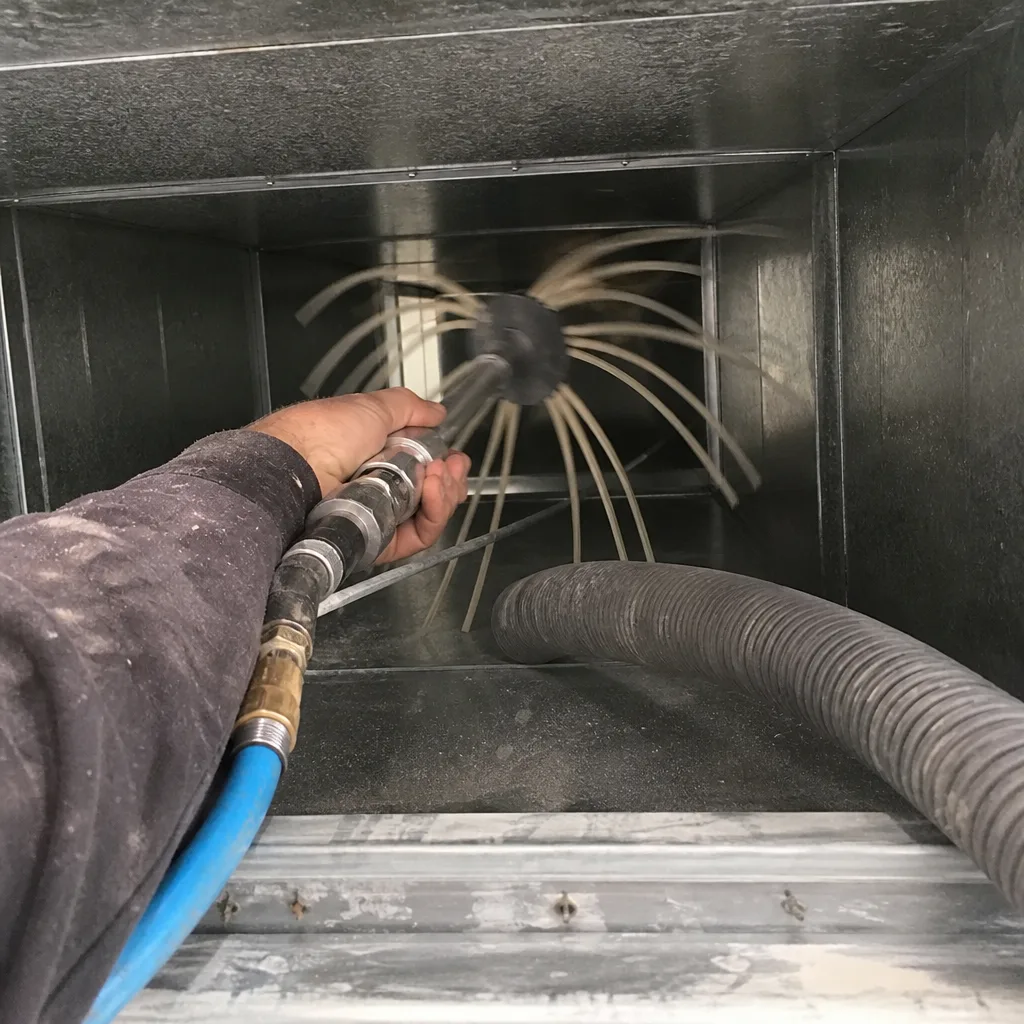
Last updated October 15, 2026
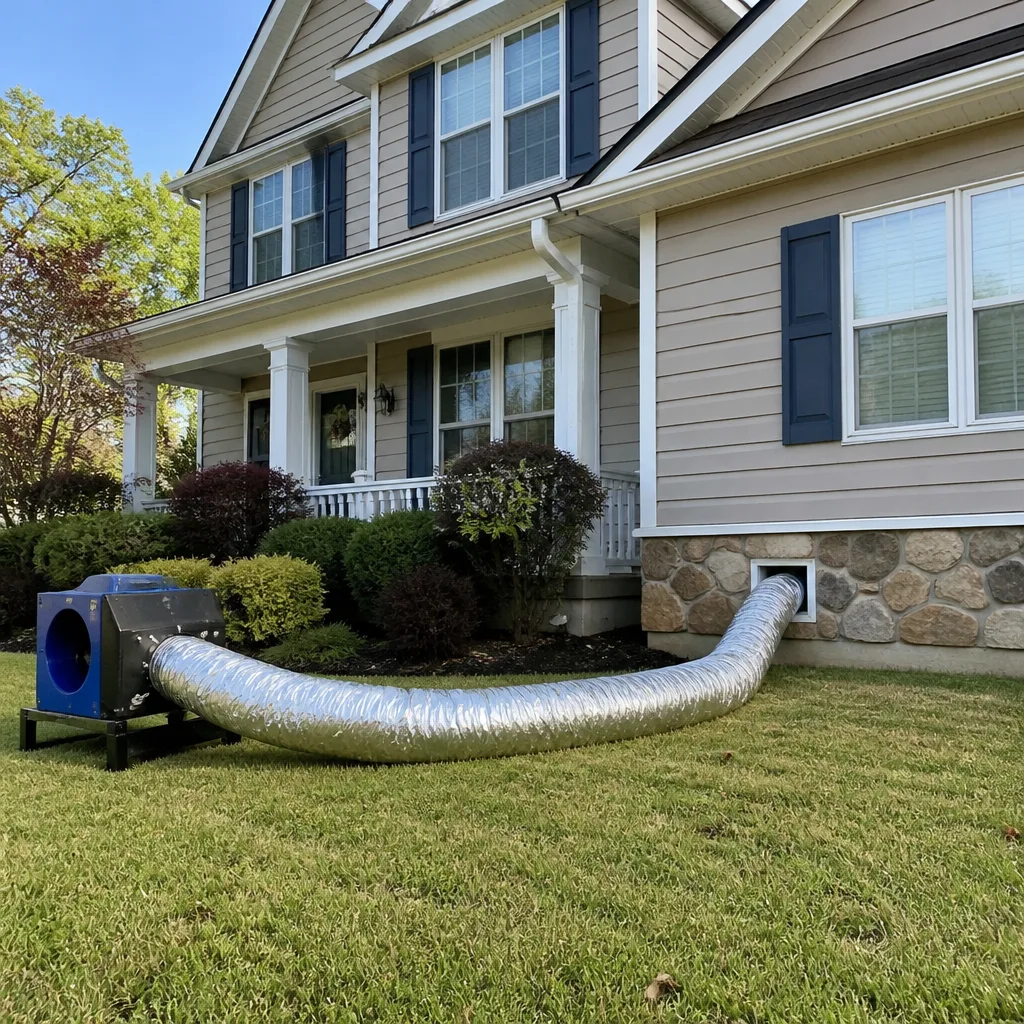 Whole-home duct cleaning
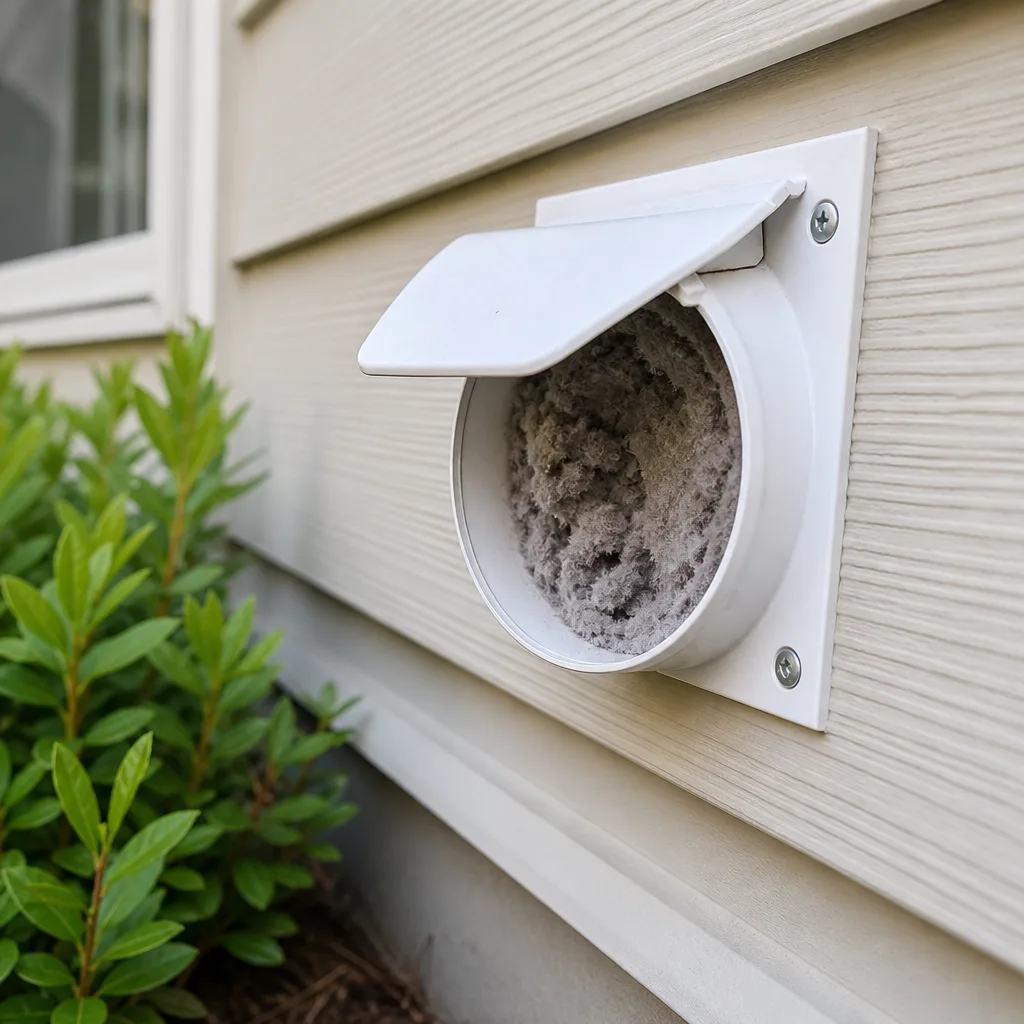 Dryer vent cleaning
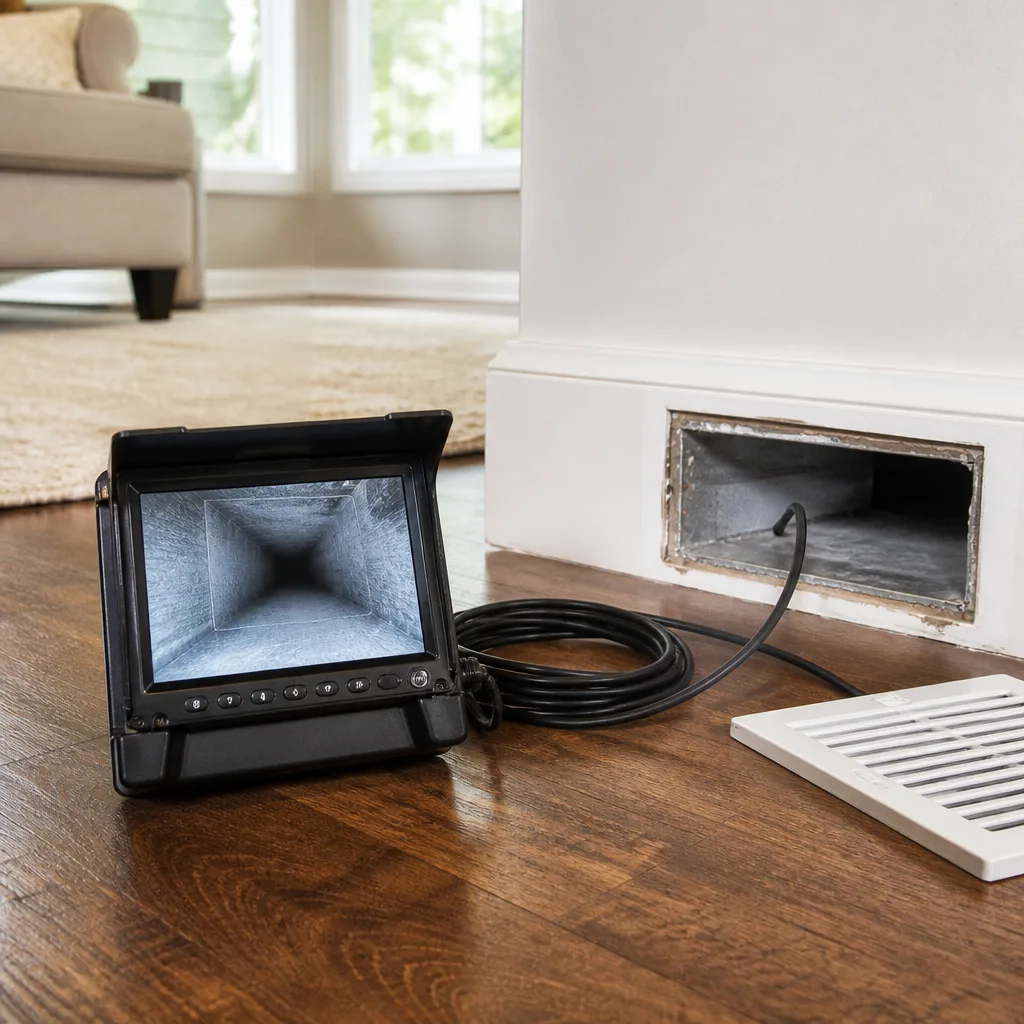 Camera inspection
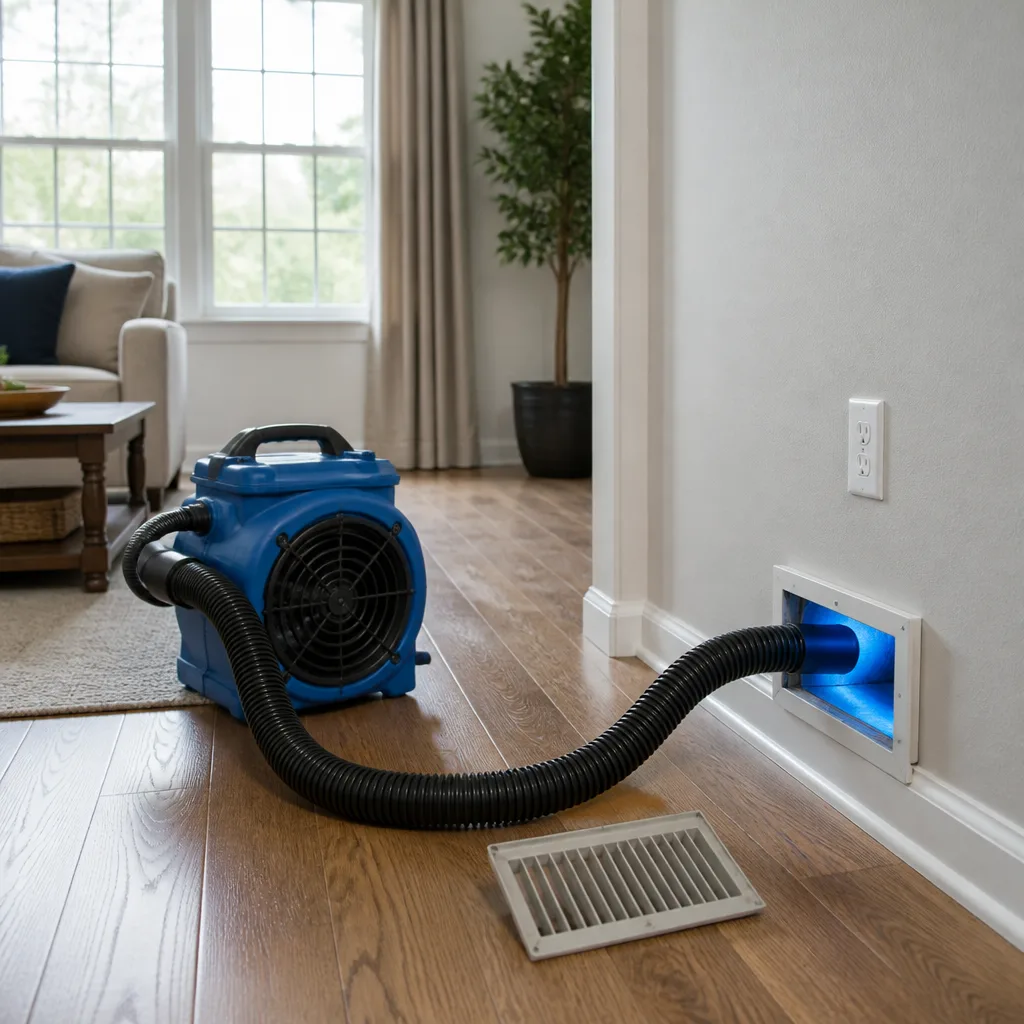 Sanitizing & deodorizing
Whole-system duct and dryer vent check with before-and-after photos - you see exactly what came out of your vents
That "$99 whole-house special" is a bait ad - the real number appears once they are in your hallway, or the "clean" is a shop-vac at the register. We photograph the inside of your ducts before and after instead.
Air Duct Cleaning Permits, Codes & Inspections in FL: What You Need to Know
Most homeowners in Orlando assume an air duct cleaning is a simple service call, no different from having carpets shampooed. That assumption is mostly right, until the technician pulls out a bucket of mastic or mentions “sealing a few gaps” while they’re in there. The moment that happens, Florida’s mechanical code switches from background noise to the only thing that matters. This guide and our Complete Guide to Air Duct Cleaning in Orlando explain exactly where the permit line sits, what triggers it, who is legally allowed to cross it, and how to protect yourself before anyone opens a vent cover.
Quick Answer
A pure residential air duct cleaning in Florida does not require a permit, inspection, or a mechanical contractor’s license when the work is limited to cleaning the interior surfaces of existing ducts. However, any duct sealing, duct modification, or work connected to an HVAC repair falls under the Florida Building Code Chapter 13 and requires a licensed mechanical contractor with a permit. Ask your duct cleaner to separate “cleaning scope” from “repair scope” in writing before work begins.
Styles & brands we work with
Table of Contents
- Does Air Duct Cleaning Require a Permit in Florida?
- Florida Building Code Chapter 13: What It Actually Covers
- The Duct Sealing Trigger: When Cleaning Becomes Contracting
- Who Is Legally Allowed to Seal or Modify Ducts in FL?
- Orange County and Orlando Inspection Nuances
- How to Get a Clean Cleaning Scope in Writing
- Home Insurance, Unpermitted Work, and Your Liability
- Why We Separate Cleaning From Mechanical Work
Does Air Duct Cleaning Require a Permit in Florida?
No. A straightforward residential air duct cleaning that uses vacuum equipment and brushes to remove dust and debris from existing ductwork does not require a permit anywhere in Florida, including Orlando. The Florida Building Code does not classify cleaning as construction, alteration, or repair. This is the position of the Florida Department of Business and Professional Regulation, which regulates contractors, and it holds true across Orange County.
What we’ve seen in Orlando homes across College Park, Baldwin Park, and Dr. Phillips is that the confusion starts when a cleaning company adds services that sound related but are legally completely different. Cleaning is maintenance. Sealing is modification. Replacing a section of damaged duct is repair. Florida law treats these as distinct activities with distinct licensing requirements.
Here is the clean breakdown:
- Air duct cleaning only: No permit, no mechanical license required. Anyone can perform this work.
- Duct sealing or mastic application: Requires a licensed mechanical contractor. May require a permit.
- Duct replacement or modification: Requires a permit and a licensed mechanical contractor.
- HVAC system repair connected to ductwork: Requires a permit and a licensed mechanical contractor.
The practical takeaway for an Orlando homeowner is simple: you can hire a specialist duct cleaning company without pulling permits, as long as the technician never touches anything beyond cleaning the interior surfaces of the ductwork.
Florida Building Code Chapter 13: What It Actually Covers
Florida Building Code Chapter 13 governs mechanical systems, including HVAC, ductwork, and ventilation. The code exists to set minimum standards for how mechanical systems are installed, modified, and maintained so that they operate safely. Understanding what Chapter 13 covers, and what it deliberately leaves out, is the difference between a routine service visit and an unpermitted construction project.
Chapter 13 applies to:
- New duct installation and system design
- Duct modification, replacement, or reconfiguration
- Duct sealing that is part of a repair or alteration
- Mechanical equipment installation and replacement
- Any work that changes airflow design or system performance
Chapter 13 does not apply to:
- Routine cleaning of existing duct surfaces
- Filter replacement
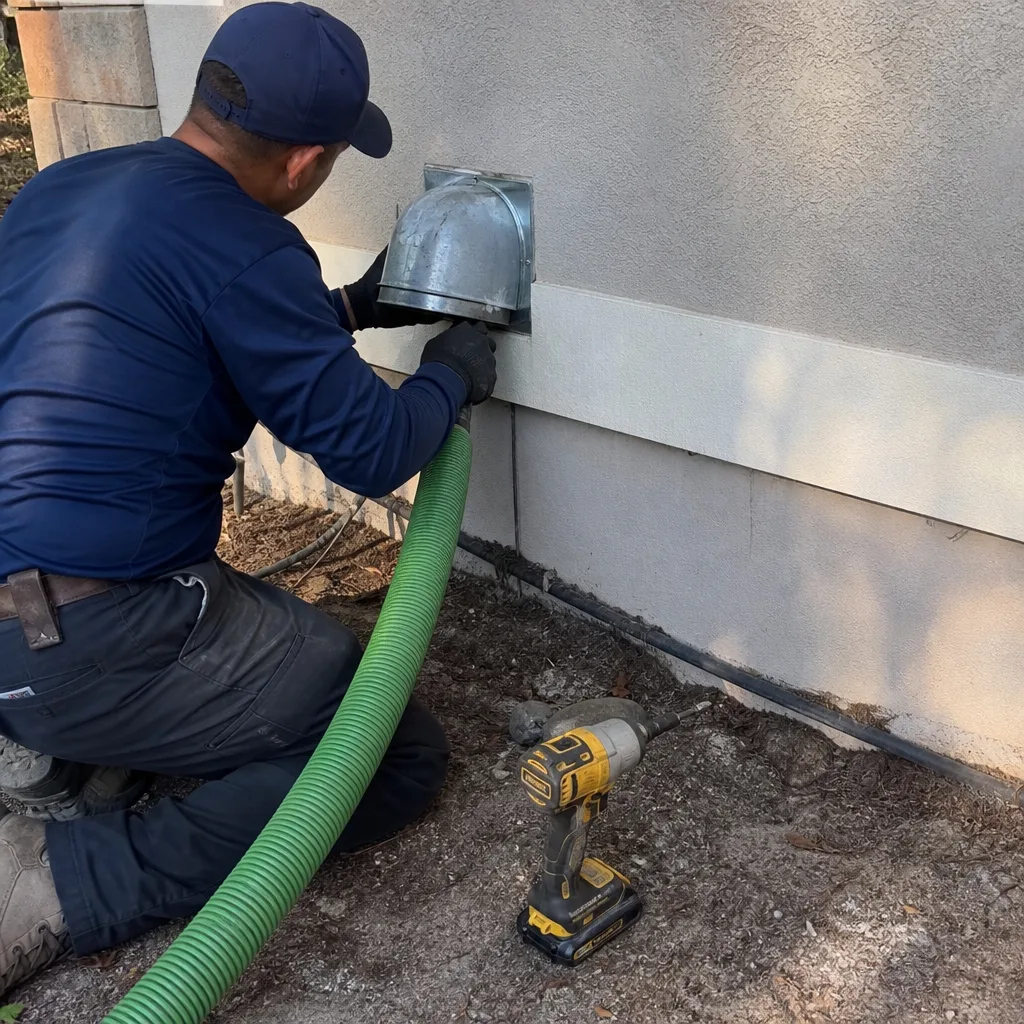
- Dryer vent cleaning
- Visual inspection of accessible ductwork
- Basic maintenance that does not alter the system
In Orange County, the Building Safety Division enforces Chapter 13 through permit reviews and inspections. A homeowner who hires a company to replace a damaged duct run without a permit has, knowingly or not, created an unpermitted modification. When we clean ducts in Orlando homes with our Air Duct Cleaning services, our scope stops at the interior surface of the duct. That is a deliberate line, not a service limitation.
The Duct Sealing Trigger: When Cleaning Becomes Contracting
Here is the scenario we hear about most often from Orlando homeowners. A duct cleaning technician finishes the job, shines a flashlight into a duct, and says, “I noticed a few small gaps in the ductwork. I can seal those for you while I’m in here, no extra charge, or for a small fee.” It sounds like a favor. Legally, it’s a scope change that transforms a maintenance visit into mechanical contracting.
Any application of mastic, foil tape, or aerosol sealant to duct joints or seams is duct sealing. Florida law treats duct sealing as repair work that requires a licensed mechanical contractor. A permit may be required depending on the extent of the work. The reason is straightforward: sealing changes the pressure dynamics of the system. Done wrong, it can create backdrafting, reduce airflow to certain rooms, or trap moisture inside the ductwork.
If your duct cleaner offers to “seal a few gaps while they’re in there,” ask one question first: do you have a Florida mechanical contractor’s license? The answer determines whether your home insurance stays valid after the visit. If the answer is no, and the sealing work fails or causes a problem, your insurance carrier can deny the claim on the basis that unlicensed work was performed on your mechanical system.
The same trigger applies when a cleaning technician offers to replace a short section of damaged flex duct, add a new supply run, or re-route ductwork to solve a hot room problem. These are all modifications and repairs, not cleaning. They require a license and likely a permit. A duct cleaning company can be excellent at cleaning and still not be legally authorized to perform this adjacent work.
Who Is Legally Allowed to Seal or Modify Ducts in FL?
In Florida, duct sealing, modification, and repair must be performed by a state-licensed mechanical contractor or an air conditioning contractor holding a license issued by the Florida Department of Business and Professional Regulation. These licenses require passing a state examination, documenting years of supervised experience, and maintaining insurance and continuing education. That licensing requirement exists to protect homeowners from exactly the kind of damage that occurs when unqualified hands alter a mechanical system.
A duct cleaning company that does not hold this license can still clean your ducts legally. What it cannot do is seal, modify, repair, or replace any component of the duct system. Any company offering both services is either licensed for both, or it is crossing a legal line. Asking to see the mechanical contractor’s license number before any sealing or repair work is not rude. It is due diligence.
The Department of Business and Professional Regulation maintains a public license lookup tool. Any Orlando homeowner can verify a contractor’s license in under two minutes. We encourage it. Even when a company claims to be licensed, verifying the license number and confirming it belongs to the company name on the invoice takes almost no time and eliminates a major risk.
Here is what to ask, in order:
- Are you performing any work beyond cleaning the interior surfaces of the ducts?
- If yes, what is your Florida mechanical contractor’s license number?
- Will a permit be pulled for the repair or modification work?
- Will you provide a written scope that separates cleaning from repair work?
Orange County and Orlando Inspection Nuances
Orlando sits within Orange County, which has its own Building Safety Division that handles permit applications, plan reviews, and inspections for mechanical work. Homeowners in Orlando proper follow Orange County’s permitting process. Neighboring cities like Winter Park, Ocoee, and Apopka have their own building departments with slightly different procedures, but all of them enforce the same Florida Building Code Chapter 13 standards.
The inspection nuance most Orlando homeowners miss is that a permit is not the same thing as an inspection. Pulling a permit for duct repair or modification means an Orange County inspector may visit the property after the work is complete to verify it meets code. That inspection is a protection, not a punishment. It is the county confirming the work was done correctly. When no permit is pulled, no inspection happens, and the homeowner is left trusting that an unlicensed worker did the job right.
Orlando’s climate adds a second layer. Central Florida’s humidity means ductwork sits in hot, damp attics for months at a time. Duct sealing done incorrectly can trap humidity inside the ducts, creating conditions for mold growth. We see this in older Orlando homes in neighborhoods like Colonialtown North and Audubon Park, where original duct systems from decades ago have been patched and re-patched by various hands. Each patch carries its own history.
For homeowners in these older neighborhoods, we recommend keeping a file with every duct-related invoice, noting what work was performed and who performed it. If a previous owner had ductwork modified, and no permit record exists, a new homeowner can be the one holding the liability when something fails.
How to Get a Clean Cleaning Scope in Writing
The single most protective step an Orlando homeowner can take before hiring any duct cleaning company is to demand a written scope of work that explicitly separates cleaning from repair. A verbal promise is not enough. A written scope forces the company to state exactly what it will do, and exactly what it will not do.
Here is a simple five-step process we recommend:
- Request a written scope before scheduling. A legitimate company will have no problem providing one. The scope should list every task, every product used, and the total price.
- Confirm the scope contains no sealing, repair, or modification language. If it does, ask for the mechanical contractor’s license number.
- Ask about equipment. Professional cleaning companies use truck-mounted or high-powered portable systems designed for duct cleaning, such as Nikro or Abatement Technologies equipment. Ask what equipment will be used on your home.
- Confirm start and finish expectations. The scope should note how long the job will take and how the home will be protected during the work.
- Get the final price in writing before the crew arrives. No ranges, no estimates that become invoices. A firm price for a defined scope.
At Mortons Air Duct Orlando, we provide a written price before any work starts, every time. Our technicians arrive with the scope they will perform, the equipment they will use, and the price that was quoted. If the job uncovers something that needs a licensed mechanical contractor, we tell the homeowner exactly that, and we do not touch it. That separation protects the homeowner, and it keeps our scope honest.
Home Insurance, Unpermitted Work, and Your Liability
Most Orlando homeowners never connect duct cleaning to their insurance policy until a claim goes wrong. The connection is direct. Home insurance policies typically require that any work performed on the home’s mechanical systems be done by licensed professionals where the law requires it. Unpermitted or unlicensed duct modification can void coverage for damage related to that work.
The scenario that plays out looks like this. A homeowner hires a company to clean ducts. The technician offers to seal gaps. A year later, a duct seam fails in the attic, water enters, and the ceiling below is damaged. The homeowner files an insurance claim. The adjuster asks who performed the sealing work. When the answer is an unlicensed duct cleaner, the claim can be denied. The homeowner is now paying for repairs out of pocket.
In Florida, where humidity and hurricane seasons already strain HVAC systems, the risk is not hypothetical. We have seen this exact sequence happen to homeowners in Orlando’s Conway and Belle Isle neighborhoods. The financial damage from a denied claim far exceeds the cost of a proper duct cleaning, or the cost of hiring a licensed contractor for the repair work in the first place.
The legal exposure goes further. If an unlicensed worker is injured in your attic while performing work that required a license, your homeowner’s liability coverage may not respond. This is not a minor concern. Protect yourself by keeping the scope clean, watching for unlicensed offers, and verifying credentials before any work that changes the duct system.
Why We Separate Cleaning From Mechanical Work
Mortons Air Duct Orlando is a duct cleaning and dryer vent cleaning specialist. We are not a mechanical contractor, and we do not hold ourselves out as one. This is intentional. We clean ducts. We do not seal, modify, repair, or replace them. When our technicians find duct damage, gaps, or disconnected sections during a cleaning, we document it, photograph it, and advise the homeowner to contact a licensed mechanical contractor for the repair.
This approach matters because it keeps your liability clean. When the scope of our visit is limited to cleaning, no permit is triggered, no unlicensed work is performed, and your insurance situation remains exactly as it was before we arrived. The homeowner who invites a cleaner to seal a duct has crossed a line they may not even know exists. We prefer to stay firmly on the safe side of that line.
Our technicians work with professional equipment from Nikro, Honeywell, and Abatement Technologies. That equipment is designed for one job: removing the dust, debris, pet hair, and microbial growth that accumulates inside Orlando duct systems over years of air conditioning use. The equipment is not designed for duct modification, and our technicians are not licensed to perform it. That is the honest boundary, and it’s one we protect on every visit.
Founded in 2005, we are part of the Cedarwell family of independently owned companies. The Cedarwell Care Promise means every visit includes shoe covers and drop cloths inside the home, a written price before any work starts, and a photo of the clean-up before the crew leaves. Our 365-Day Done Right Promise means if the cleaning isn’t right, we make it right. Those promises apply to everything we do because they are the system we work within, not a slogan we attach to invoices.
Common Mistakes to Avoid
- Accepting a verbal promise of a “low rate” without a written scope. If the price isn’t in writing before the crew arrives, the final invoice has room to grow. Always get the scope and price in writing first.
- Letting a duct cleaner seal gaps without checking the mechanical license. Sealing is contracting in Florida. If the tech doesn’t hold an active mechanical contractor’s license, you’re accepting unlicensed work on your mechanical system.
- Paying for a whole-home clean that only covers the supply ducts. Some Orlando companies quote low by cleaning only the supply side and leaving the return ducts untouched. Ask whether the scope includes both supply and return duct runs.
- Assuming a permit was pulled because the company “handled it.” Ask for the permit number. Check it with Orange County if you want. Permits are public records, and verifying one takes minutes.
- Treating dryer vent cleaning as optional when the scope includes it. Clogged dryer vents are a fire hazard. If your duct cleaning company also offers Dryer Vent Cleaning in Orlando, adding it to the visit is a practical way to handle both at once.
- Ignoring the paperwork trail on a newly purchased Orlando home. Older homes in neighborhoods like Thornton Park or Delaney Park may have decades of undocumented duct patches. When you buy, request all HVAC and duct documentation from the previous owner.
- Hiring solely on price without checking what equipment will be used. Professional equipment from brands like Nikro or Abatement Technologies does a fundamentally different job than a small portable unit. Ask what arrives on the truck.
See the difference
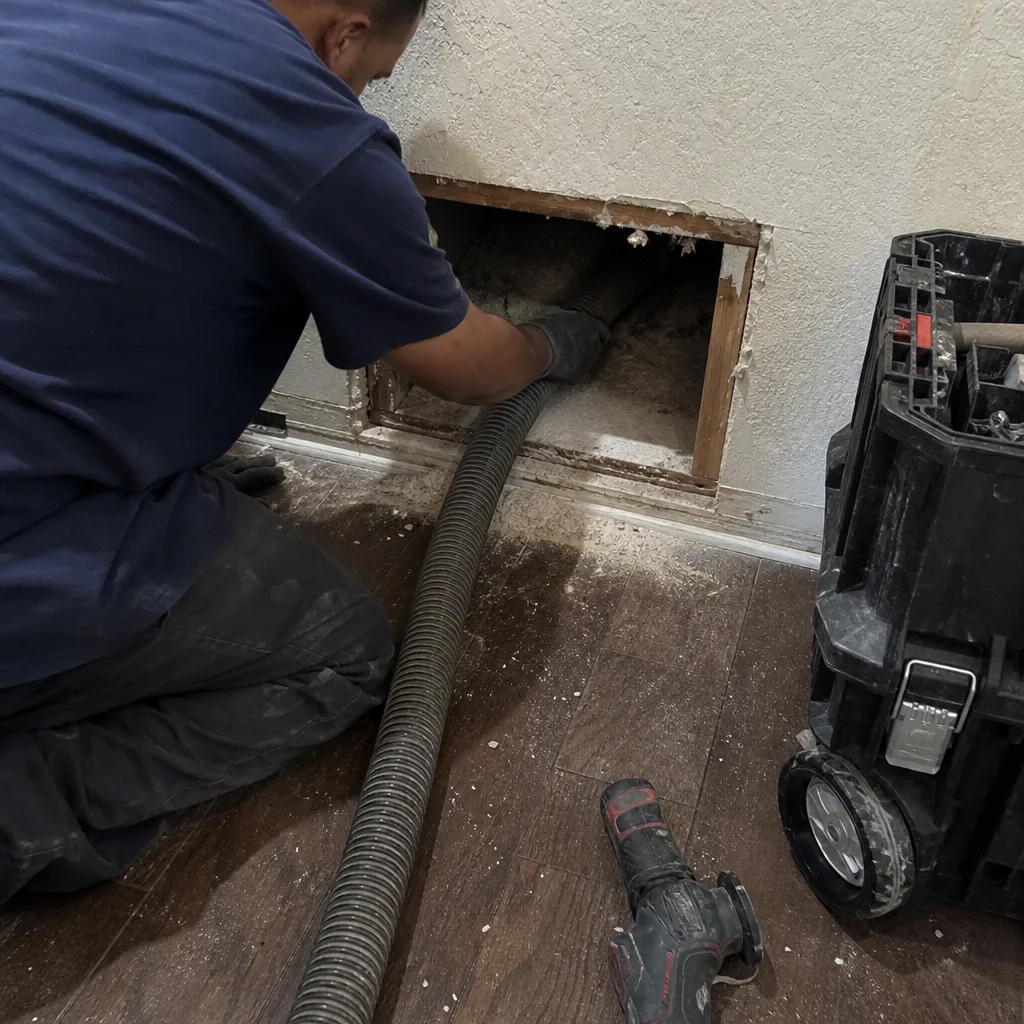 Before
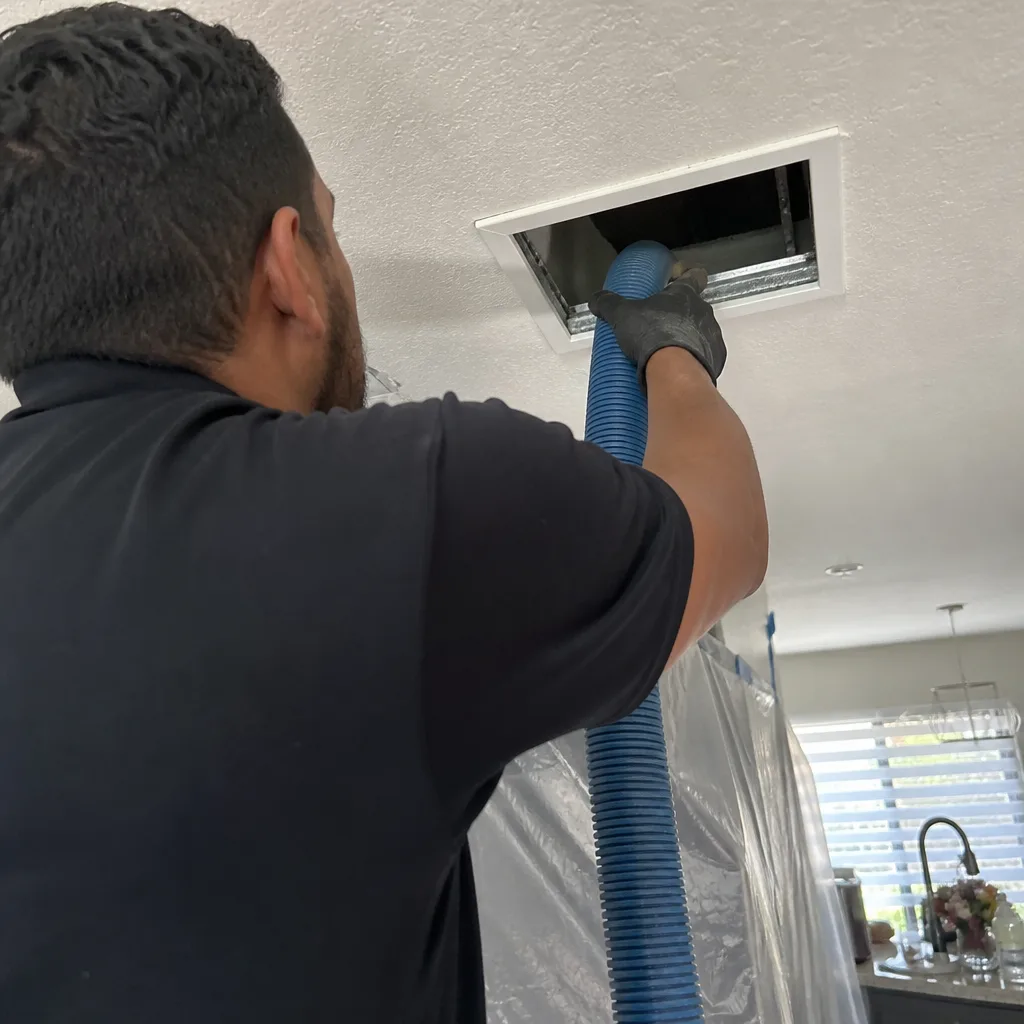 After
After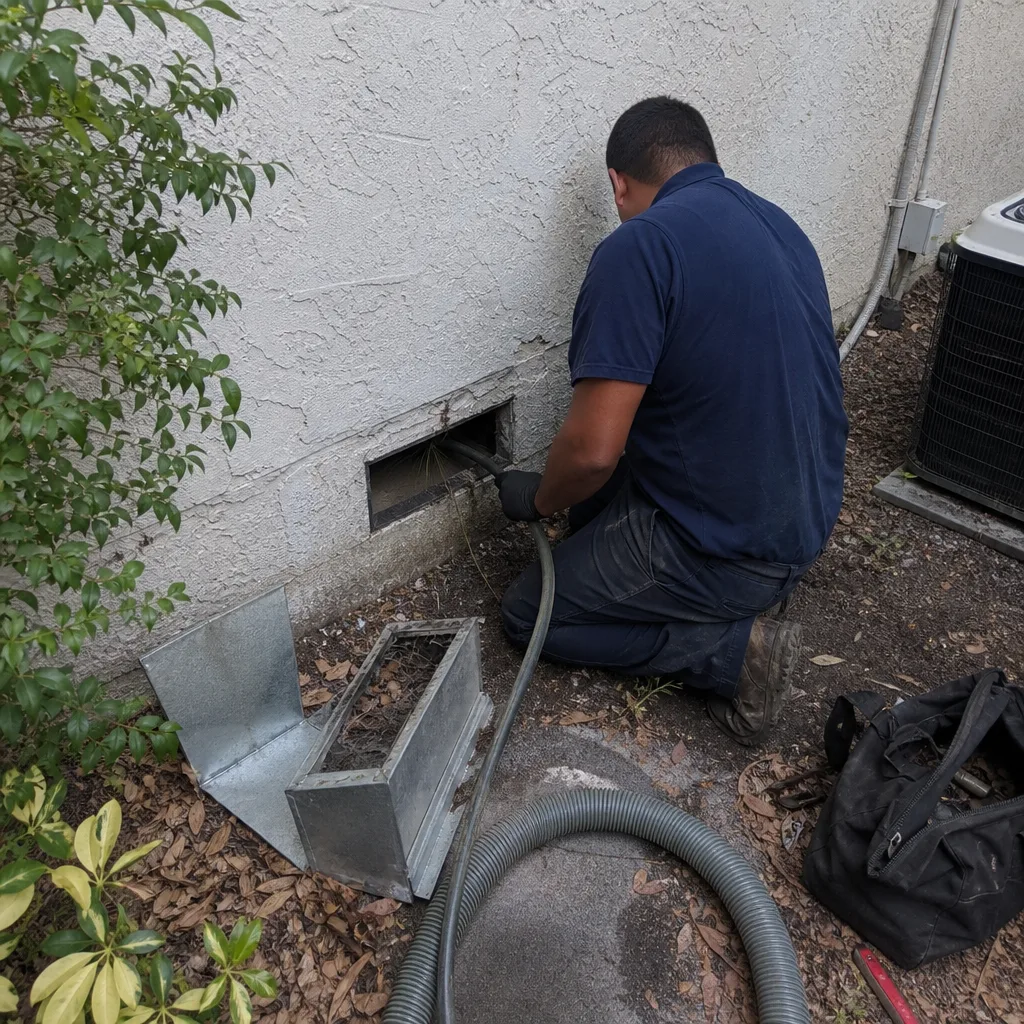 Before
 After
After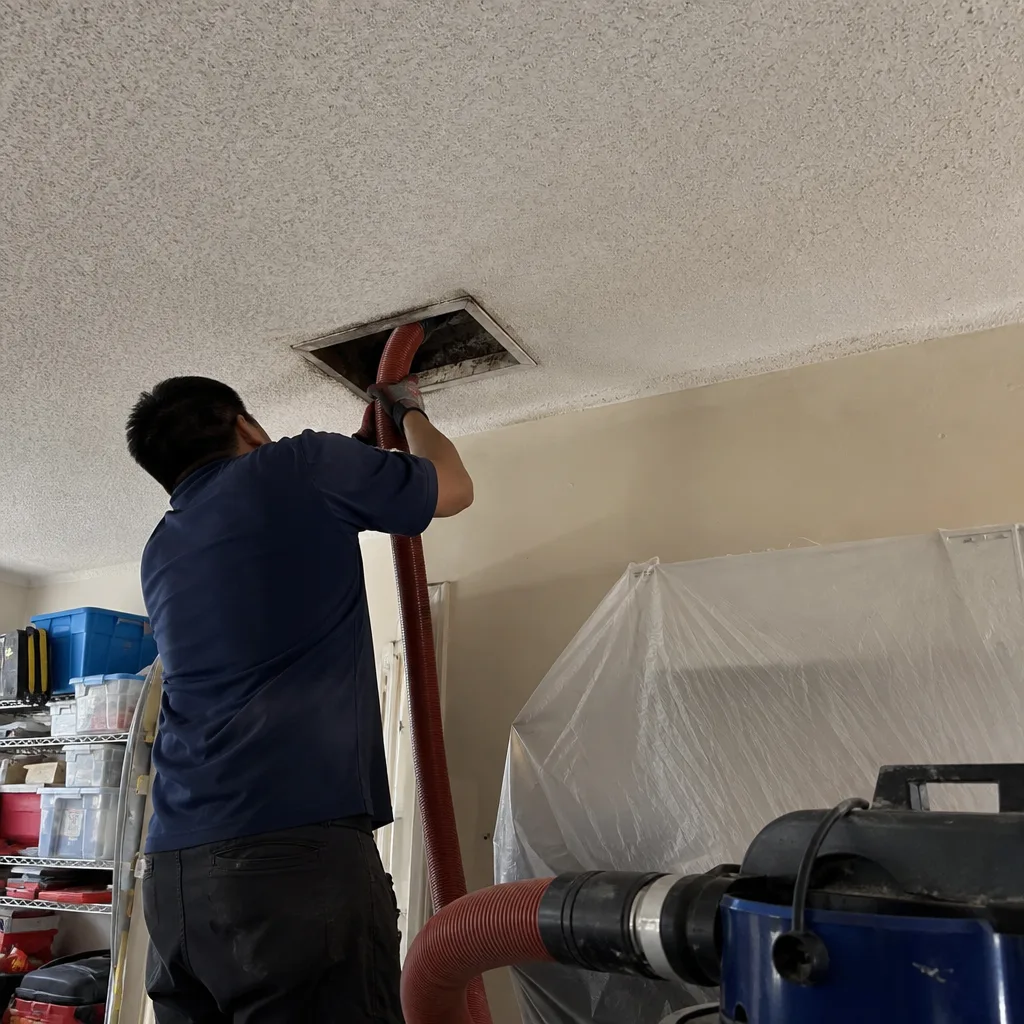 Before
 After
AfterWhen to Call a Professional
If you can see dust collecting around your vent covers within days of cleaning, smell a stale or musty odor when the AC runs, or find pet hair blowing from registers, your ducts are due for a professional cleaning. Homes with shedding dogs and cats in Orlando typically need cleaning more often than pet-free homes because dander and hair accumulate faster in the duct runs. If you’re unsure whether your ducts need cleaning, a professional inspection can answer the question without any pressure to proceed, and you can find more guides & resources on our blog.
When the job does move forward, you want a company that hands you a written price before work starts, covers your floors with shoe covers and drop cloths, works around nap schedules and pets, and shows you a photo of the clean-up before the crew leaves. Air Duct Cleaning in Orlando is what we do. Mortons Air Duct Orlando offers free estimates in Orlando, call (321) 204-8194.
Frequently Asked Questions
No. A pure air duct cleaning that only involves cleaning the interior surfaces of existing ductwork does not require a permit in Florida. Permits enter the picture when the work includes duct sealing, modification, repair, or replacement.
Duct sealing is legally considered a mechanical repair in Florida, not a cleaning service. Any application of mastic, foil tape, or aerosol sealant to duct joints requires a licensed mechanical contractor and may require a permit.
Only if the company also holds an active Florida mechanical contractor’s license. A duct cleaning specialist without that license can clean but cannot legally seal, modify, or repair ductwork. Always ask for the license number before any repair work.
Check with the Orange County Building Safety Division for permit records on your property. If duct modifications were made without a record, you may have unpermitted work that could affect an insurance claim. When buying a home, request all HVAC and duct documentation from the seller.
Cheaper quotes often mean a narrower scope, such as cleaning only supply ducts and skipping return ducts, or using portable equipment that cannot achieve the same results as professional systems from brands like Nikro or Abatement Technologies. Ask what is included and what equipment will be used before comparing prices.
Ask for photo proof of the cleaning, including before and after images inside the ducts. A professional company will show you what was removed and what the duct looks like after cleaning. Mortons Air Duct Orlando includes a photo of the clean-up before our crew leaves, every time. Call (321) 204-8194 for a free estimate.
The Bottom Line
Air duct cleaning in Florida does not require a permit, but the line between cleaning and contracting is thin. The moment sealing, modification, or repair enters the conversation, Florida Building Code Chapter 13, licensing requirements, and potential permit obligations take over. Protect yourself by getting a written scope that separates cleaning from repair, verifying mechanical licenses before any sealing work, and keeping paperwork on every duct-related job. For a professional cleaning that keeps its promise, Mortons Air Duct Orlando home is the place to start. We clean ducts. We leave the contracting to the licensed professionals, and we’ll tell you exactly where that line is before anyone opens a vent cover.
Written by Paul Adeyemi, Owner at Mortons Air Duct Orlando, serving Orlando since 2005.