
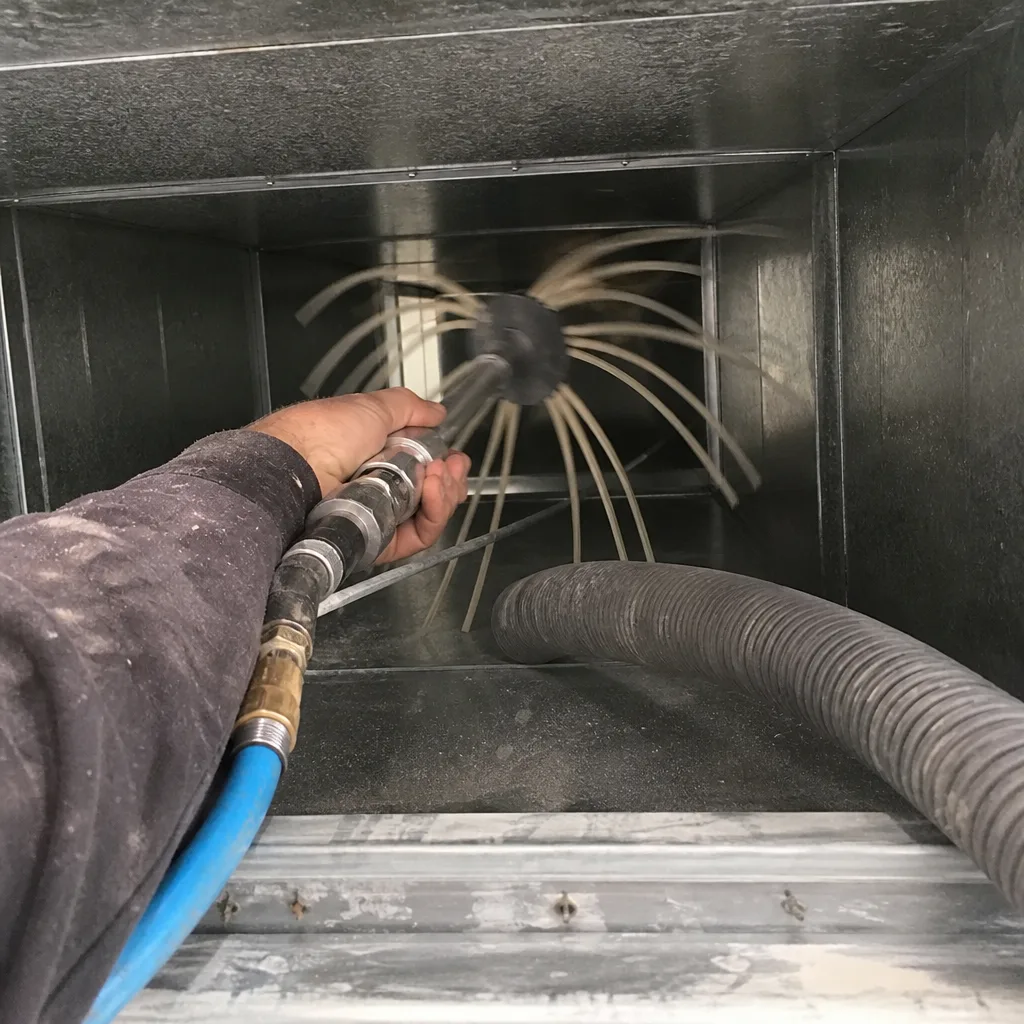
Last updated October 15, 2026
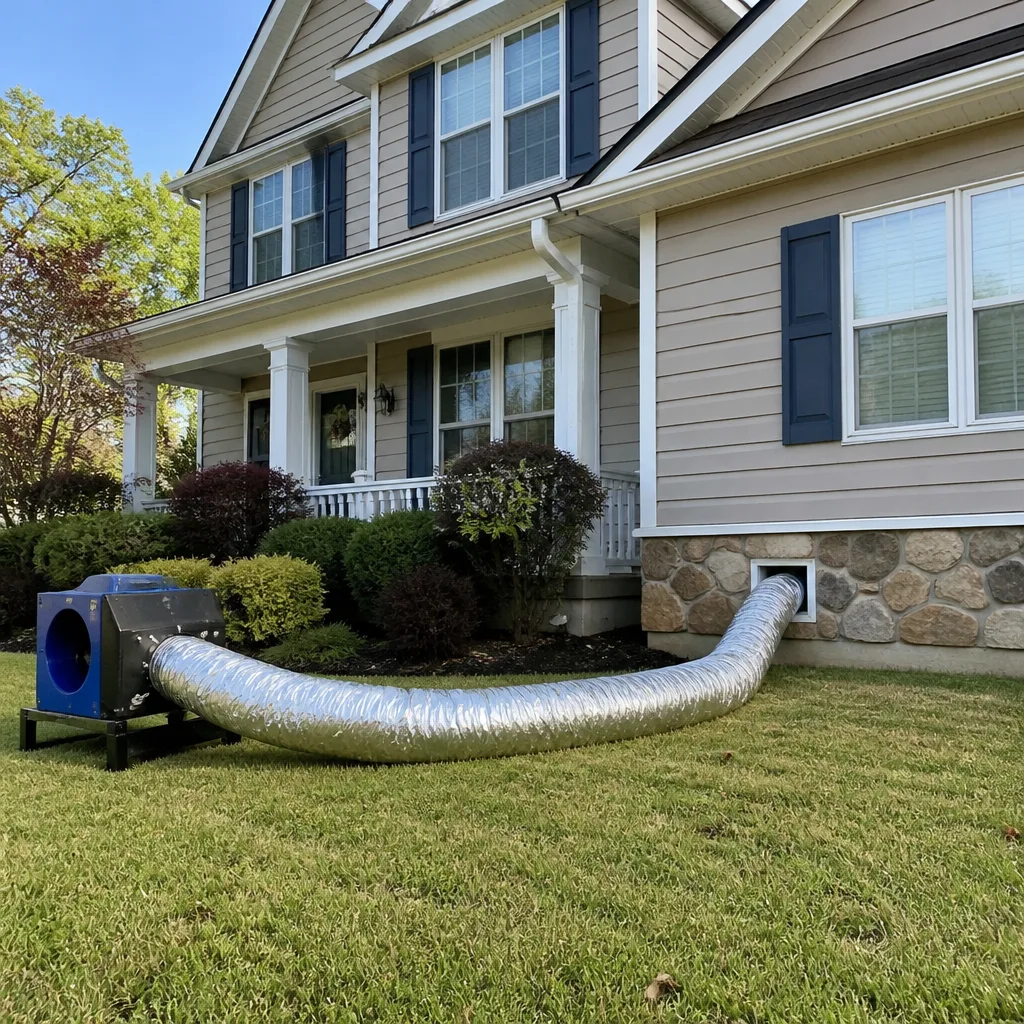 Whole-home duct cleaning
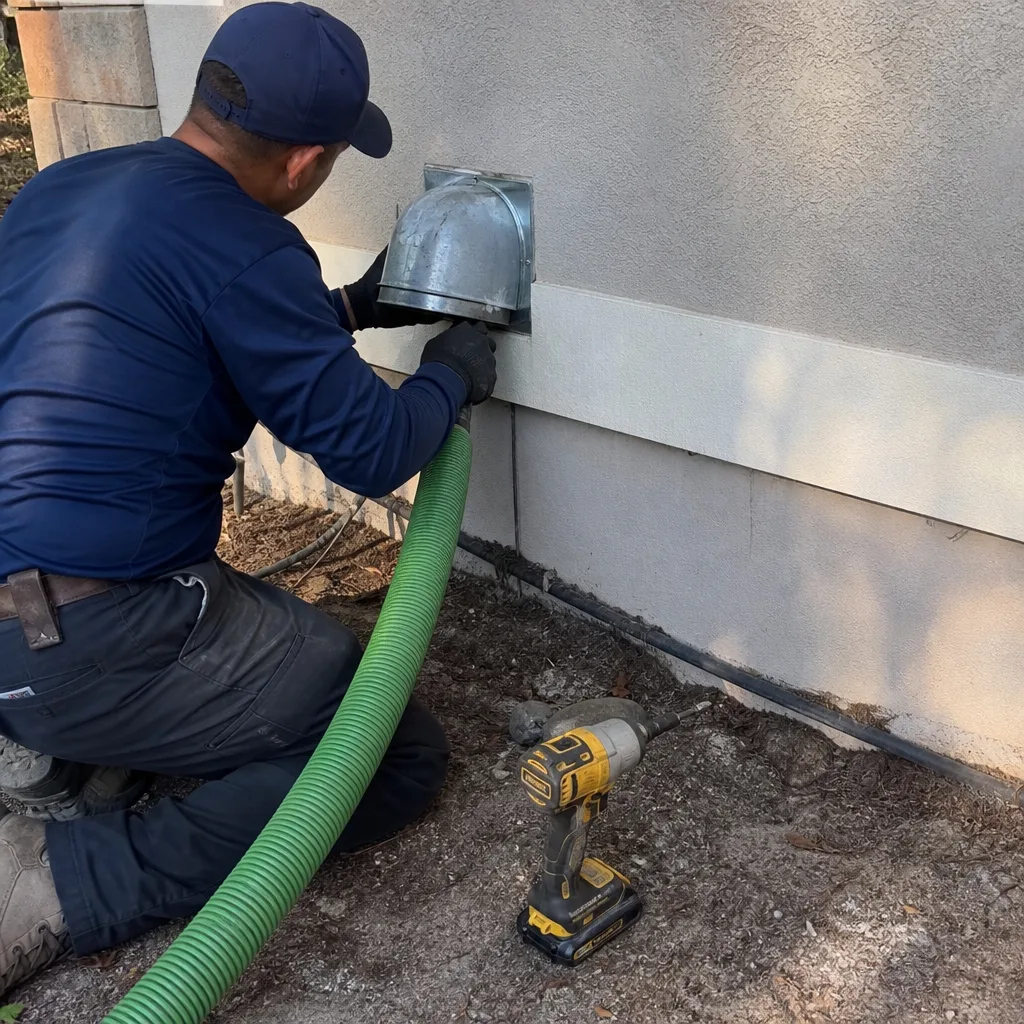
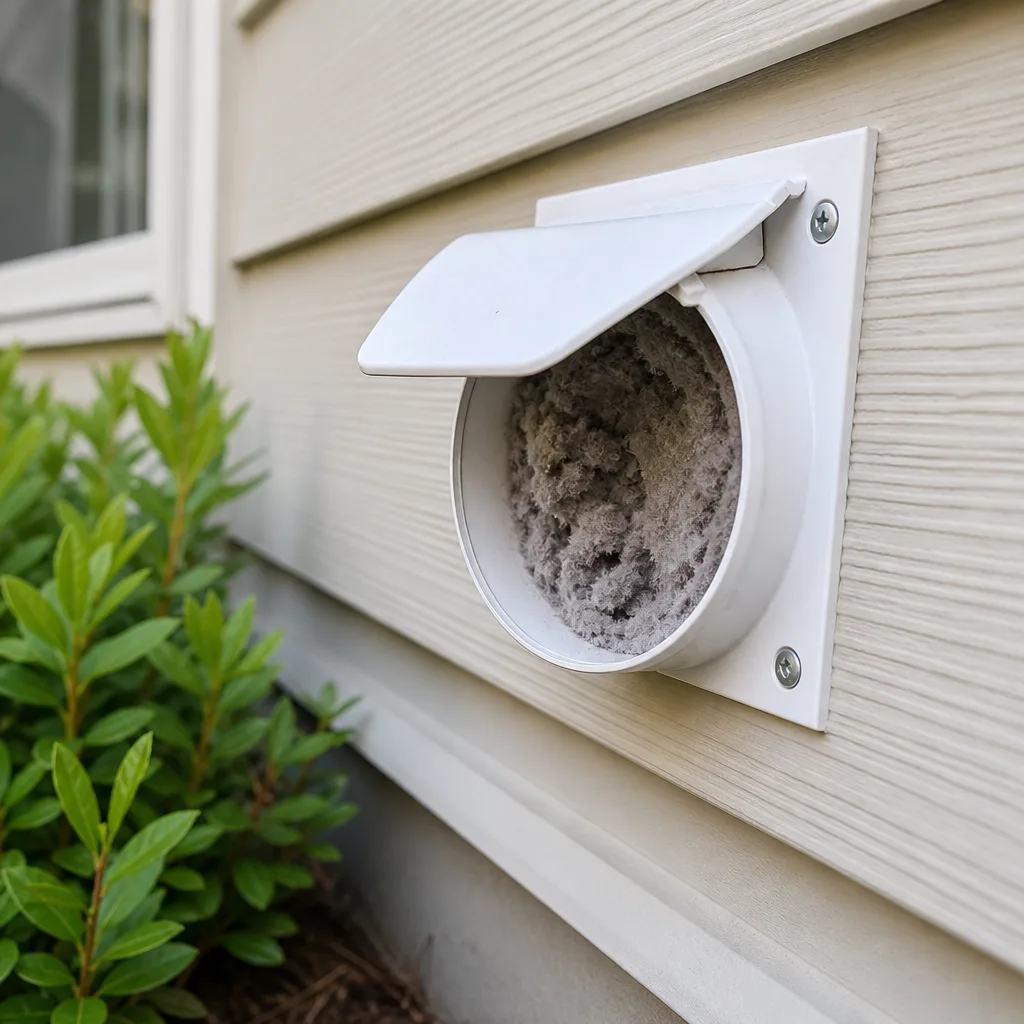 Dryer vent cleaning
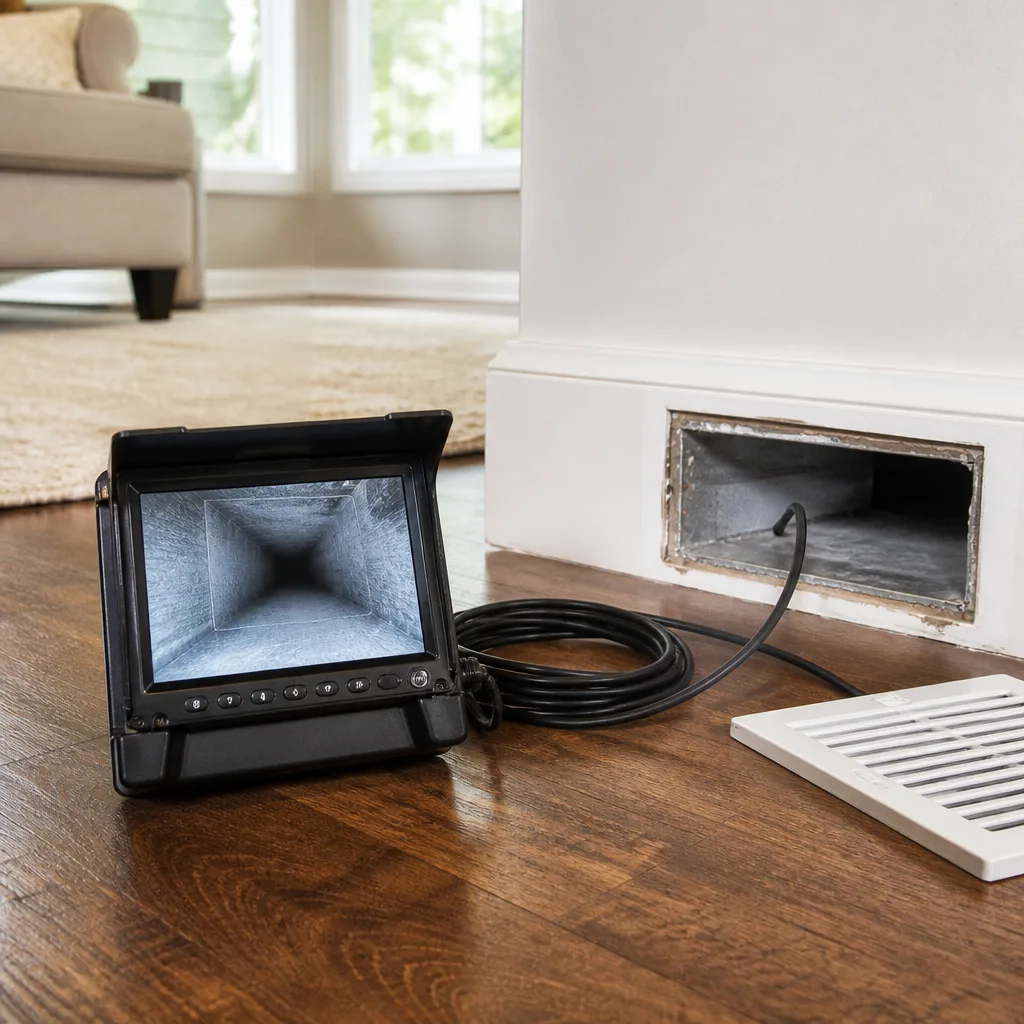 Camera inspection
 Sanitizing & deodorizing
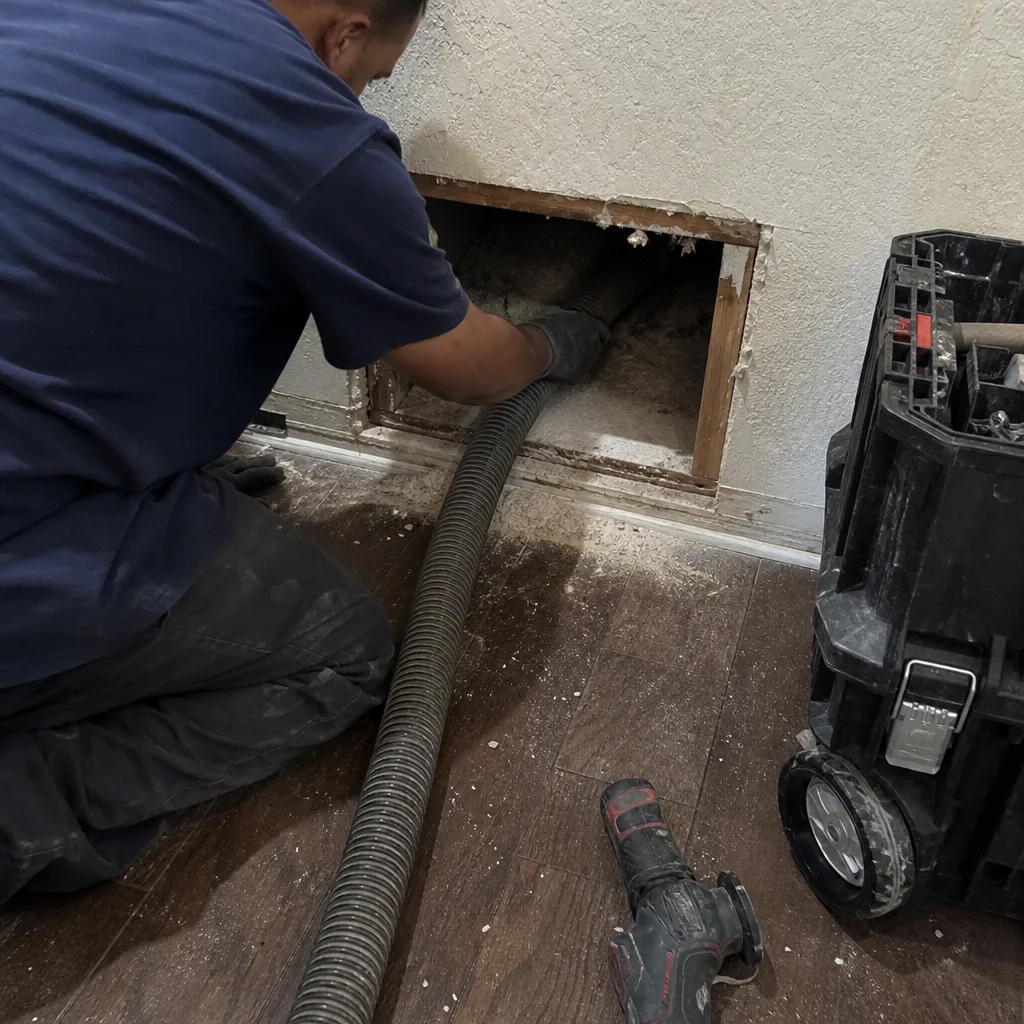
Whole-system duct and dryer vent check with before-and-after photos - you see exactly what came out of your vents
That "$99 whole-house special" is a bait ad - the real number appears once they are in your hallway, or the "clean" is a shop-vac at the register. We photograph the inside of your ducts before and after instead.
DIY vs Professional Air Duct Cleaning: The Orlando Homeowner’s Decision Guide
A shop vac and a dryer vent brush can genuinely improve a duct system, but only the top third of it. In Orlando, where humidity pushes dust and organic matter to cling and compact inside duct walls, that limitation matters more than it would in Phoenix or Denver. This guide gives you an honest look at what DIY actually reaches, what it leaves behind in a Florida home, and the decision framework we use with our own neighbors in Orlando when they ask whether to grab a ladder or pick up the phone.
Styles & brands we work with
Quick Answer
DIY Air Duct Cleaning in Orlando can remove loose surface debris from registers, return-air grilles, and the first few accessible feet of flex duct, but it cannot create the sustained negative pressure professional systems use to extract compacted buildup and humidity-driven mold colonies from deep inside duct walls. If your home is newer, you have no allergy sufferers, and you’re just dusting the visible areas, DIY maintenance between professional cleanings makes sense. If your ducts haven’t been professionally cleaned in 5+ years, you have kids or pets, or you can see matted gray buildup on register surfaces, a professional clean with negative-pressure equipment is the honest answer.
Table of Contents
- What DIY Duct Cleaning Can Actually Do in Orlando
- What Professional Negative-Pressure Equipment Reaches That Consumer Tools Can’t
- Why Orlando Humidity Changes the DIY Calculus
- DIY Maintenance Between Professional Cleanings: What’s Genuinely Useful
- The Honest Decision Framework: DIY vs. Professional
- Real Cost Comparison: DIY Supplies vs. Professional Service in Orlando
- Common Mistakes to Avoid
- When to Call a Professional
- Frequently Asked Questions
- The Bottom Line
What DIY Duct Cleaning Can Actually Do in Orlando
Let’s be specific about what a homeowner with a good shop vac, a long brush kit, and a Saturday afternoon can genuinely accomplish. You’re not wasting your time if you understand the boundaries.
Registers and Return-Air Grilles
Every floor register and wall register in your Orlando home is removable. Most take under ten seconds to unscrew or pop out. Once removed, you can vacuum the immediate cavity behind the register, wipe down the register fins with a damp microfiber cloth, and use a flexible brush to loosen debris in the visible boot, which is the metal or plastic transition piece connecting the register to the duct run. This work is real. It removes surface dust, pet hair clumps, and the gray film that forms on register backs in humid air. What it does not do is reach the 20 to 40 feet of main trunk line and branch runs behind that boot.
Accessible Flex Duct Sections
In many Orlando homes, especially single-story ranches built in the 1980s through 2000s, portions of flex duct run through accessible attic spaces. A homeowner can gently disconnect a flex duct collar at the plenum or at a register boot and look inside the first few feet. You’ll typically see a thin layer of dust, maybe some insulation particles, sometimes the early stages of what looks like gray felt forming on the duct walls. You can vacuum what you can reach with a brush attachment. What you cannot reach is the other 90% of that flex run, which snakes through the attic and into areas you can’t comfortably access without crawling through insulation and potentially damaging the duct.
The Honest Outcome Expectation
DIY duct cleaning in Orlando is best understood as surface maintenance, not system extraction. You’ll improve the visible surfaces. You’ll remove the loose debris that’s about to become airborne and recirculate. You will not change the static pressure characteristics of the system, you will not remove compacted layers on duct walls, and you will not address the biological film that Orlando’s humidity encourages in the parts of the system you can’t reach. If you approach DIY as “make the visible parts better and extend the time between professional visits,” it’s genuinely useful. If you approach it as “clean the whole system,” you’ll be disappointed.
For homeowners who want the full picture of what’s inside their system, our Air Duct Cleaning in Orlando service page explains the professional process step by step.
What Professional Negative-Pressure Equipment Reaches That Consumer Tools Can’t
The core difference between DIY and professional duct cleaning is not effort or technique. It’s physics. Professional equipment creates sustained negative pressure across the entire duct system, which is an entirely different mechanism than a shop vac’s short-range suction.
How Negative Pressure Works
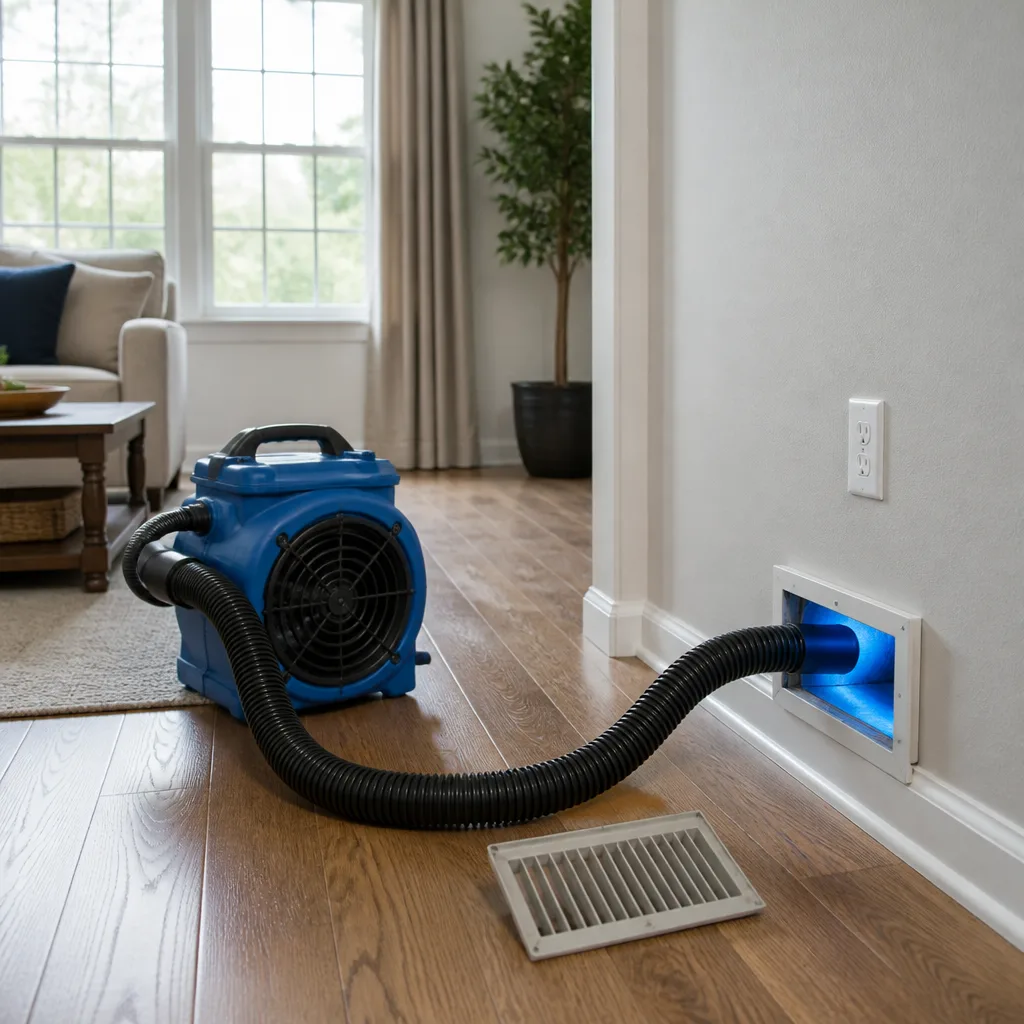
A professional system like the Rotobrush or a Nikro truck-mount unit connects to the main trunk line and creates a vacuum that pulls air through the entire duct network at a controlled rate. Technicians then feed agitation tools through each branch run. The combination of mechanical agitation, which loosens the debris from the duct walls, and constant negative pressure, which immediately pulls loosened material toward the collection point, is what actually extracts compacted buildup. A shop vac creates localized suction at the point of contact. It cannot sustain negative pressure across a 400-foot duct system. It’s the difference between vacuuming your living room rug with a handheld attachment and running a whole-house filtration system.
What Gets Extracted That DIY Leaves Behind
- Compacted debris on duct walls: In Orlando humidity, loose dust mixes with airborne moisture and organic matter to form a matted film that adheres to duct surfaces. This is what you’re seeing when registers show a gray, felt-like coating. It does not vacuum off with consumer suction. It requires mechanical agitation combined with extraction.
- Mold colonies in humid sections: Flex ducts running through unconditioned Orlando attics experience condensation on the interior surface during the hottest months. That moisture wicks into dust layers, and that’s where mold starts. Professional agitation can reach these colonies in the mid-span of flex runs, which is exactly where DIY tools cannot reach.
- Debris beyond the first bend: Every duct system has turns, transitions, and distant branch runs. Debris that has fallen into the deeper sections, especially in low-lying runs, simply stays there without the pull of a negative-pressure system.
- Contaminants behind the coil: The evaporator coil inside the air handler is the most moisture-heavy component in the Orlando HVAC system. The area upstream and downstream of the coil collects more organic buildup than any register area. DIY never reaches this.
Equipment That Matters
Professional duct cleaning equipment designed by companies like Nikro and Abatement Technologies is engineered for a specific job: sustained extraction across an entire system. Rotobrush systems are designed to combine agitation and extraction in a single pass. Honeywell and Aprilaire are known for filtration and air quality components, which matter when you’re thinking about what happens to the air after the ducts are clean. This is not entry-level rental gear, and the difference shows in the results. We see homeowners in Orlando who have spent a full weekend doing DIY cleaning, then had a professional clean done months later, and were surprised by how much material the professional system removed. It’s not that the DIY work was wasted. It’s that the tools operate at fundamentally different scales.
Why Orlando Humidity Changes the DIY Calculus
If you search for DIY duct cleaning advice online, much of it comes from homeowners and content creators in Colorado, Arizona, Nevada, and other dry-climate states. Their experience is real, but it doesn’t transfer to Orlando. Here’s why.
Dry Climate Ducts vs. Orlando Ducts
In a dry climate, the dust inside ducts stays dry. It’s loose. It sits on the bottom of runs until disturbed, and it responds to basic agitation and vacuuming. You can make meaningful progress with a shop vac and a brush kit because the debris is physically uncomplicated. In Orlando, the debris is wet, or has been wet and dried in cycles. It compacts. It adheres. It develops biological films. The humidity that keeps your skin comfortable in February also means that dust inside your attic duct runs is cycling through condensation events every summer. That changes what the debris is and how hard it is to remove.
Mold Growth in Humid Duct Systems
Mold colonies need three things: organic food, moisture, and a surface. Your duct walls provide the surface. Dust, skin cells, and pet dander provide the food. Orlando’s humidity provides the moisture, especially in unconditioned attic spaces where the duct exterior surface sits in 130-degree heat while the interior carries 55-degree air. Condensation is a physical certainty in that scenario, not a failure of the system. That’s why mold growth in duct interiors is a recurring reality in Orlando homes, and why DIY cleaning, which cannot reach the mid-span of flex runs where this growth occurs, leaves the most consequential material in place.
What This Means for Your DIY Decision
The first time you see a matted gray film on a return-air grille, you’re likely looking at a humidity-driven adhesion process, not simple dust accumulation. Wiping the grille improves the visible surface. The same film is forming deeper in the system, where it’s cooler and damper. In our experience in Orlando homes across Conway, College Park, Baldwin Park, and MetroWest, homeowners are consistently surprised by how different the inside of their ducts looks once a camera is run through them. The top third looks like what they vacuumed. The rest tells a different story. If you’d like to understand more about how professional cleaning works in the Florida context, our Mortons Air Duct Orlando home page shows the full range of services.
DIY Maintenance Between Professional Cleanings: What’s Genuinely Useful
Here’s the part of this guide that most competitors won’t tell you: DIY maintenance between professional cleanings is genuinely valuable, and the right methods will extend the life of a professional clean and improve air quality day to day. For more guides & resources, see our blog. The key is doing it without pushing debris deeper into the system.
The Right DIY Maintenance Tasks
- Wipe down registers and grilles monthly: Use a damp microfiber cloth, not a feather duster. Feather dusters scatter particles back into the air. A damp cloth captures them. This takes five minutes and removes the visible surface layer before it has a chance to recirculate.
- Replace your HVAC filter on schedule: In Orlando’s air-conditioning season, which is most of the year, a 1-inch filter should be checked monthly and replaced every 30 to 60 days depending on pet load. 4-inch media filters last longer. A clean filter reduces the volume of new debris entering the system between professional cleans.
- Vacuum register cavities carefully: When you remove a register, use a vacuum hose with a brush attachment held at a slight angle. Do not push the hose deep into the boot and force it around. The goal is to lift accumulated surface dust, not to shove it further down the run. Gentle, shallow passes are the correct technique.
- Check accessible flex duct sections annually: If you have attic access and can see a few feet of flex duct near a register boot, you can inspect it with a flashlight. You’re looking for visible mold growth, water staining, or disconnected sections. This is inspection, not cleaning. If you see something concerning, that’s when professional attention is warranted.
What Not to Do During DIY Maintenance
Do not feed a rotating brush attachment, dryer vent brush, or any other tool deep into a duct run through a register opening. The force pushes loosened debris ahead of the brush and drives it deeper into the system, where it will likely stay until a professional clean with negative pressure extracts it. In an Orlando home with humid duct walls, that debris then becomes a mold growth site. The same principle applies to dryer vents, by the way, and our Dryer Vent Cleaning in Orlando page covers that separately.
The Honest Decision Framework: DIY vs. Professional
Rather than give you a one-size-fits-all answer, here’s the framework we use when advising Orlando homeowners. Answer these four questions honestly, and the decision typically makes itself.
Question 1: How old is the home, and when was the last professional clean?
If your home is under 5 years old and has had filters changed regularly, the duct system has not had time to accumulate significant compacted debris. DIY surface maintenance is likely sufficient. If your home is 10+ years old and you cannot remember the last professional duct cleaning, or you know it’s been 5+ years, there is compacted material in the system. That material will not come out with a shop vac. Call a professional. If it’s been 3 to 5 years, DIY maintenance between professional visits is the right move.
Question 2: Do you have kids, pets, or anyone with allergies or asthma?
Pet dander, skin cells, and the organic material they create are precisely what feeds mold and dust mite populations inside humid Orlando duct systems. If you have two dogs and a toddler, the organic load in your ducts is higher than a childless, pet-free home. Occupant sensitivity also matters: if anyone in the home has documented allergies or asthma, the threshold for professional cleaning is lower. The standard of “clean enough” changes when a family member is reacting to what’s circulating.
Question 3: What does visible contamination look like?
Remove a few registers and look. Loose dust? DIY maintenance is fine. A matted, gray, felt-like coating on the register back or the visible boot? That’s compacted humidity-driven buildup, and it’s present deeper in the system too. Call a professional. Visible mold, whether black, green, or white, on any accessible surface? Call a professional without delay. Do not attempt to clean mold yourself, as you’ll likely spread spores throughout the home.
Question 4: What’s your realistic time budget?
A thorough DIY maintenance session, done correctly, takes 2 to 3 hours for a typical Orlando home. That’s register removal, grille cleaning, boot vacuuming, and filter replacement. It’s real work and requires some contortion behind furniture. A professional clean of the full system, including all branch runs and the main trunk, typically takes 3 to 5 hours, and you don’t do any of the labor. We’re transparent about this because DIY is a genuine option for the right household and the right system age.
Real Cost Comparison: DIY Supplies vs. Professional Service in Orlando
Families in Orlando deserve real numbers, so here’s what we see in this market. These are whole-system figures, not per-vent pricing, because honest duct cleaning work is priced by the system.
DIY Supply Costs
- Shop vac with HEPA filter: $80 to $180, depending on brand and capacity. A standard wet/dry vac without HEPA filtration will recirculate fine particles back into the home, so HEPA matters.
- Register and vent brush kit: $20 to $50. Small brushes, flexible extenders, and microfiber cloths.
- HEPA vacuum filter replacements: $15 to $30 each, typically one per year in a dusty attic environment.
- Flashlight and basic hand tools: Most homeowners already own these; budget $0 to $40 if you need a new headlamp.
- Personal protective equipment: N95 mask, gloves, and eye protection run $15 to $25 total.
Realistic DIY startup cost: $130 to $325, with the shop vac being the largest single item. This equipment then lasts for years and applies to other household tasks.
Professional Duct Cleaning Cost in Orlando
Professional air duct cleaning for a typical single-family Orlando home runs between $350 and $700, depending on the number of systems (many Orlando homes have one HVAC system, while larger two-story homes may have two), the number of vents, and the degree of contamination. Homes with visible mold growth, extensive pet hair, or systems that haven’t been cleaned in 10+ years will fall at the upper end. This pricing includes a written quote before work begins. We do not price by the vent because that model encourages upselling and surprise line items on the final invoice. You’ll know the full price before anyone touches a register.
What the Numbers Don’t Capture
DIY costs real time and the learning curve of doing the work correctly without pushing debris deeper. Professional cleaning costs money but includes extraction of material you can’t reach, which is the entire point. In our experience serving Orlando, most families find that the math comes down to system age and occupant sensitivity more than raw dollars. A 3-year-old home with clean filters doesn’t need a professional clean. A 12-year-old home with two dogs and an allergy-prone child likely does. If you want a precise quote for your specific home, call (321) 204-8194 and we’ll work out the number with you before anything starts.
Common Mistakes to Avoid
- Pushing debris deeper with aggressive brushing: The single most common DIY error is using a rotating brush or rod assembly to “scrub” deep into the duct through a register opening. This pushes accumulated debris away from the opening and toward the main trunk, where it’s even harder to reach. In humid Orlando duct systems, that displaced organic material becomes a mold growth site within a season. Use shallow, gentle passes at the register, and stop when the surface is clean.
- Using a non-HEPA vacuum: Standard shop vacs without HEPA filtration exhaust what they suction. Fine duct particulates enter the vac, pass through the filter, and exit back into the room. You’re not removing dust; you’re scattering it. If you DIY, use a HEPA-filtered vacuum or you’re making the air quality worse, not better.
- Neglecting the return side: Many homeowners clean every supply register and forget the return-air grilles entirely. In Orlando homes, the return side often carries more visible debris than the supply side because it pulls unfiltered air from the living space. Clean returns first, before supplies, so you’re not redistributing what you just removed.
- Disconnecting flex duct without understanding reconnection: Flex duct collars are held with zip ties or clamps. Disconnecting them without a plan for re-sealing will result in air leaks into the attic, which means conditioned air leaving the system before it reaches the room. This increases your Orlando cooling bill substantially. Don’t disconnect ducts unless you have the correct clamps and tape for reconnection.
- Confusing filter replacement with duct cleaning: Replacing your HVAC filter is necessary monthly maintenance, but it protects the equipment from incoming debris. It does nothing to remove what has already accumulated in the duct runs. Use both: filters prevent new debris, professional cleaning removes existing accumulation.
- Ignoring musty odors that come and go: In Orlando, an intermittent musty smell when the AC cycles is often the first indicator of mold growth in the duct system or around the coil. It is not a static smell; it appears with the system’s condensation cycle. DIY can’t address this, and air fresheners only mask it. If you notice this, call a professional with moisture assessment capability.
When to Call a Professional
Call a professional if you can see matted buildup on register backs that looks like gray or brown felt; if you smell mustiness when the AC cycle starts; if anyone in the home has unexplained allergy symptoms that improve when away from the house; if the system hasn’t been professionally cleaned in 5+ years; if you have pets and children and the visible registers accumulate debris unusually fast; or if you see visible mold on any accessible duct surface. Mold requires professional attention with approved antimicrobial treatments and proper containment protocols, not consumer cleaning. Mortons Air Duct Orlando offers free estimates in Orlando, with a written price before any work starts. Call (321) 204-8194 and someone will answer in person.
Frequently Asked Questions
DIY duct cleaning in Orlando is worth it as surface maintenance between professional cleanings, but it cannot replace a professional clean. You can remove visible dust from registers, grilles, and the first few feet of flex duct, which genuinely improves the surfaces you see. What you cannot do is reach compacted buildup and humidity-driven mold growth in the mid-span of duct runs, which is exactly what Orlando’s climate produces. If you think of DIY as extending the life of a professional clean rather than replacing it, you’ll have realistic expectations. Call (321) 204-8194 for a free estimate and we’ll tell you what’s actually in your ducts.
Professional air duct cleaning for a typical single-family Orlando home costs between $350 and $700, based on the number of systems, the number of vents, and the degree of contamination. We provide a written price before any work starts, and the price you’re quoted is the price you pay. If you’d rather DIY first, budget $130 to $325 for a HEPA shop vac, brush kit, and safety gear. For an exact quote on your home, call (321) 204-8194.
Companies offering $99 whole-house duct cleaning almost always use per-vent upselling models. The $99 price covers the system inspection and a few supply runs; once the tech is in the home, the bill becomes $800 or more when individual vents, the return side, the coil, and sanitation treatments are added line by line. Legitimate duct cleaning involves real equipment, time, and technician labor, which cannot be done well for $99. We quote one flat price for the entire system before work begins, with no per-vent pricing and no surprise line items. Call (321) 204-8194 and compare our written quote honestly.
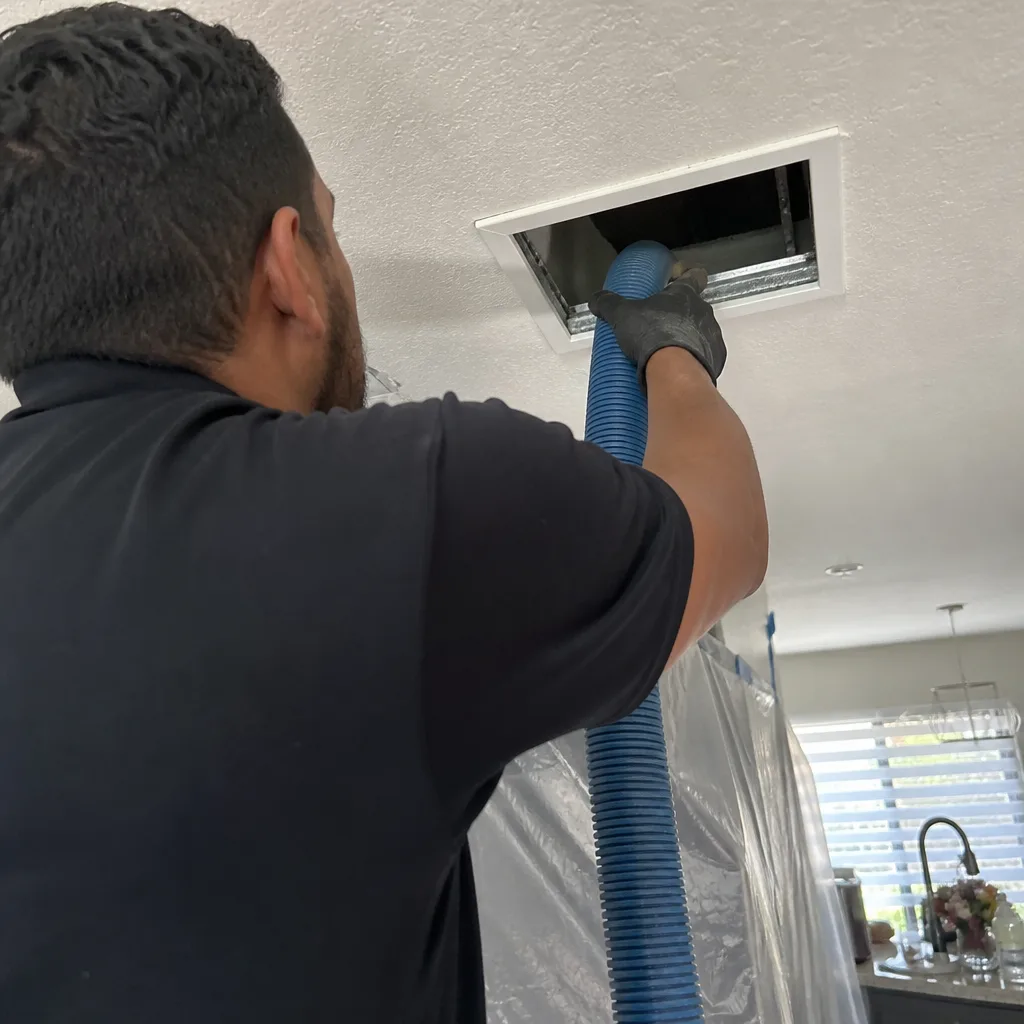
Ask for before-and-after photos of the duct interior. Any legitimate professional duct cleaning company in Orlando will run a camera into the main trunk and several branch runs before the work starts and after it finishes. You should see visible difference. We also photograph the areas where the crew worked inside the home, including the floor protection and the final clean-up, before the team leaves. If a company cannot show you before-and-after duct photos, ask why. Call (321) 204-8194 and we’ll show you exactly what our camera sees.
Most Orlando homes benefit from a professional air duct cleaning every 3 to 5 years, depending on occupant load and home age. Homes with multiple pets, young children, or allergy-sensitive family members will fall toward the 3-year mark. Homes without pets and with good filter discipline can extend toward 5 years. Between professional visits, the monthly DIY maintenance tasks in this guide will keep the visible surfaces clean and reduce the volume of new debris entering the system. For seasonal timing, see our Seasonal Air Duct Cleaning Care for Orlando: Year-Round Homeowner’s Guide. Call (321) 204-8194 if you’re unsure where your home falls.
Yes, mold can and does grow inside air ducts in Orlando. The combination of 55-degree air moving through ducts in a 130-degree attic space creates condensation on the interior duct surface during summer months. That moisture combines with organic debris, and mold spores settle and colonize. This is a physical process driven by climate, not a failure of the home. The most common location is the mid-span of flex duct runs, which is exactly the area DIY tools cannot reach. Professional negative-pressure cleaning with agitation reaches these sections. If you suspect mold, call (321) 204-8194 and we’ll inspect before recommending anything.
The Bottom Line
DIY air duct cleaning in Orlando has a real but limited role. You can handle the surface: registers, grilles, return covers, accessible flex duct ends, and filter replacement. That work is honest and useful when done correctly. What you cannot handle is the sustained negative-pressure extraction required to remove compacted, humidity-driven buildup and biological films from the deeper duct system, which is the part that matters most for long-term air quality in a Florida home. Use the decision framework in this guide: home age, time since last professional clean, occupant sensitivity, and visible contamination level. If those factors point toward professional service, call (321) 204-8194 for a written quote before any work begins. If they don’t, maintain what you can reach, and know you’ll need a professional eventually. The ducts in an Orlando home simply accumulate more than dry-climate ducts do, and honest advice means telling you that directly.
Written by Paul Adeyemi, Owner at Mortons Air Duct Orlando, serving Orlando since 2005.
See the difference
 Before
 After
After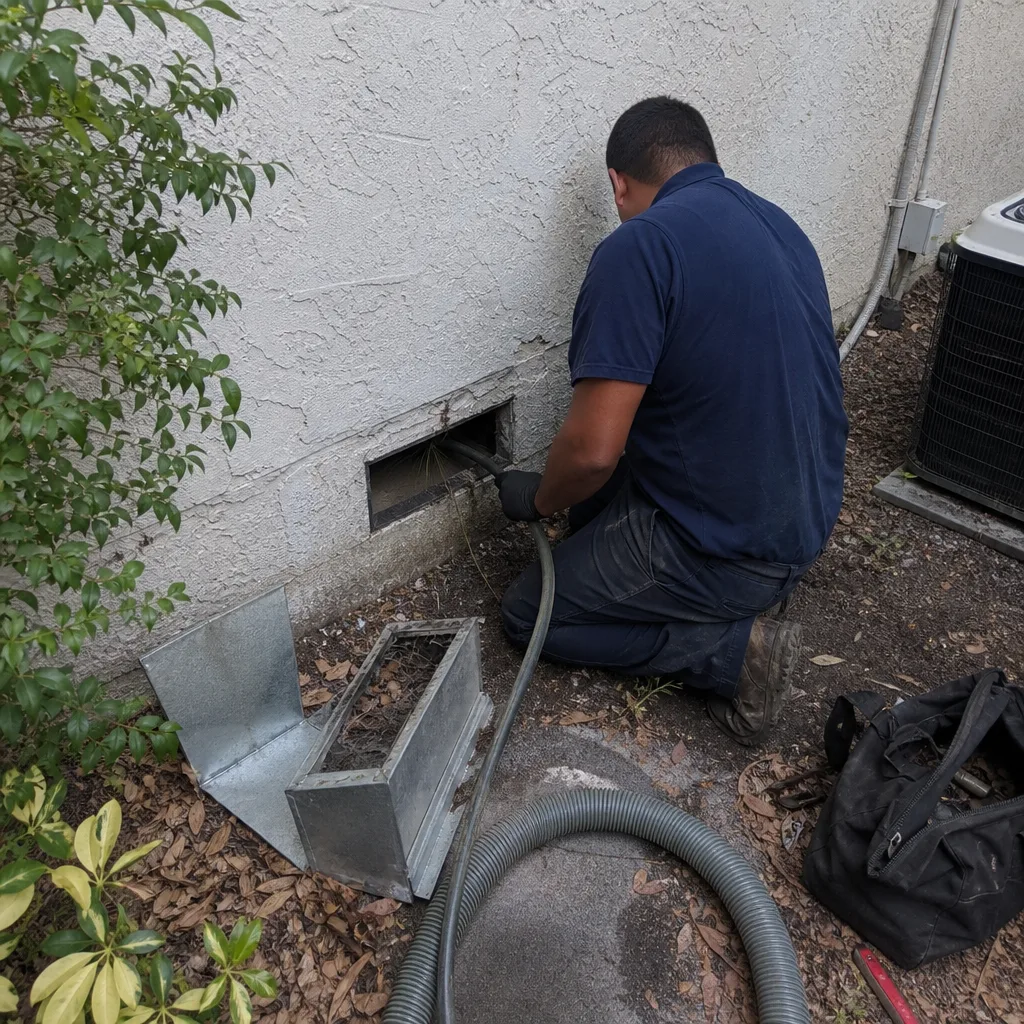 Before
 After
After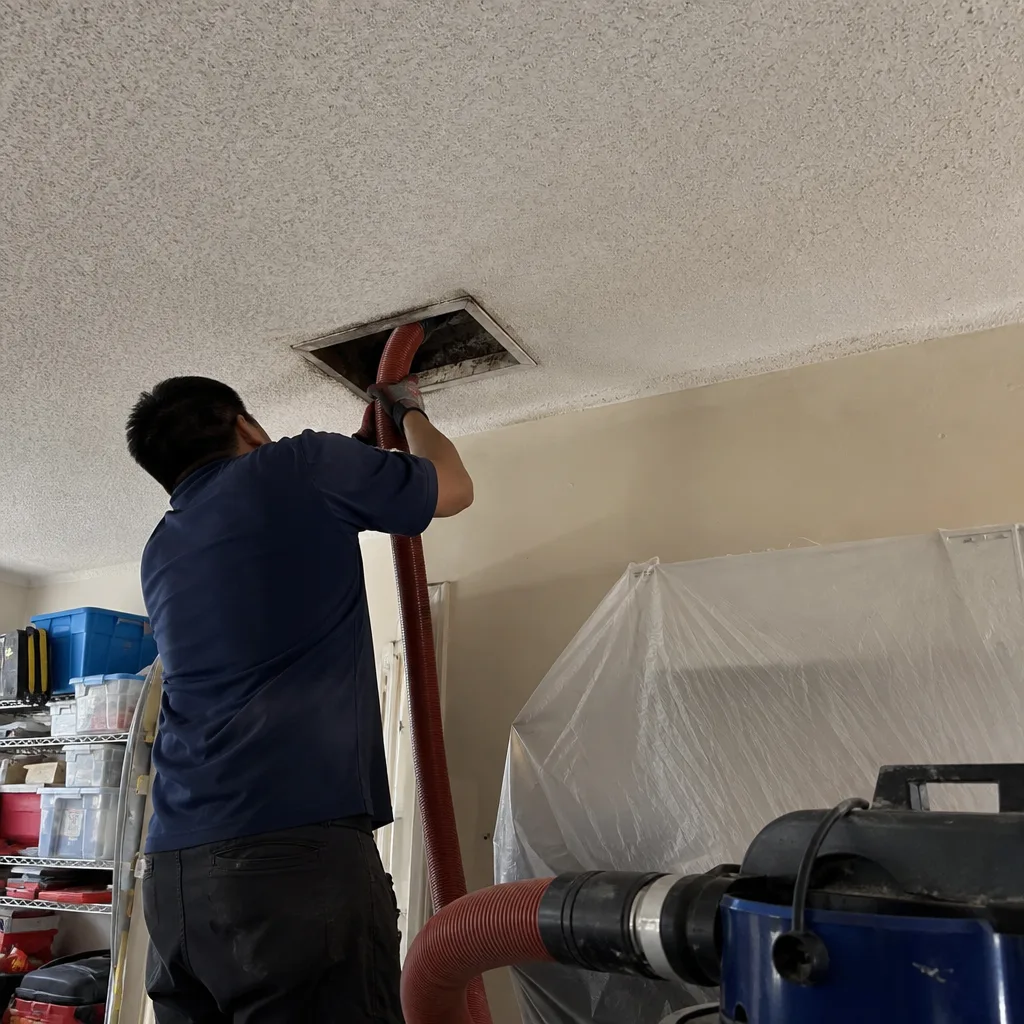 Before
 After
After