
Last updated October 15, 2026
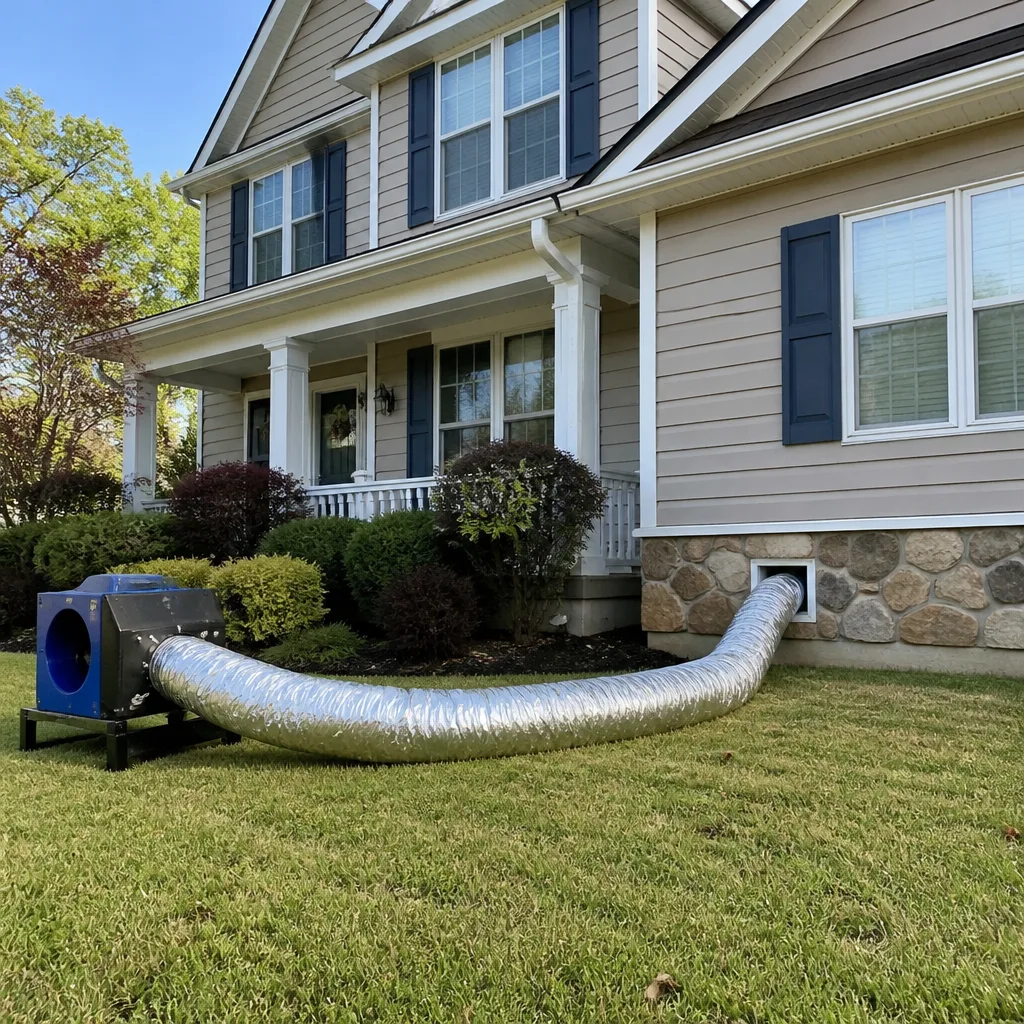 Whole-home duct cleaning
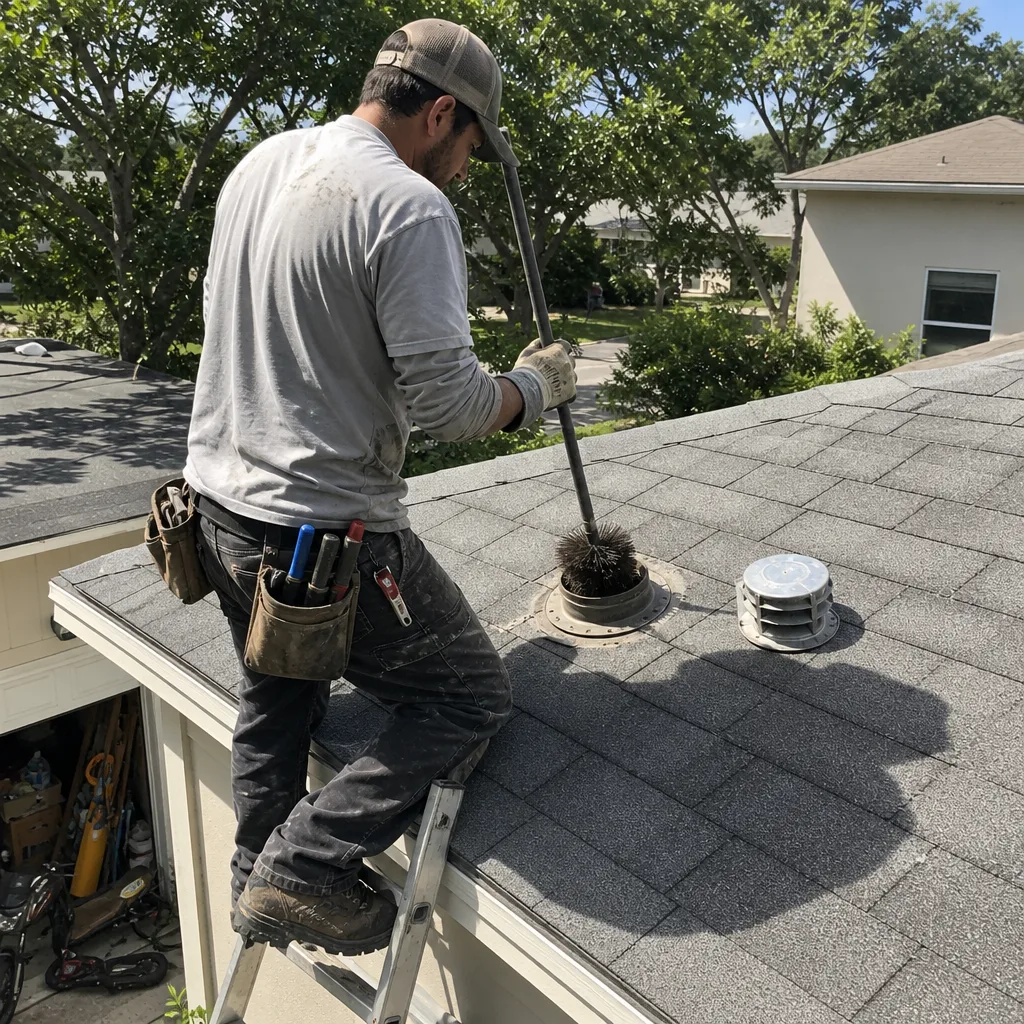
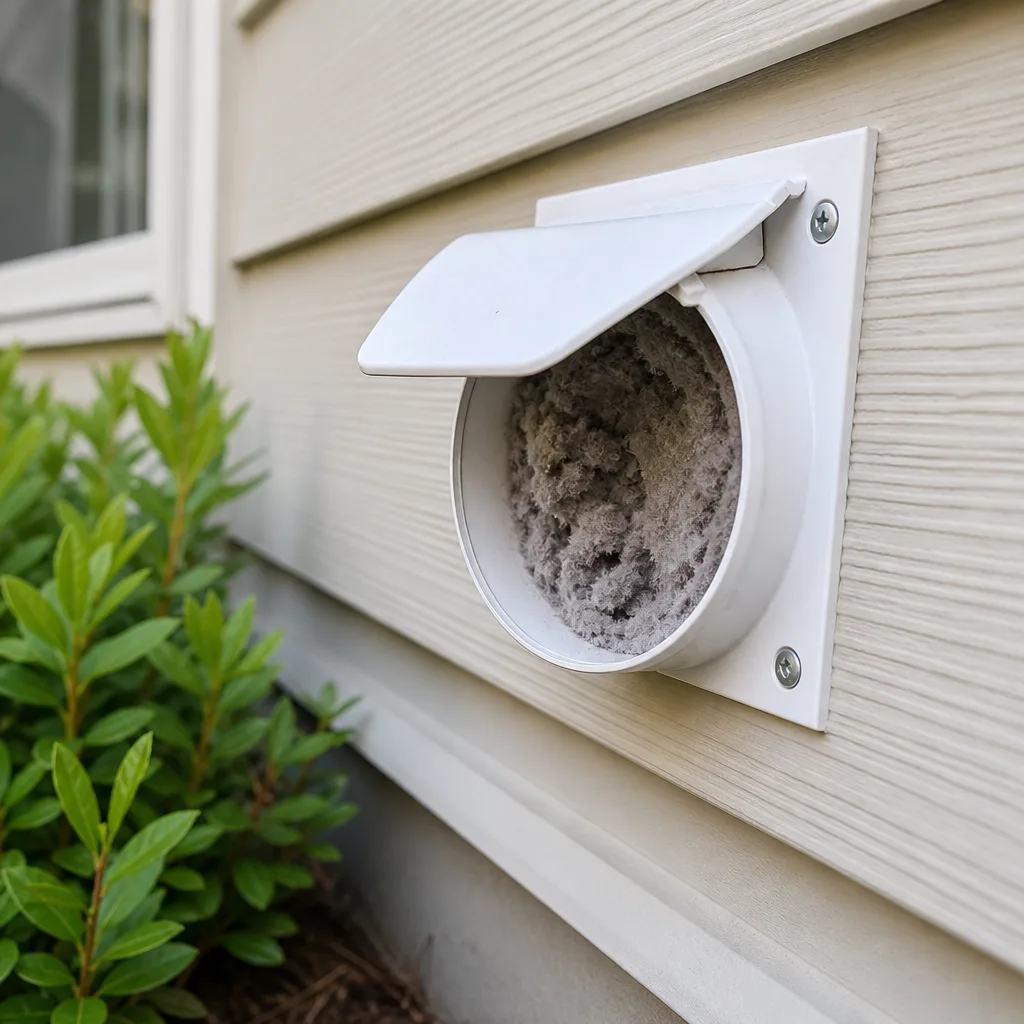 Dryer vent cleaning
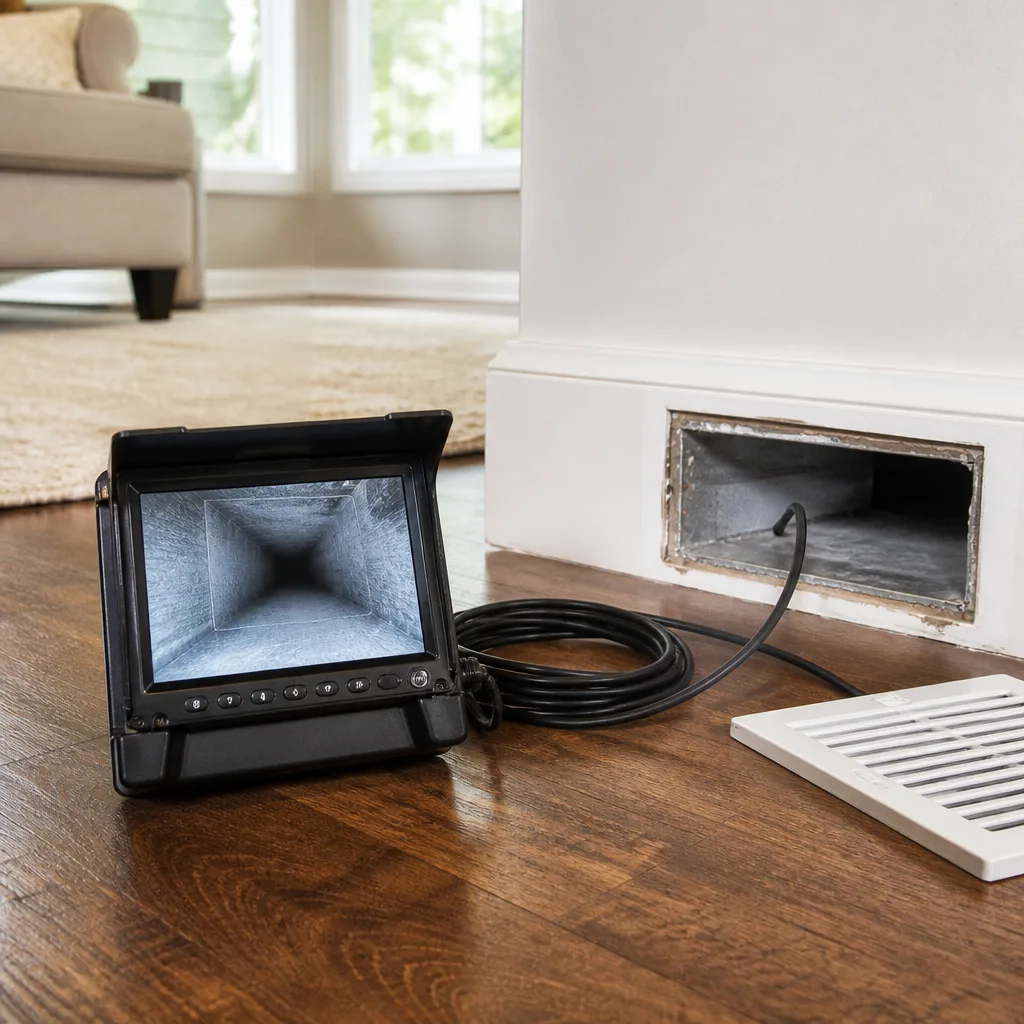 Camera inspection
 Sanitizing & deodorizing
Whole-system duct and dryer vent check with before-and-after photos - you see exactly what came out of your vents
That "$99 whole-house special" is a bait ad - the real number appears once they are in your hallway, or the "clean" is a shop-vac at the register. We photograph the inside of your ducts before and after instead.
The Complete Guide to Air Duct Cleaning in Orlando
Most air duct guides were written for Chicago or Denver. They describe basements, furnaces, and snow-country filtration. Orlando homes sit at 70 – 90% humidity for half the year, and that changes almost everything about what grows in your ducts and how often they need attention. This guide walks through how Orlando’s climate shapes duct contamination, what our Air Duct Cleaning services actually involve, how much it costs here, and how to know the job was done right. You’ll also learn what a legitimate post-cleaning report looks like and how to spot a “blow-and-go” visit before you pay for one.
Styles & brands we work with
Quick Answer
Air duct cleaning in Orlando typically costs between $350 and $800 for a full system, depending on home size, number of returns, and whether the dryer vent is included. In Orlando’s humidity, ductwork collects mold spores, palmetto bug debris, and pet dander faster than in drier climates, which means most homes benefit from a professional source-removal cleaning every 3 to 5 years, and more often if you have shedding pets or recent construction. A legitimate Orlando duct cleaning uses negative-air equipment and agitation tools, not a shop vac attached to a vent.
Table of Contents
- Why Orlando Humidity Changes the Duct Cleaning Conversation
- What Actually Accumulates in Orlando Ductwork
- Source-Removal Cleaning vs. “Blow-and-Go”: What the Difference Looks Like
- How Often Should You Clean Your Ducts in Orlando?
- How Much Does Air Duct Cleaning Cost in Orlando?
- What a Legitimate Post-Cleaning Report Shows
- What a 365-Day Promise Actually Means in Practice
- Common Mistakes Orlando Homeowners Make
Why Orlando Humidity Changes the Duct Cleaning Conversation
National duct cleaning advice assumes a baseline of 30 – 50% indoor relative humidity. Orlando homes operate far outside that range. From May through October, outdoor humidity sits between 70% and 90%, and your air conditioner pulls that moisture indoors every time it cycles. Inside ductwork, conditions are cooler and damper than the rest of the house. That’s the exact environment mold needs to colonize.
What does this mean in practice? A duct system in Orlando that goes uncleaned will show visible dust accumulation and potential microbial growth years faster than an identical system in, say, Denver or Phoenix. We see this in almost every pre-cleaning inspection we do across metro Orlando: supply vents with a fine, slightly sticky film that never appears in drier regions. That film is dust bound together by moisture. It doesn’t blow off with a quick vacuum pass. It requires agitation and extraction.
There’s also the wet-season/dry-season cycle. In winter, humidity dips, duct interiors dry out, and accumulated debris loosens and recirculates into living spaces. Families notice that “dusty” smell when the heat first kicks on in December or January. That’s not the system breaking. That’s six months of wet-season accumulation finally drying and becoming airborne.
For a deeper look at how our team handles Orlando’s specific conditions, see our Air Duct Cleaning in Orlando page.
Duct Sweating and Slab Foundations
Many Orlando homes are built on concrete slab foundations. That design choice pushes supply ductwork into the attic or into chases that run through hot, unconditioned spaces. When cooled air moves through ductwork surrounded by warm, humid air, condensation forms on the duct exterior. Over time, that moisture attracts dust and creates a film on the outside of the ducts. Inside, temperature swings cause the duct lining to absorb and release moisture repeatedly.
What does that mean for you? Homes with attic duct runs in Orlando often show higher levels of fine particulate accumulation inside the ducts than homes with basement installations, which barely exist in Central Florida. It also means that the visible vents in your ceiling or wall are often cooler than the room air around them, causing condensation rings around vent openings. If you’ve noticed faint water marks or darkened edges around ceiling registers in Orlando, that’s duct sweating, and it signals that the interior of those ducts is likely holding more moisture than it should.
Cleaning alone can’t fix duct sweating, but it removes the organic material that moisture binds to. That’s why we always explain the difference between cleaning and remediating: we clean, and we tell you honestly when the issue is insulation or design, not dirt.
What Actually Accumulates in Orlando Ductwork
People ask us all the time: “What’s actually in there?” The honest answer varies by home, but in Orlando, four categories dominate.
- Dust and fiberglass particles: Every home sheds dust. Ducts in newer Orlando construction also collect drywall dust, insulation fibers, and paint overspray from the build. That construction debris never leaves unless removed.
- Mold and microbial growth: The damp duct interior we described above gives mold spores a place to settle and reproduce. You won’t always see it from the vent opening. It grows on the interior surfaces of trunk lines and in the first few feet of flex duct.
- Palmetto bug debris: Central Florida’s famous palmetto bugs, along with regular roaches, enter ductwork through gaps in duct joints and chase penetrations. What they leave behind, including egg casings and shed exoskeletons, becomes an allergen source. This is a Florida-specific problem that generic national guides never mention.
- Pet dander and hair: Orlando homes with indoor pets generate significant dander loads. Dander is smaller and lighter than human skin cells, which means it stays suspended longer and travels further into the duct system. It then bonds with humidity-formed moisture and sticks to duct walls.
One thing we’ve learned from working in Orlando since 2005: the mixture of these contaminants is worse in central returns. If your home has one large return in a hallway, it’s pulling from every room and concentrating everything in that single trunk line before it reaches the filter. Homes with multiple returns distribute the load more evenly but sometimes hide buildup in less-used return lines.
We start every visit with a home walkthrough at Mortons Air Duct Orlando so we can identify return locations and understand the home’s airflow before touching any equipment.
Source-Removal Cleaning vs. “Blow-and-Go”: What the Difference Looks Like
The term “air duct cleaning” covers a wide range of practices, and in Orlando, you’ll encounter everything from legitimate source-removal companies to one-man operations with a shop vac and a pole. Knowing the difference protects your money and your home.
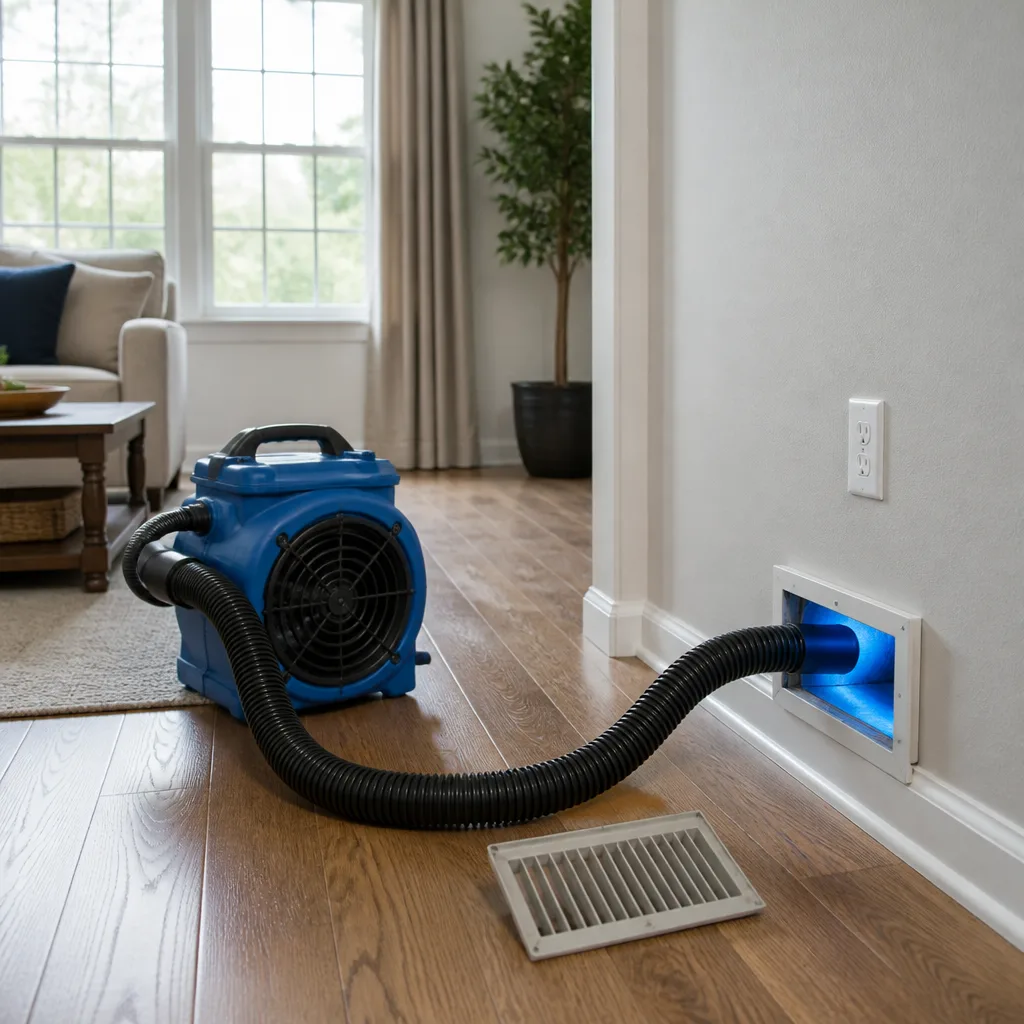
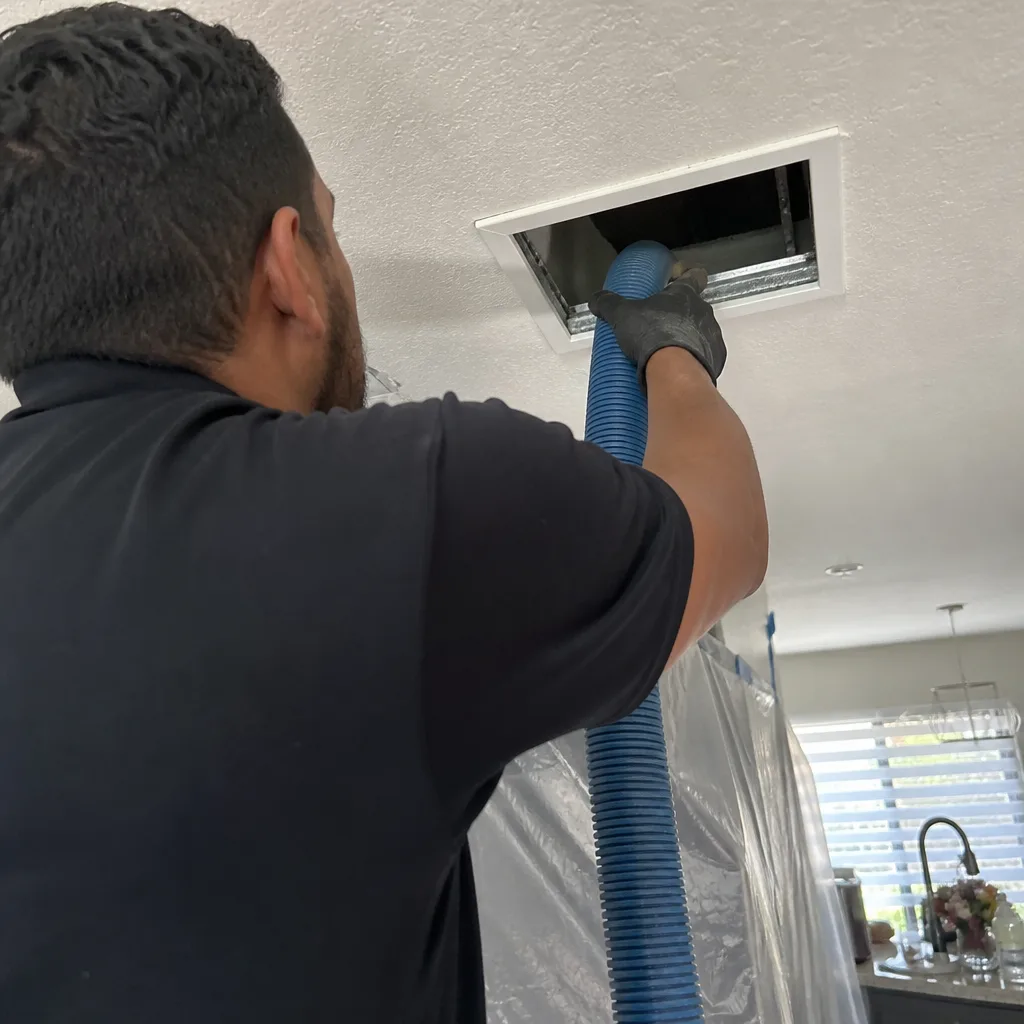
Source-removal cleaning is the standard professional approach. It means the technician creates negative pressure in the duct system using a high-powered vacuum connected at the plenum or return. That vacuum pulls air through the ducts continuously while agitation tools, compressed air whips, rotating brushes, or pneumatic devices, dislodge debris from interior surfaces. The loosened material is drawn into the vacuum’s filtration system, not blown around the house.
Equipment matters here. Brands like Rotobrush and Nikro manufacture the rotating brush and negative-air systems that make source removal effective. These aren’t entry-level tools. They’re designed to reach deep into trunk lines and branch runs. A company running professional-grade equipment from these brands is making a serious investment in results, not just showing up with a rented carpet cleaner.
“Blow-and-go” is the opposite. A technician opens a few vent covers, shoves a vacuum hose into the nearest section, and spends 45 minutes moving a brush around the first few feet of visible duct. No negative pressure. No systematic agitation. No camera verification. The ducts look cleaner at the opening and are untouched everywhere else. The telltale sign: the whole job takes under two hours and costs under $200. In Orlando, where humidity-bound debris requires real agitation, blow-and-go visits leave behind exactly the material you paid to remove.
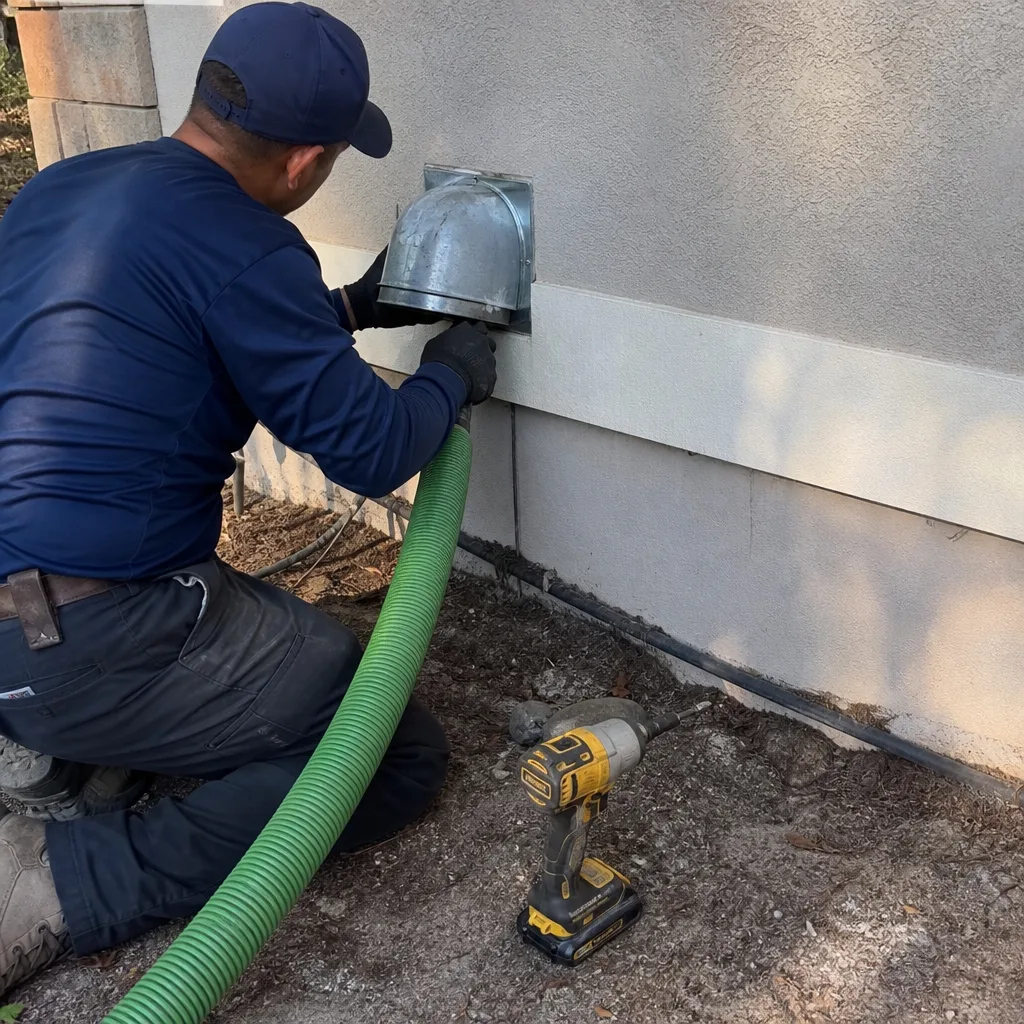
We use negative-air systems and mechanical agitation on every duct cleaning we perform. We also document what we find and what we remove. That’s part of our Dryer Vent Cleaning in Orlando standards too, where clogs and buildup are even easier to hide from a homeowner.
How Often Should You Clean Your Ducts in Orlando?
The national guidance says every 3 to 5 years. Orlando’s climate pushes most homes toward the shorter end of that range, and sometimes outside it altogether. Here are the situations we see that justify more frequent cleaning in Central Florida.
- You have indoor pets that shed. Dander and hair accumulate rapidly in humid duct interiors. Homes with two or more shedding animals often benefit from a cleaning every 2 to 3 years.
- You’ve completed a renovation or major repair. Drywall dust, sawdust, and insulation fibers get pulled into returns during construction. Even a single room remodel can introduce enough debris to warrant a full cleaning.
- You bought a newly constructed home. Builders don’t clean ducts before occupancy. The first year in a new Orlando construction home often means circulating drywall dust and paint particulates.
- You notice visible dust accumulation around supply vents within days of cleaning. That’s often a sign of duct leakage pulling attic air into the system, not a dirty house. A professional can identify the source during the inspection.
- Someone in the home has documented allergies or respiratory sensitivity. Removing accumulated allergens provides a cleaner starting point, even if it’s not a cure.
- You’ve seen evidence of pests. Palmetto bugs and rodents leave waste in ductwork that should be removed, not left to circulate.
If none of these apply and your home is a two-person household with no pets, no recent construction, and a good filtration setup, 5 years is a reasonable interval. The key word is reasonable. No honest Orlando company will insist you need an annual cleaning. That’s a red flag.
How Much Does Air Duct Cleaning Cost in Orlando?
Let’s talk dollars, because you should know before you call. Orlando air duct cleaning for a typical single-family home sits between $350 and $800. Smaller condos and apartments may come in slightly lower. Larger homes with multiple air handlers or long attic runs can exceed that range. The price should be quoted per system, not per vent.
Here’s a breakdown of typical price factors for the Orlando market:
- Number of systems: A single air handler serving a 2,000-square-foot home is one system. A two-story with separate upstairs and downstairs units is two systems. Price should reflect each system cleaned.
- Number of returns: More return openings mean more access points to clean and more time on the job. A central-return home is often less expensive than one with returns in every bedroom.
- Accessibility: Attic ductwork in a Florida summer is hot work. Tight attics, low clearances, and long flex runs add time.
- Dryer vent add-on: If the dryer vent is cleaned at the same time, expect that to be priced separately or bundled. It’s a different system with different tools.
- Sanitizing treatment: Some companies offer an antimicrobial fogging as an add-on. This is optional and should be quoted separately so you can decline it.
A written price before work starts is non-negotiable. At Mortons Air Duct Orlando, every visit comes with a written quote up front, and the price you approve is the price on the invoice. No per-vent pricing games, no surprise add-ons once the equipment is in your driveway. If a company can’t give you a firm all-in price over the phone or before the work begins, treat that as a signal.
Why do some quotes come in at $99? Because the company plans to make it up once they’re inside. The low price gets the van parked in your driveway, and then the upselling starts: “Your coils need cleaning,” “You have mold, that’s another $400.” Sometimes those claims are true and sometimes they’re invented, but you’re now negotiating from your hallway with equipment running. A $400 – $650 whole-system price is honest for Orlando’s housing stock and climate. A $99 price is a down payment on a sales pitch.
Call (321) 204-8194 for an exact quote on your Orlando home. Estimates are free, and the price you’re quoted is the price you’ll pay.
What a Legitimate Post-Cleaning Report Shows
When the job is done, you should receive documentation. Not a receipt that says “ducted cleaned.” A legitimate report shows what was cleaned and what it looked like before and after.
Here’s what to look for:
- Before-and-after photos. At minimum, you should see images of the main trunk line and at least a few branch runs. Before photos show the accumulation. After photos show bare interior surfaces. If the company has no camera or doesn’t offer photos, they can’t prove they did what they claimed.
- Equipment used. The report should name the system: negative-air vacuum, rotating brush, compressed air agitation. “Vacuum and brushes” is vague. “Nikro negative-air system with rotary agitation” tells you real equipment entered your ducts.
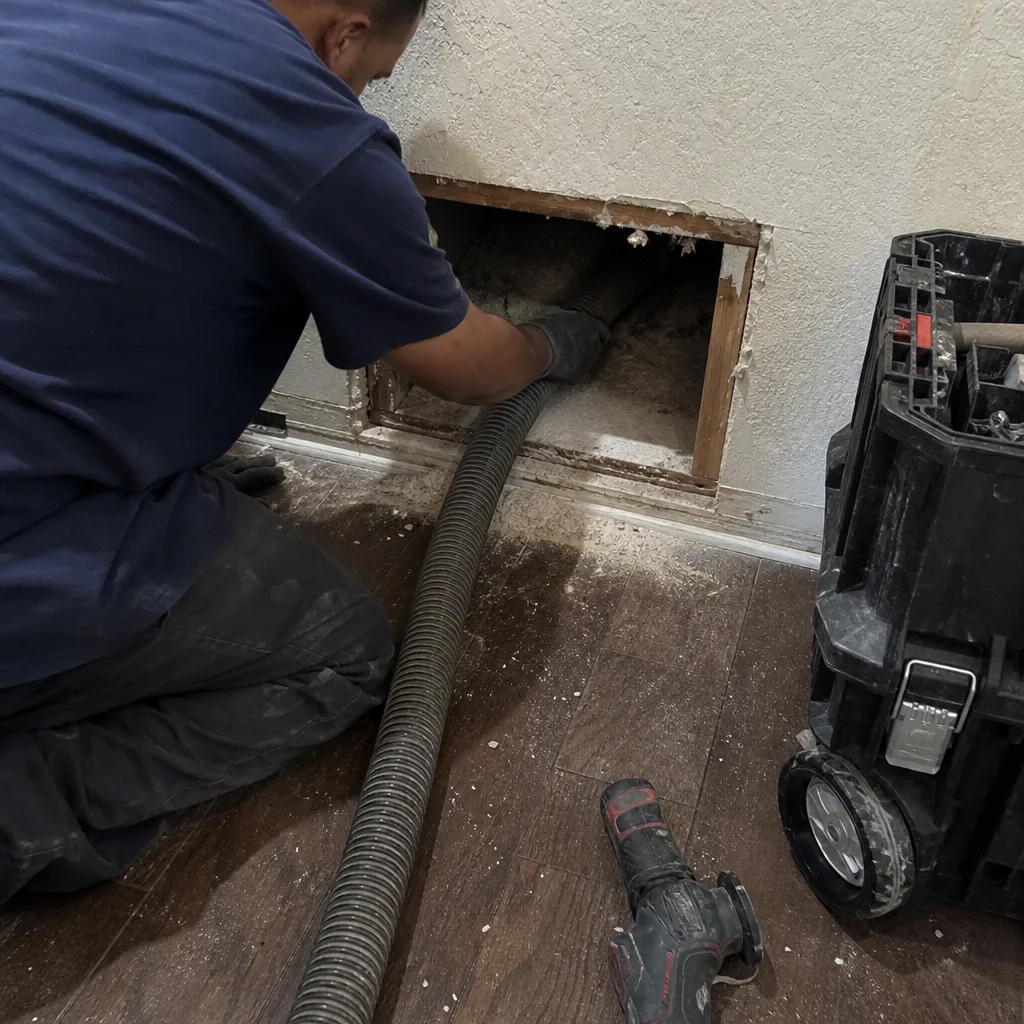
- Access points. A proper cleaning requires cutting access ports if no suitable openings exist. The report should note where ports were cut and confirm they were sealed afterward.
- Condition notes. Did the technician see moisture, mold, duct leaks, disconnected sections, or pest evidence? That should be written down, even if it’s outside the scope of the cleaning.
- Filter condition. A note on whether the existing filter was sufficient and a recommendation for future replacement is a sign of a careful technician.
We photograph every job before and after, and we send the images with the final report. You’ll see the ducts as we saw them. No vague assurances, just documentation.
What a 365-Day Promise Actually Means in Practice
Warranties in the air duct world range from nonexistent to “call us if you think there’s a problem, and we’ll consider it.” A 365-Day Done Right Promise means something specific: if the cleaning wasn’t done right, the company returns and makes it right. No new invoice.
What triggers a return visit under a promise like this? Here’s what we’ve seen in Orlando:
- Visible dust return within weeks: If you cleaned the house and the ducts were properly cleaned, new accumulation around supply vents shouldn’t appear in a month. If it does, something was missed.
- Persistent odor from the ducts: If the smell that prompted the cleaning returns quickly, the source may be in a section that was skipped or inaccessible.
- Excessive debris still visible at vent openings: You shouldn’t be able to shine a flashlight into a supply vent and see heavy accumulation immediately after a cleaning.
What homeowners should document: photos of vent openings after the cleaning, notes on any unusual smells or sounds, and the date the work was performed. If you call within the year with a real concern about the work, a company with a genuine promise answers.
Morton’s Air Duct Orlando backs every job with a 365-Day Done Right Promise. It’s part of the Cedarwell Care Promise that applies to every visit. If the job isn’t done right, we make it right. Full stop. That’s what the promise means, and it’s stamped on every job we do.
Common Mistakes Orlando Homeowners Make
- Hiring on price alone in a humid market. The $99 duct cleaning deal that circulates through Orlando coupon mailers is a door-opener. The final invoice almost always lands higher, often with scare tactics about mold. A flat, written price for the whole system is the honest way to buy this service.
- Assuming the AC filter protects the ducts. Your filter sits in front of the blower, not inside the supply ducts. It removes some airborne particles before they enter the unit, but ducts accumulate dust from many sources, including construction debris, pet dander that bypasses the filter through return-side gaps, and humidity-bound particulate. The filter reduces some accumulation. It doesn’t prevent it.
- Cleaning ducts without addressing moisture. If your ducts sweat because of poor attic insulation or oversized AC equipment, cleaning removes the existing debris but doesn’t stop new accumulation from starting. A good Orlando technician will point this out during the walkthrough and tell you what a fix involves.
- Ignoring the dryer vent while cleaning the ducts. Dryer vents are a fire risk when clogged and they’re one of the most neglected parts of the home. A cleaning visit that skips the dryer vent, even for an additional fee, is a missed step. Ask about it.
- Not verifying what equipment will be used. “Professional-grade equipment” is easy to say. Specific brands are harder to fake. Ask what system the company runs. If they can’t name it, they’re likely using consumer-grade tools on a professional price tag.
- Accepting “no photos available.” A camera inspection takes minutes. If a company can’t show you the inside of your own ducts before or after, assume they didn’t look.
When to Call a Professional
You should call an air duct professional in Orlando when you notice dust accumulation around supply vents that returns quickly after cleaning, when you smell a musty or stale odor from the registers that doesn’t improve after changing the AC filter, or when you’ve completed a renovation and want the construction debris out of your system. Visible mold around vent openings, black streaks near ceiling registers, and evidence of pests in the ductwork all justify a professional inspection and cleaning. If someone in the home has dust allergies and you’ve already addressed bedding, flooring, and the AC filter, duct cleaning is often the next logical step.
Mortons Air Duct Orlando offers free estimates in Orlando. Call (321) 204-8194 to schedule an inspection and receive a written quote before any work begins.
Frequently Asked Questions
A full air duct cleaning in Orlando typically costs between $350 and $800 for a single-family home, with smaller condos sometimes coming in under that range and larger multi-system homes exceeding it. The price should be quoted per system, not per vent, and it should be provided in writing before any work starts. If you’re getting a quote far below $300, expect aggressive upselling once the technician arrives. Call (321) 204-8194 for a free, exact quote on your home.
Low Orlando duct cleaning quotes, usually under $200, come from companies that plan to recover the difference through add-on charges once they’re inside your home. They may claim you need coil cleaning, antimicrobial treatment, or additional work that conveniently totals several hundred dollars more. A legitimate company gives you a written whole-system price before equipment leaves the van, so you know the full cost upfront.
Ask for before-and-after photos from inside the ducts. A legitimate Orlando duct cleaning company runs a camera before starting and after finishing, and the after photos should show bare metal or clean flex duct surfaces where debris was previously visible. Also check that the report names the equipment used and notes where access ports were cut and sealed. At Morton’s Air Duct Orlando, we photograph every job and send those images with your report.
In Orlando’s humid climate, most homes benefit from air duct cleaning every 3 to 5 years, with homes that have shedding pets, recent construction, or allergy-sensitive residents leaning toward every 2 to 3 years. Annual cleaning is not necessary for most households, and any company telling you it is should be viewed with skepticism. The right interval depends on what’s actually inside your ducts, which a camera inspection will reveal.
Air duct cleaning removes accumulated dust, pet dander, pollen, and particulate matter from the duct system, which can reduce the total allergen load circulating through your home. For Orlando residents with documented dust or pet allergies, a clean duct system is one part of a broader strategy that includes upgraded AC filtration and regular surface cleaning. It’s not a cure, but it removes a meaningful reservoir of irritants.
Yes, air duct cleaning is worth it in Orlando specifically because Florida’s humidity accelerates debris accumulation inside ductwork faster than in drier parts of the country. What might take a decade to build up in Denver can appear in three years here. For homes with kids, pets, or recent renovations, the return on a professional source-removal cleaning is cleaner air moving through the house and less dust settling on furniture.
The Bottom Line
Orlando’s humidity makes air duct cleaning a different conversation than it is in most of the country. Ducts here accumulate moisture-bound dust, mold spores, palmetto bug debris, and pet dander on a faster timeline. A legitimate cleaning uses source-removal methods with negative-air equipment and agitation tools from brands like Rotobrush and Nikro, comes with a written price before work starts, and provides photo documentation of the before and after. A 365-Day Done Right Promise means the company stands behind the work for a full year. If you’re ready for an honest assessment of your Orlando home’s ducts, call Mortons Air Duct Orlando at (321) 204-8194 for a free estimate.
Written by Paul Adeyemi, Owner at Mortons Air Duct Orlando, serving Orlando since 2005. Explore more guides & resources on keeping your home’s air clean.
See the difference
 Before
 After
After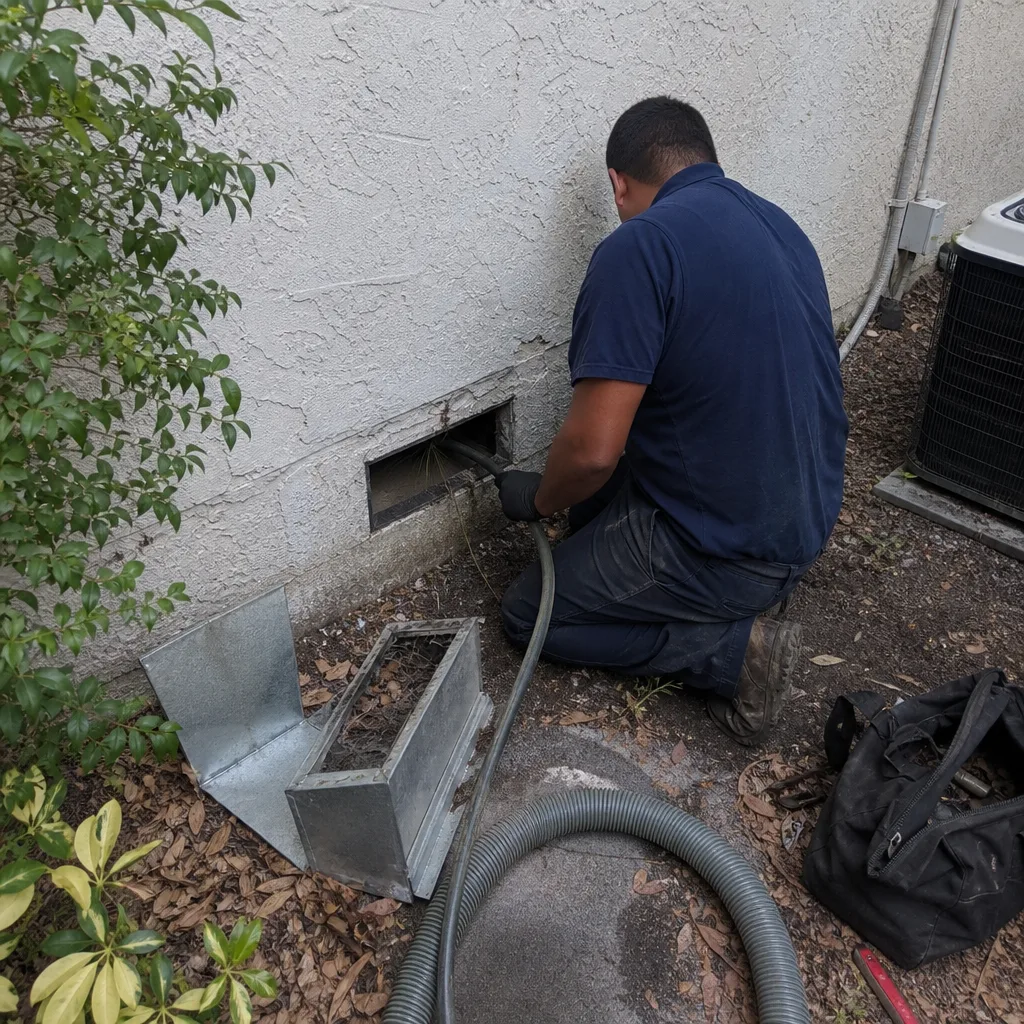 Before
 After
After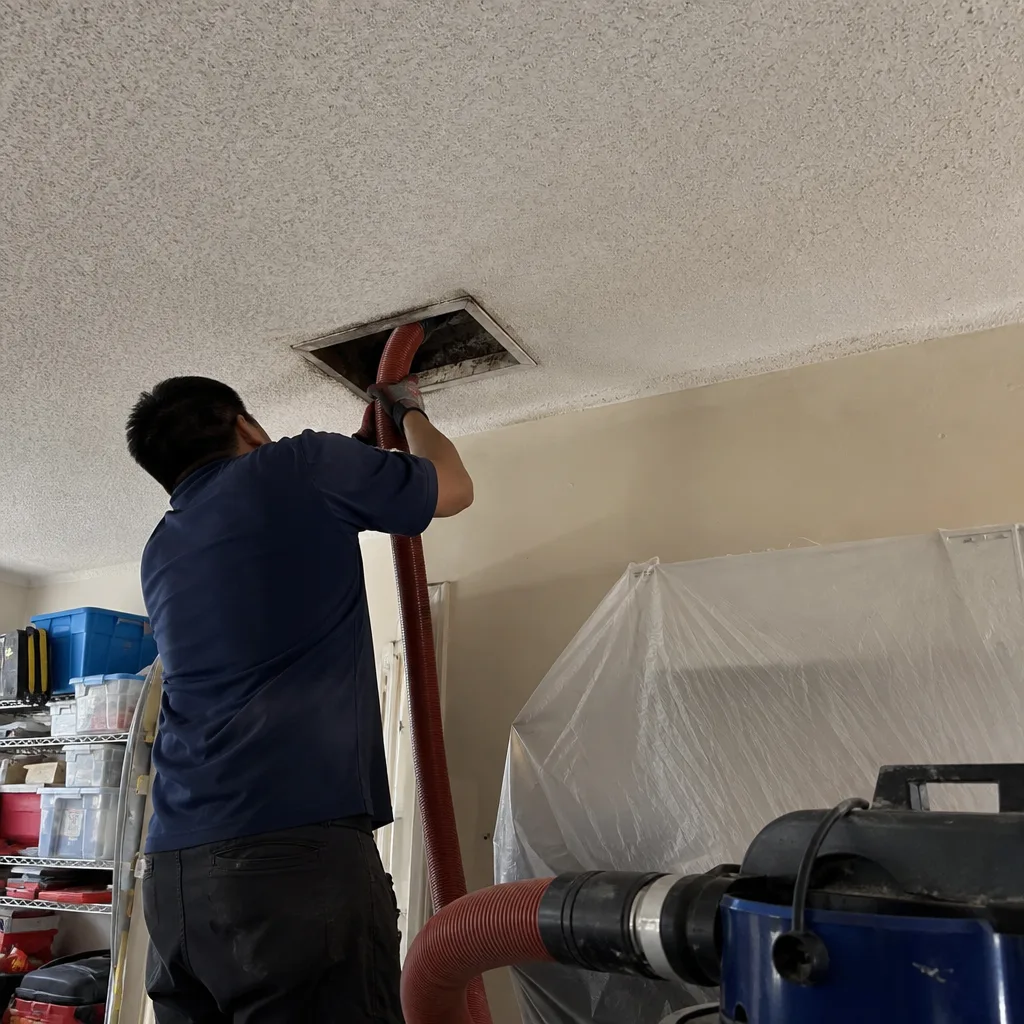 Before
 After
After