
Last updated October 15, 2026
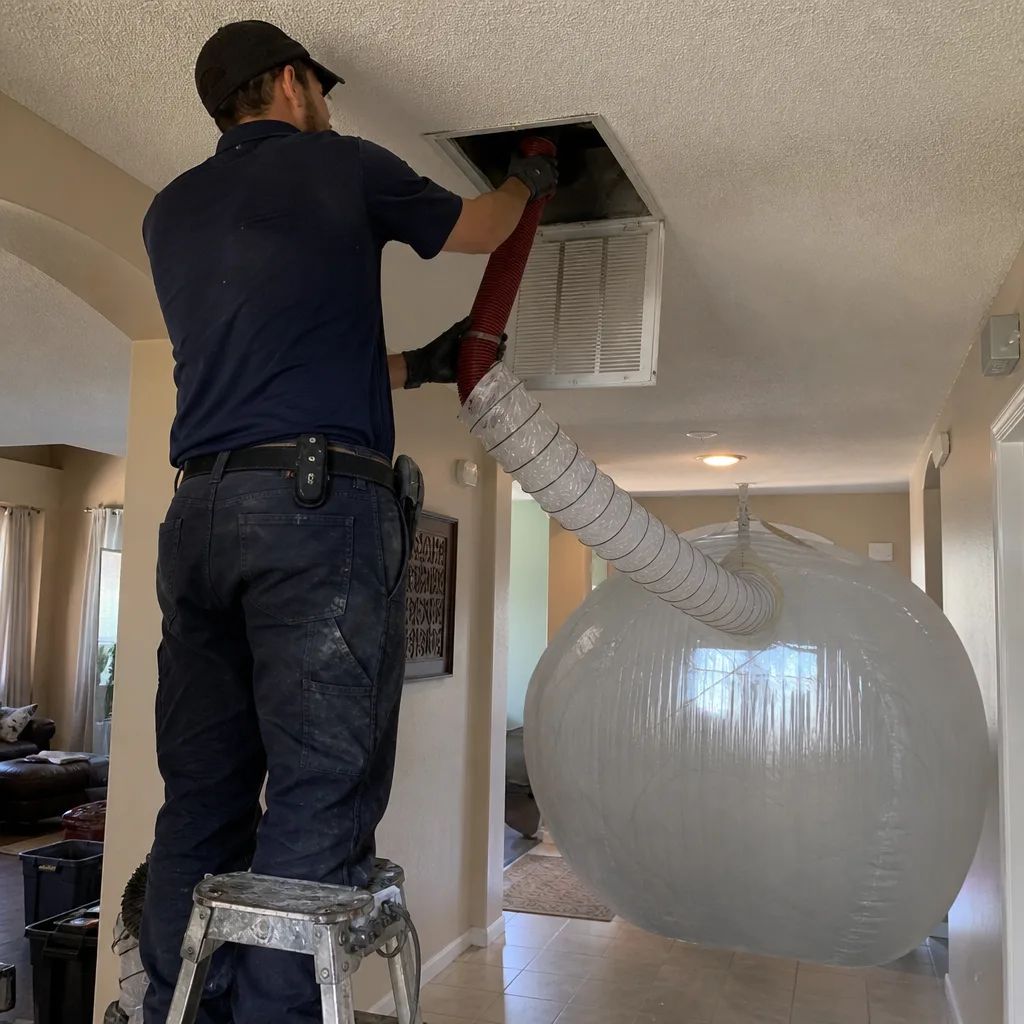
 Whole-home duct cleaning
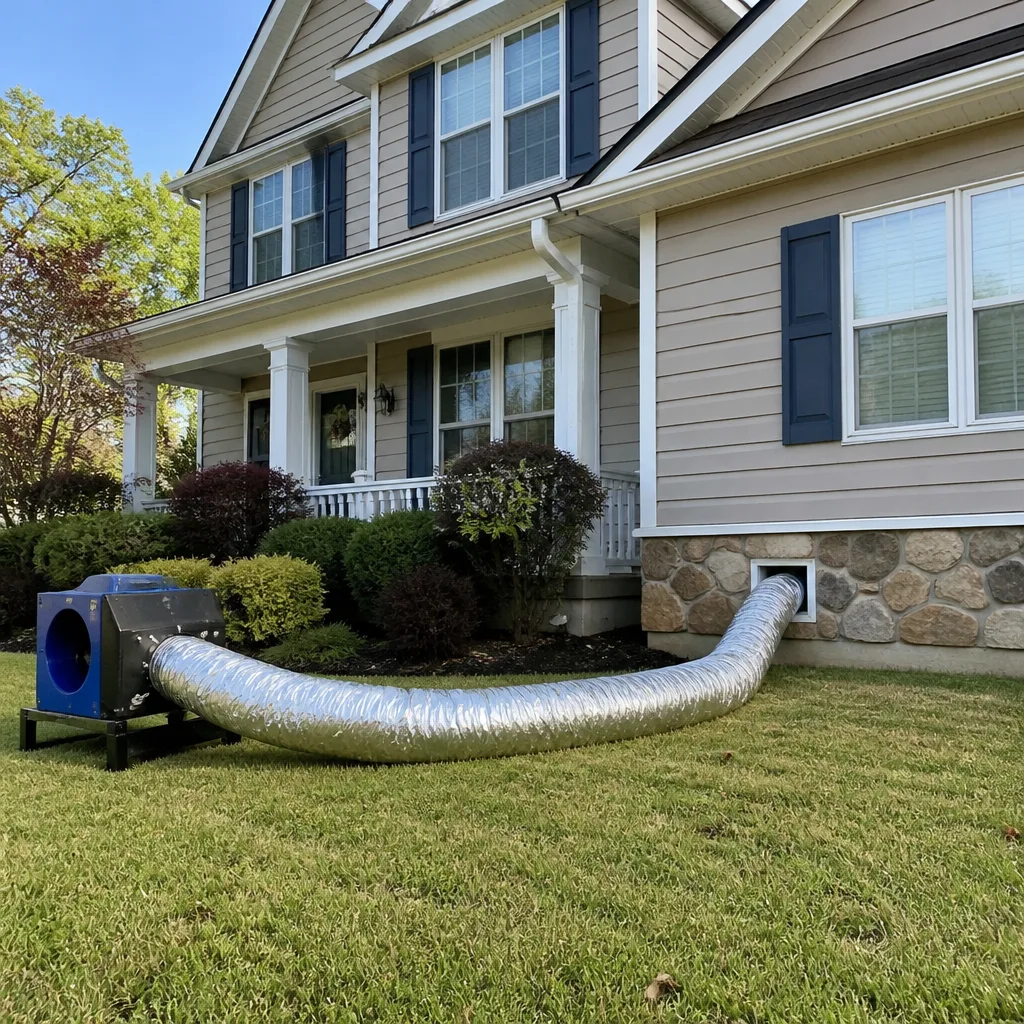
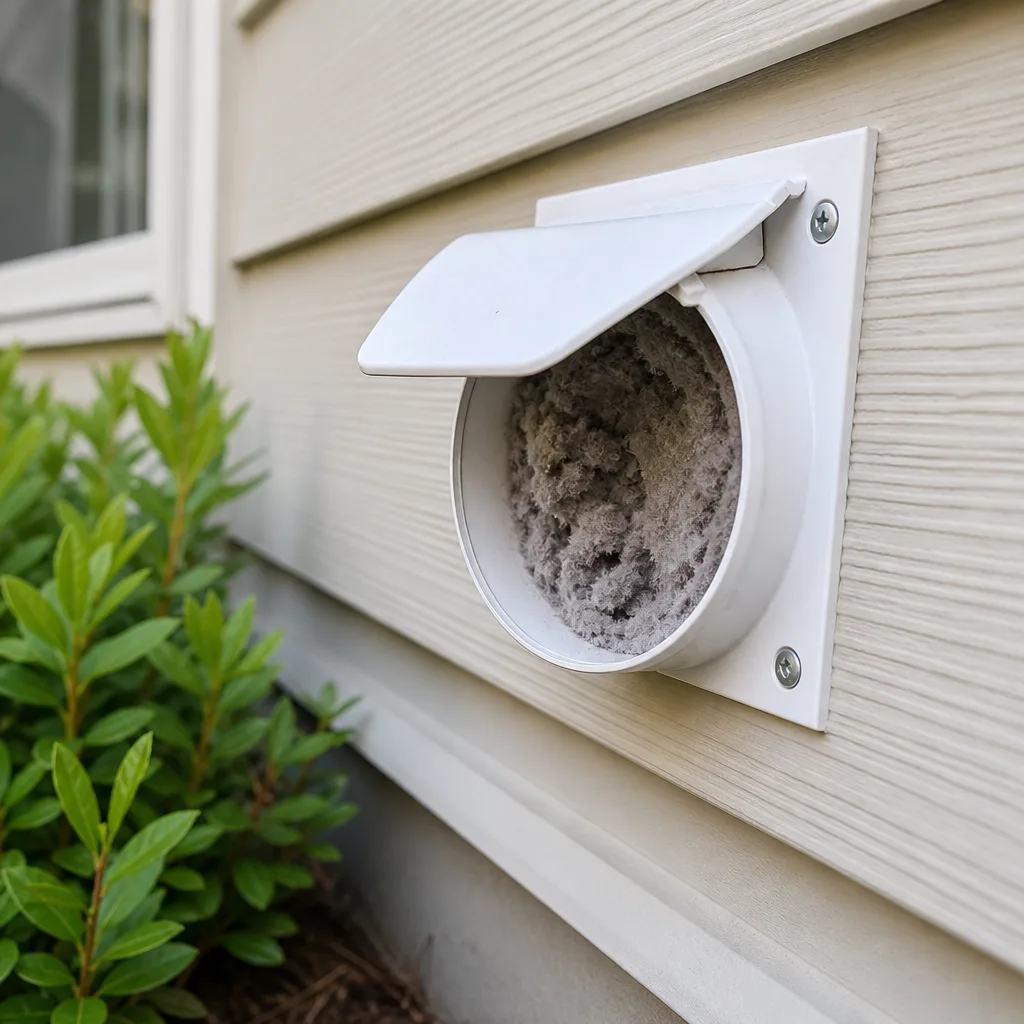 Dryer vent cleaning
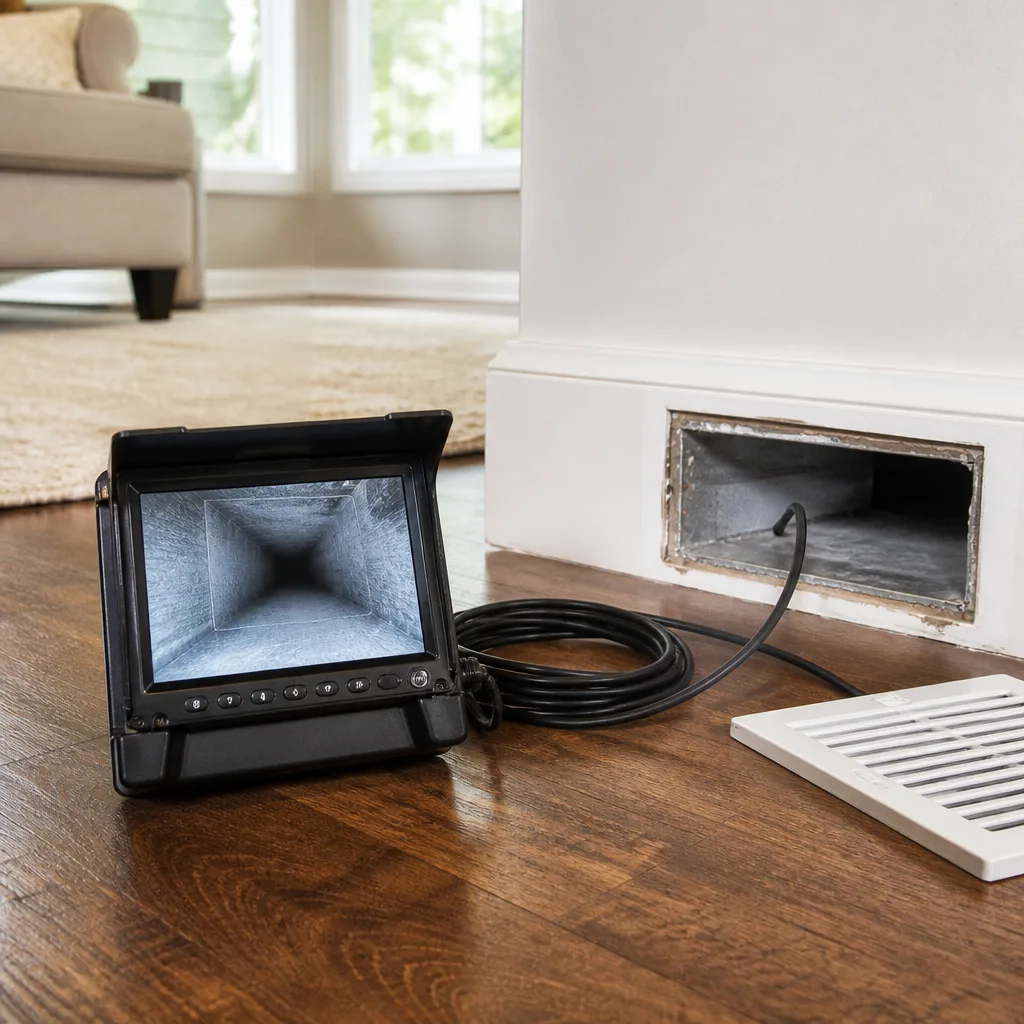 Camera inspection
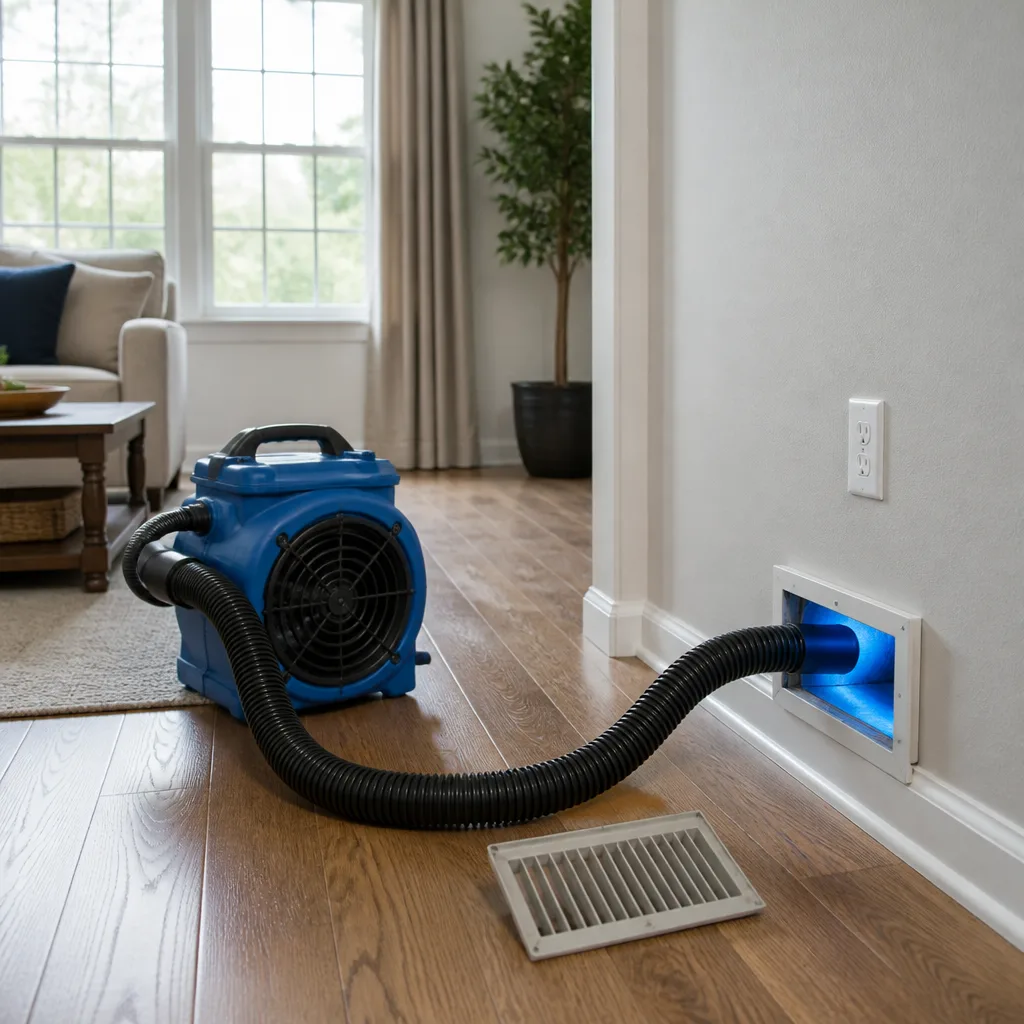 Sanitizing & deodorizing
Whole-system duct and dryer vent check with before-and-after photos - you see exactly what came out of your vents
That "$99 whole-house special" is a bait ad - the real number appears once they are in your hallway, or the "clean" is a shop-vac at the register. We photograph the inside of your ducts before and after instead.
Air Duct Cleaning Maintenance Checklist for Orlando Homeowners
The average Orlando homeowner replaces their air filter every 90 days. Homes with one dog and a toddler should be doing it every 30, and that single habit can double the life of a professional duct cleaning. Most maintenance guides stop there. They hand you a filter schedule and call it a day. This one goes further, because after 20 years of cleaning ducts across Orlando, we’ve learned that the gap between professional visits is where homes either stay clean or quietly collect the same dust, dander, and humidity-driven buildup that made them call us in the first place. By the time you finish this guide, you’ll have a working month-by-month plan built for Central Florida’s two-season climate, plus a simple logging habit that helps your next Air Duct Cleaning services technician spot patterns instead of just current conditions.
Quick Answer
An air duct cleaning maintenance checklist for Orlando homeowners should include monthly filter checks (every 30 days for homes with pets or children under 5), a 5-minute visual register inspection you can do without tools, seasonal dryer vent lint trap clearing, and a written log of humidity levels, odors, and dust return between professional cleanings. In Orlando’s wet June-to-September stretch, condensation inside ducts accelerates buildup, so filter discipline and register checks matter twice as much as they do in drier climates. Most Orlando homes benefit from professional air duct cleaning every 3 to 5 years, with homes that have multiple pets or allergy sufferers often needing service closer to every 3 years. For details on local requirements, see our guide to Air Duct Cleaning Permits, Codes & Inspections in FL: What You Need to Know.
Styles & brands we work with
Table of Contents
- The Monthly Checklist (5 Minutes, No Tools)
- Orlando’s Two-Season Reality: Wet Months vs. Dry Months
- Filter MERV Ratings for Orlando Homes with Pets and Kids
- How to Do a 5-Minute Visual Register Check
- The Dryer Vent Parallel: Why It Belongs on the Same Checklist
- What to Log Between Professional Visits
- Common Mistakes to Avoid
- When to Call a Professional
- Frequently Asked Questions
The Monthly Checklist (5 Minutes, No Tools)
Good duct maintenance is not a weekend project. It’s a five-minute habit that fits between unloading the dishwasher and walking the dog. The single most effective thing any Orlando homeowner can do is look at the air filter on the first weekend of every month. Not every three months. Every month. Here’s the full routine, in order:
- Check the air filter. Hold it up to a light. If you can’t see light through it, replace it. That’s the test, and it works for every filter type. In Orlando, where the AC runs 10 to 11 months a year, filters load up far faster than the national average.
- Look at two or three return grilles. Walk to wherever your returns are and look at the slats. Dust fur, dander, or a gray film means the filter has been underperforming or the return is pulling from a high-traffic area. Vacuum the grille face with a brush attachment.
- Spot-check one supply register per floor. Pick a different room each month. Run a white paper towel along the inside edge of the register. A light dust line is normal. A thick, dark, or damp line is not, and you should note it in your log.
- Smell the air coming from a vent on fan-only mode. If it smells musty, that’s usually condensation inside the duct or a dirty evaporator coil. One monthly sniff test can catch mold-friendly conditions before they spread.
- Clear the area around returns. Furniture, curtains, or pet beds pressed against a return restrict airflow and force the system to pull from other areas. This is a simple fix that costs nothing and improves system balance.
None of these steps require a screwdriver, a ladder, or any tools beyond your eyes and a paper towel. The point is consistency. Five minutes every month across twelve months is one hour a year, and that hour is what determines whether a professional cleaning lasts three years or needs redoing in eighteen months.
For a deeper look at what a full professional cleaning involves when it is time, see our guide to air duct cleaning in Orlando.
Orlando’s Two-Season Reality: Wet Months vs. Dry Months
Orlando does not have four seasons. It has two: the wet stretch from June through September, and the dry stretch from October through May. Any maintenance checklist built for a four-season climate misses what actually happens inside ducts here, because humidity is the variable that drives nearly every air quality problem we see in Central Florida homes.
Wet season (June through September)
Daily afternoon thunderstorms push outdoor relative humidity past 80% for weeks at a time. Inside the ducts, supply-air temperatures drop below the dew point during long AC cycles, and condensation forms on the duct interior. That condensation catches dust, and dust plus moisture becomes a sticky film that dander and pollen cling to. Here’s what changes in the wet season:
- Filters should be checked every 2 to 3 weeks, not monthly. The AC runs longer and harder, moving more air through the filter.
- Watch for damp register areas. If a supply register in a warm room, like a garage-adjacent utility room, shows condensation on the outside, the air inside is cold enough to be causing internal condensation too.
- Run the fan for 10 to 15 minutes after the AC cycle ends if your thermostat allows. This dries the coil and reduces the moisture that finds its way into the ducts.
- Check the condensate drain line monthly. A clogged drain backs water into the air handler, where the blower pushes it into the ducts. This is the single most common cause of wet-duct problems in Orlando.
Dry season (October through May)
Humidity drops, but pollen peaks twice: oak and pine in the early spring, and ragweed and grass in the late spring and fall. Dry-season duct maintenance is less about moisture and more about keeping allergen loads from accumulating. During these months, filter discipline matters most for allergy control, and a filter with a higher MERV rating becomes useful in a way it might not be during the wet season, when airflow takes priority.
In our experience cleaning ducts across Orlando neighborhoods from College Park to Lake Nona, the homes that schedule a professional cleaning in late May, right before the wet season settles in, report cleaner systems throughout the summer. That timing means the ducts start the sticky season with as little accumulated dust as possible.
Filter MERV Ratings for Orlando Homes with Pets and Kids
MERV stands for Minimum Efficiency Reporting Value, and it rates how well a filter catches particles. The number runs from 1 to 16 for residential use. The right MERV rating for an Orlando home is not simply the highest number, because airflow matters as much as filtration. A filter that’s too restrictive makes the AC work harder, runs up the utility bill, and can freeze the coil in peak summer.
Here’s what we recommend based on the types of homes we clean in Orlando:
- MERV 8 is the baseline for a home with no pets, no allergies, and adults only. It catches most dust and pollen without restricting airflow. Change every 90 days.
- MERV 11 suits most families with one or two pets and children. It catches pet dander and finer pollen. Change every 60 to 90 days.
- MERV 13 is the right choice for homes with multiple pets, a child under 5, or anyone with asthma or allergies. It catches the smallest particles that trigger reactions. Change every 30 to 45 days in Orlando’s AC season, because these filters load up faster.
The key number is the replacement interval, not the MERV rating. A MERV 8 filter changed every 30 days does more than a MERV 13 filter left in place for six months. Pets, especially dogs that shed, push filters to capacity quickly in a city where the AC runs year-round. If you have a dog and a toddler, start with MERV 11 and a 30-day cadence, then adjust up to MERV 13 if allergy symptoms persist.
One more Orlando-specific note: pleated filters, not fiberglass mesh, are worth the extra cost here. Humidity softens the mesh and reduces its already low capture efficiency. Pleated filters hold their shape and do what they’re rated to do.
How to Do a 5-Minute Visual Register Check
You do not need tools, training, or a technician to inspect your registers. You need a paper towel, a flashlight, and five minutes. Here’s the step-by-step method we teach Orlando homeowners who want to catch problems between professional visits:
- Choose three registers: the one closest to the air handler, one in the most-used room, and one in the room farthest from the unit. This gives you a sense of the whole system rather than one lucky or unlucky spot.
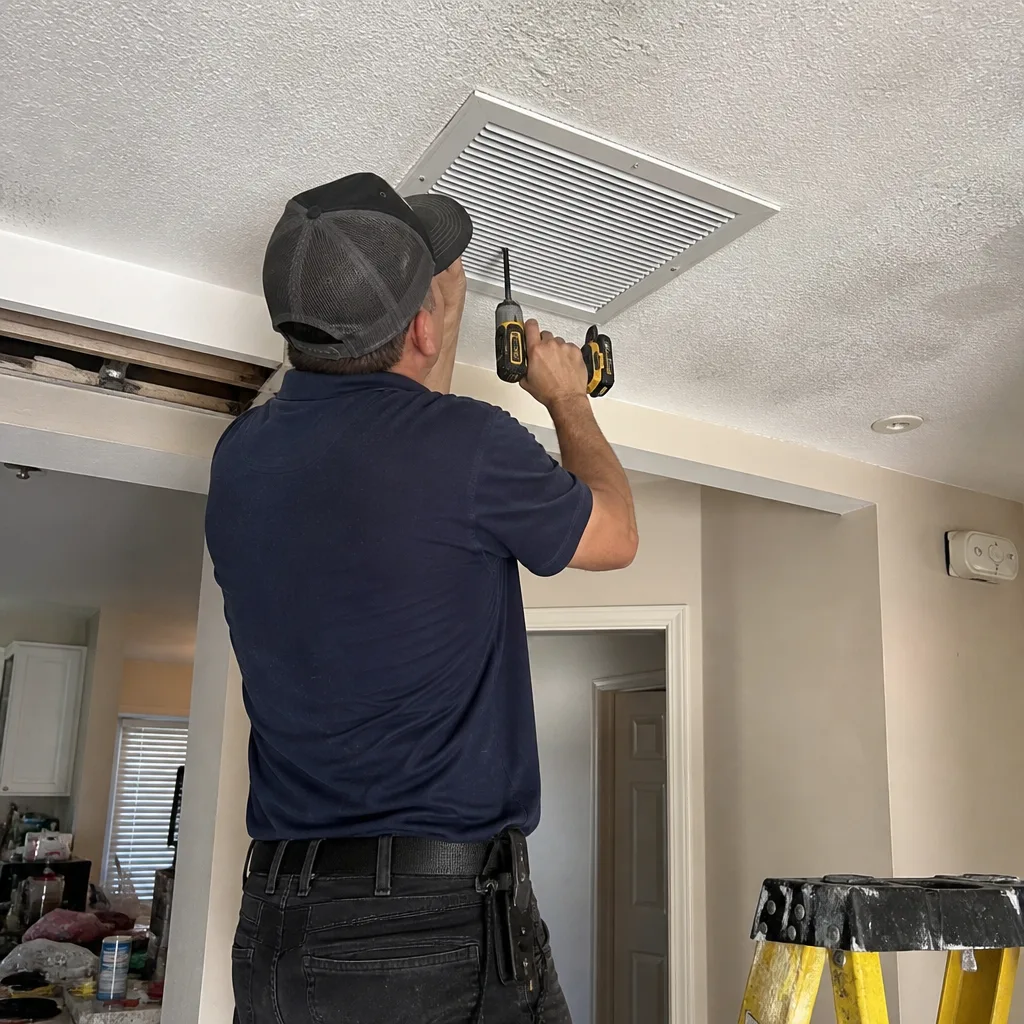
- Remove the register cover. Most are held by two screws or simply lift out. Set the cover aside. Do not reach inside the duct.
- Shine the flashlight into the duct opening. Look for a gray or brown film on the duct walls. A light, even dust layer is normal. A thick, fuzzy, or damp-looking layer is not.
- Wipe the inside edge of the duct opening with a dry paper towel. If the towel comes away dark or oily, that’s the buildup you want to track and eventually have cleaned.
- Check the register cover itself. Mold, rust, or water stains on the back of the cover indicate condensation inside the duct at some point. Make a note of which register and when.
- Replace the cover and log your findings. One line in a notebook or phone app: date, room, what you saw. That log becomes the single most useful thing you can hand a technician.
Do this check three times a year: once in March as the dry season winds down, once in August at the peak of the wet season, and once in November after the first stretch of cooler weather. Homes in the wetter parts of the metro area, like the Conway chain-of-lakes district, often show more moisture-related signs than homes at higher elevation in the northwest.
The Dryer Vent Parallel: Why It Belongs on the Same Checklist
Air ducts and dryer vents are separate systems, but in Orlando they fail for the same reason: lint, moisture, and neglect. The dryer vent is the shorter, hotter, and more dangerous cousin of the air duct, and it deserves a place on the same maintenance checklist because the habits that keep one clean also keep the other clean.
A clogged dryer vent does three things. It increases drying time, which raises your utility bill. It pushes lint back into the dryer cabinet and the surrounding room, which adds fine particulate to the air your AC system then circulates. And it creates the conditions for a dryer fire, which is why the U.S. Fire Administration lists dryer vent cleaning among the most important home maintenance tasks in humid climates where lint clings rather than dispersing.
Here’s the parallel checklist:
- Clear the lint trap before every load, and wash the lint screen with warm soapy water every month. Fabric softener residue creates a film that traps lint invisibly, reducing airflow even when the trap looks clean.
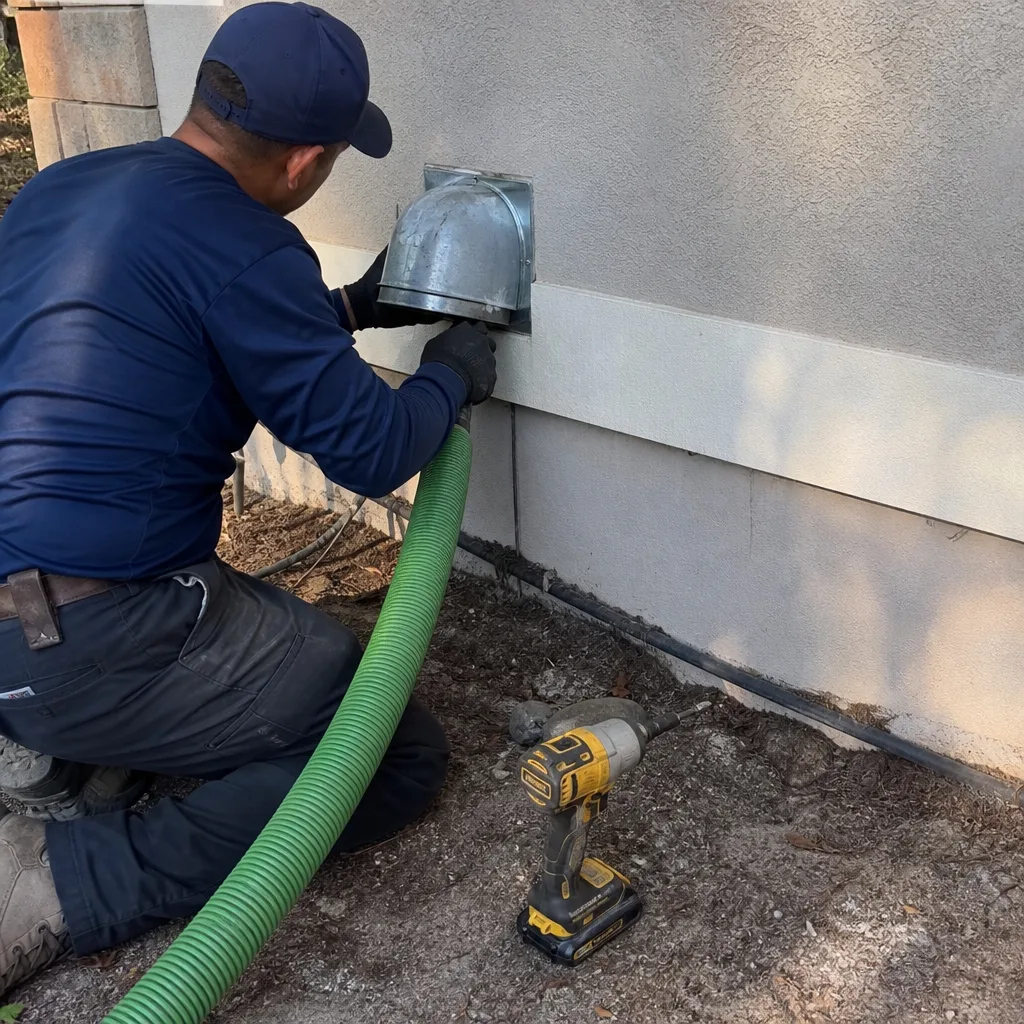
- Check the exterior vent hood every month. Walk outside while the dryer runs. You should feel strong, steady airflow from the vent. Weak airflow, no airflow, or a flapper that does not move means the vent is restricted.
- Look for lint buildup on the ground near the vent. In Orlando’s damp months, lint sticks instead of blowing away, gathering around the vent hood. That ground lint is a sign the vent itself is accumulating.
- Schedule professional dryer vent cleaning every 12 to 24 months, more often if the vent run is long or has multiple elbows. A vent that travels through a roof or through a second-story wall needs more frequent attention.
We clean dryer vents alongside air ducts regularly for Orlando homeowners, and the two services fit naturally on the same maintenance calendar. You can learn more about our dryer vent cleaning in Orlando service page.
What to Log Between Professional Visits
The most overlooked tool in duct maintenance is a simple written log. Not a spreadsheet with formulas. Just a note on your phone or a page in a kitchen notebook. Here’s what to record and why it matters:
- Filter replacement dates. A pattern of monthly filter changes tells a technician the system moves a lot of air, which helps interpret the level of buildup found inside. A log showing filters changed rarely explains heavy buildup without any mystery.
- Humidity readings. A basic hygrometer costs under $15. Logging indoor humidity once a week, or even once a month, shows whether the home stays below 55% in the wet season. Homes that consistently run high humidity almost always show more duct buildup.
- Odors. Musty smells from specific vents, not the whole house, often appear and disappear with weather patterns. Logging the date and room makes it possible to connect the smell to specific conditions, like a heavy August rain.
- Dust return rate. Notice how quickly surfaces in a room get dusty after cleaning. If a bedroom goes from clean to dusty in three days instead of the usual week, log it. That pattern points to a specific register or return, not the whole system.
- Register check findings. The notes from your three-times-a-year visual check form a time-lapse record of what is happening inside the ducts. A light film that stays light for two years is a very different situation from a light film that becomes thick and dark in eight months.
When you do schedule a professional cleaning, this log gives the technician something most homeowners cannot: history. Instead of looking at current conditions and guessing how long the buildup took to form, a technician can read your log and see the progression. That means better recommendations, and it means not paying for service you do not need.
Common Mistakes to Avoid
- Waiting for visible dust before doing anything. By the time you see dust piling on registers or furniture, the buildup inside the ducts has been there for months. Maintenance is about acting before the visible symptom, not after.
- Buying the highest MERV filter as a default. A MERV 16 filter in a standard Orlando AC system can choke airflow enough to raise energy costs and freeze the coil. Match the filter to the household and the system, not to the marketing.
- Closing registers in unused rooms. It seems sensible, but it raises static pressure inside the duct system and can force more air through the remaining openings, accelerating buildup in those runs. Keep registers open, even in rarely used rooms.
- Skipping the exterior dryer vent check. Orlando homeowners often clean the lint trap diligently and never once look at the exterior vent hood. The exhaust side is where clogs form and where the fire risk lives.
- Running the fan constantly without managing humidity. Continuous fan mode during Orlando’s wet season can pull humidity back into the ducts after the AC cycle ends. Use fan-on mode sparingly in summer, and prioritize dehumidification instead.
- Not logging anything between cleanings. Every professional cleaning without a log is a fresh start with no context. The log is free to keep and it is the best diagnostic tool a homeowner can produce.
When to Call a Professional
Some conditions warrant a professional look sooner than the 3-to-5-year interval. Call for an assessment if you see mold on a register cover, if dust returns to surfaces within days despite a clean filter, if a musty odor persists after the condensate drain is cleared, or if your dryer takes two or more cycles to dry a normal load. In new-to-you Orlando homes, a duct inspection is a reasonable pre-move-in step, especially in older neighborhoods like Colonialtown or Delaney Park where ductwork may be original. Mortons Air Duct Orlando offers free estimates in Orlando. Call (321) 204-8194 and a live person will answer, day or night, no voicemail maze.
Frequently Asked Questions
Every 3 to 5 years is the right interval for most Orlando homes, with homes that have multiple pets, children under 5, or allergy sufferers leaning closer to every 3 years. Orlando’s wet season accelerates buildup inside ducts, so a home here should never push past 5 years without at least an inspection. Call (321) 204-8194 for an exact assessment of your home, free of charge.
Yes, pet dander and hair load filters and ducts far faster than average, especially in Orlando where the AC runs nearly year-round. Homes with one dog typically need professional cleaning every 3 to 4 years rather than 5. Daily brushing, monthly filter changes, and vacuuming around returns all help stretch the interval.
A shop vacuum can clean the first few inches of a register, but it cannot reach deep duct runs, and it does not have the agitation power or HEPA filtration that professional equipment like Rotobrush and Nikro systems provide. Deep duct cleaning requires tools that both loosen and capture debris, not just pull at it.
Look for dust returning to furniture within days of cleaning, musty odors from specific vents, dark buildup on register covers, or visible dust inside the duct opening during a register check. Any of these signs is reason enough to schedule an inspection, and a professional cleaning with before-and-after photos confirms the work was done. Learn what to watch for in our Air Duct Cleaning Warning Signs: A Orlando Homeowner’s Reference Guide.
Some companies quote a low per-vent price and then inflate the invoice with add-ons once the job starts, or they skip steps like agitation and sanitization that a proper clean requires. A reputable Orlando duct cleaning company provides a written whole-system price before any work starts, with no per-vent pricing games and no surprises on the invoice.
New construction often leaves drywall dust, sawdust, and debris inside ducts, and that debris circulates for months after move-in. A cleaning is worth it if you see construction dust around registers or if the home was built and finished on a tight schedule where the ducts were not sealed during construction. Many Orlando homeowners in newer developments like Lake Nona and Horizon West schedule a cleaning within the first year.
The Bottom Line
Air duct maintenance in Orlando is not complicated, but it is consistent work. The five-minute monthly check, the MERV rating matched to your household, the three-time-a-year register inspection, and the log you keep between professional visits are the difference between a system that stays clean and one that slowly accumulates the exact buildup you paid to have removed. Orlando’s humidity makes this checklist matter more, not less. Do the monthly work, keep the log, and when it is time for a professional cleaning, you will know it because the signs will be clear in your own notes, not buried in someone else’s guess. For more guides & resources, explore our blog.
Written by Paul Adeyemi, Owner at Mortons Air Duct Orlando, serving Orlando since 2005.
See the difference
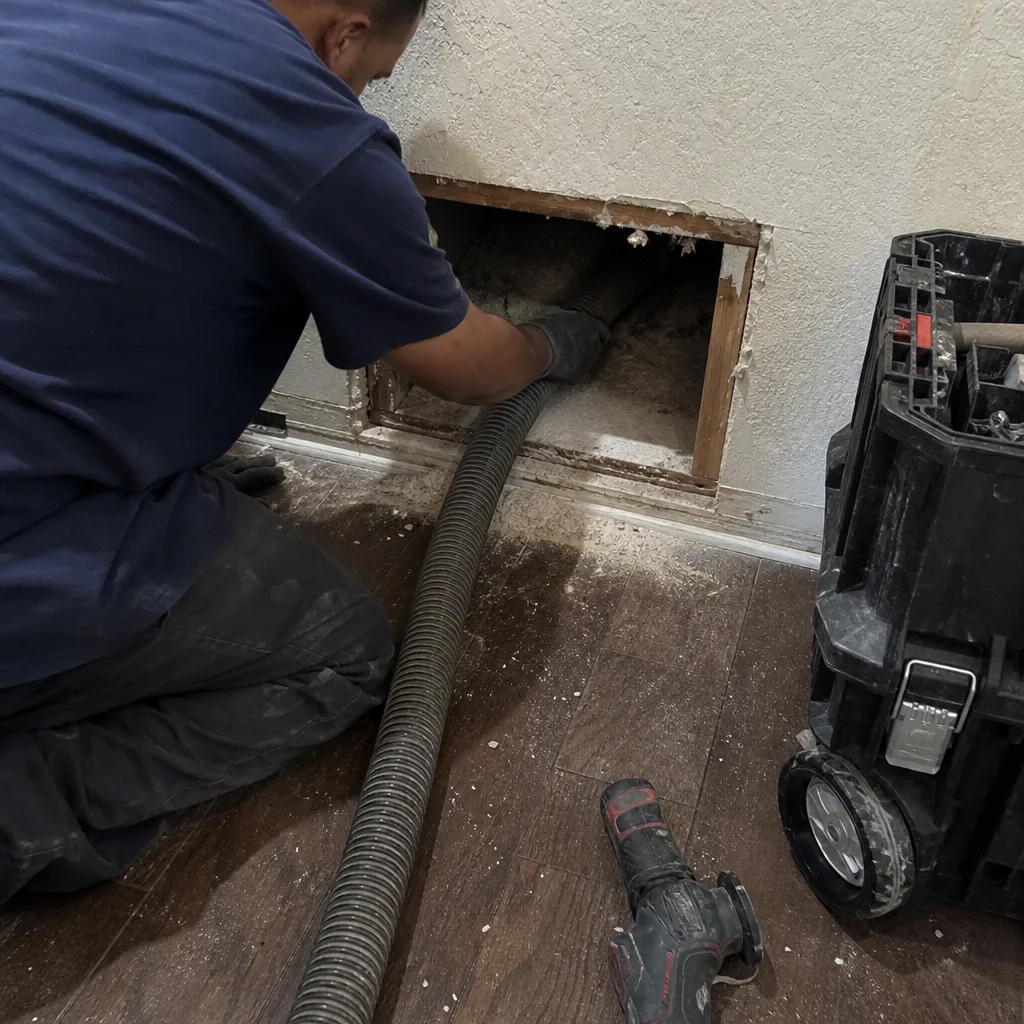 Before
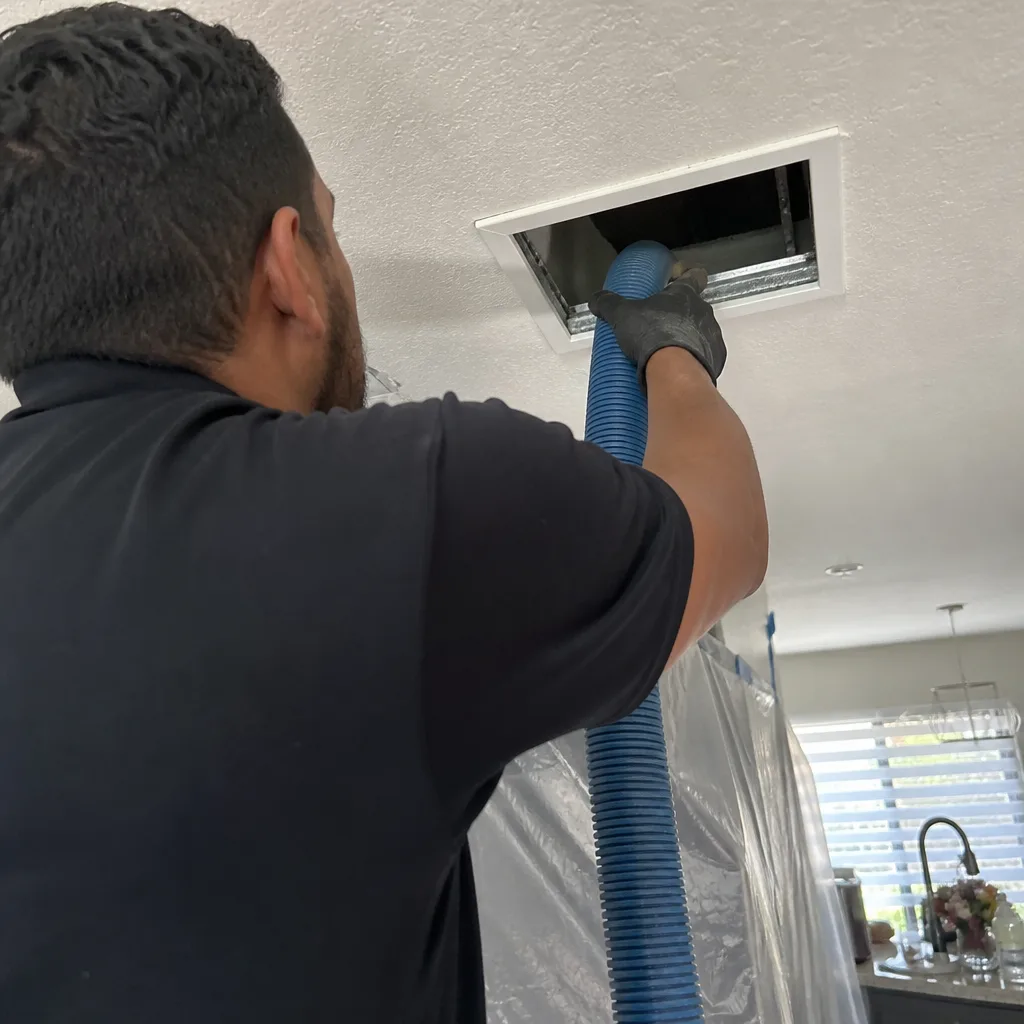 After
After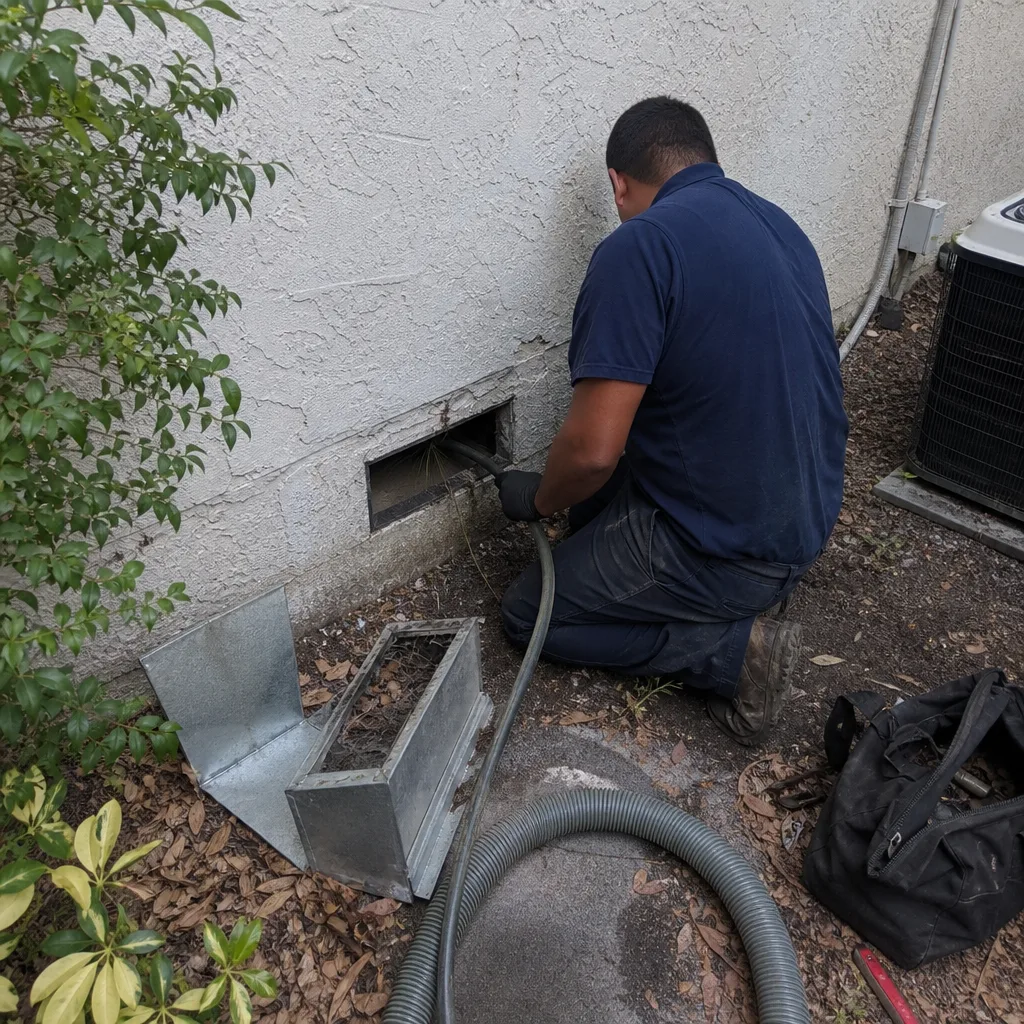 Before
 After
After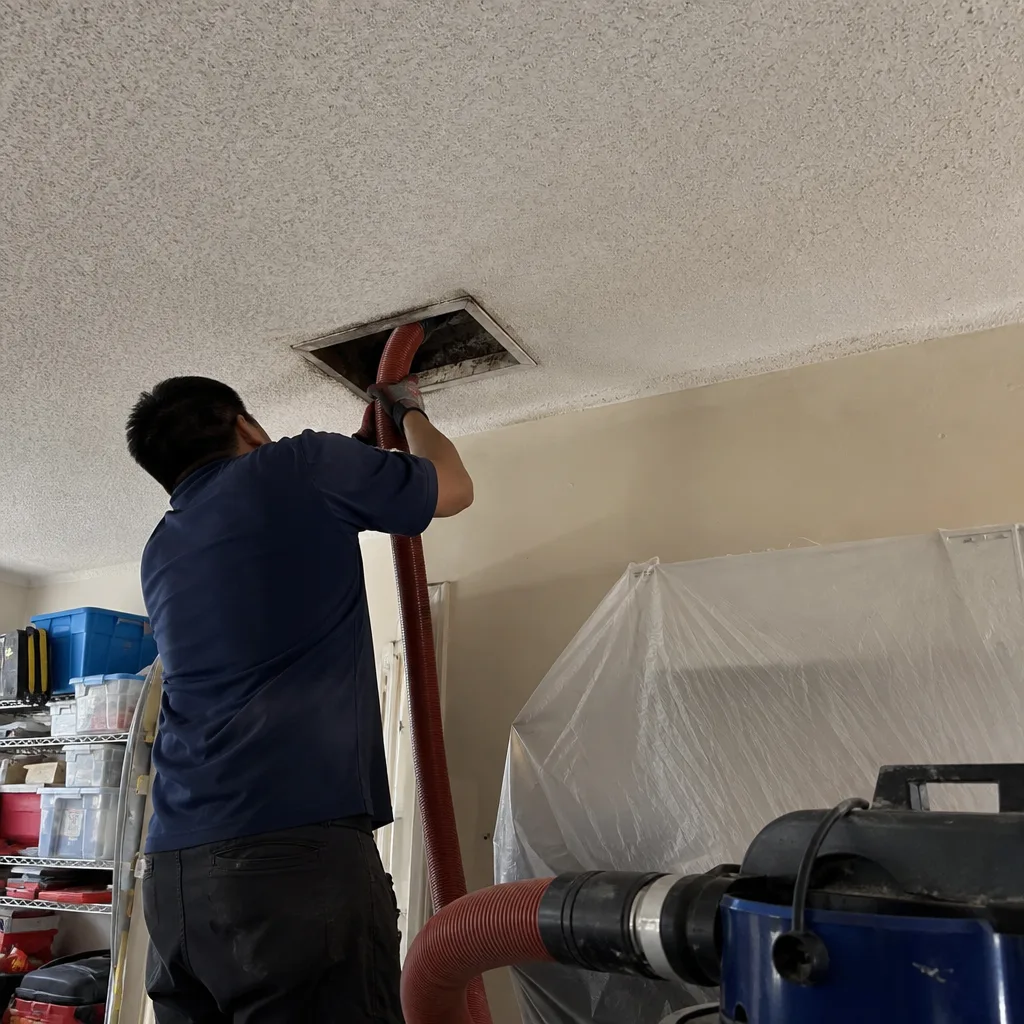 Before
 After
After