
Last updated October 15, 2026
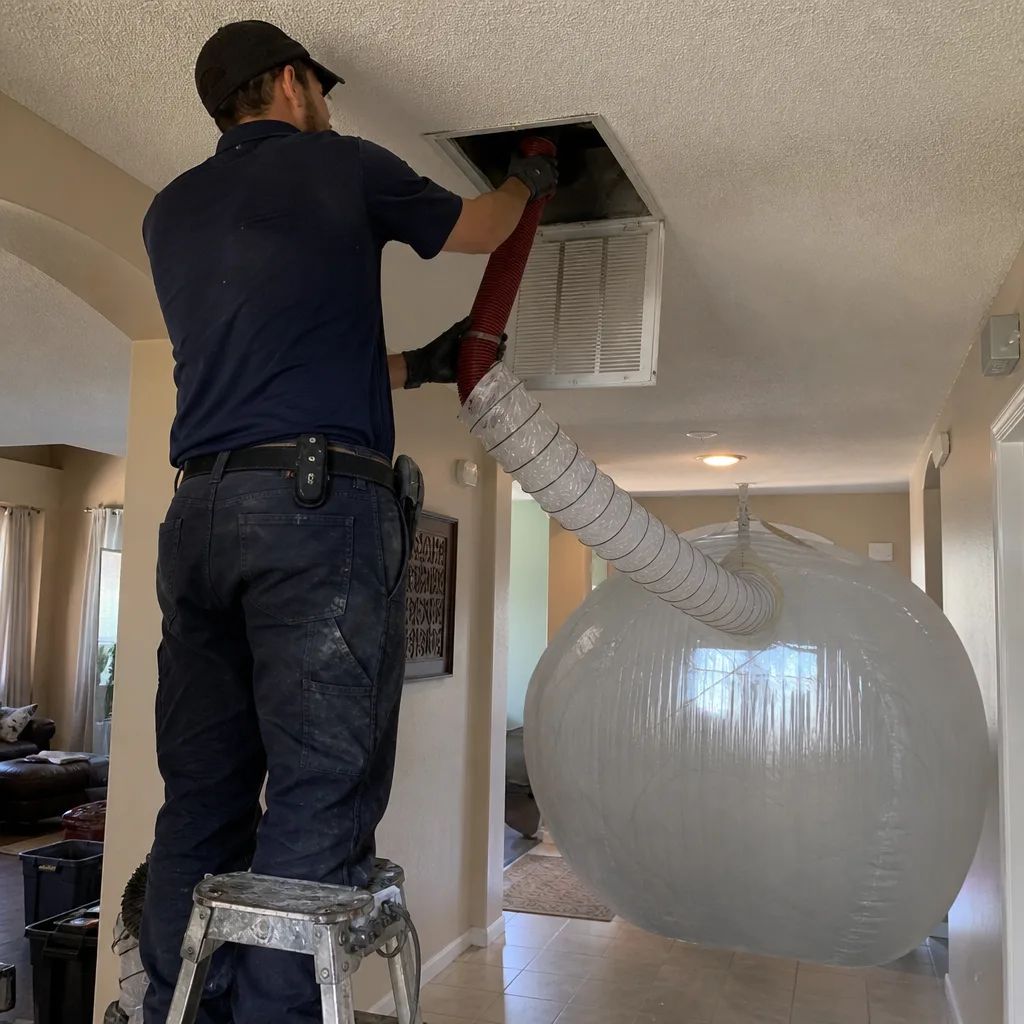
 Whole-home duct cleaning
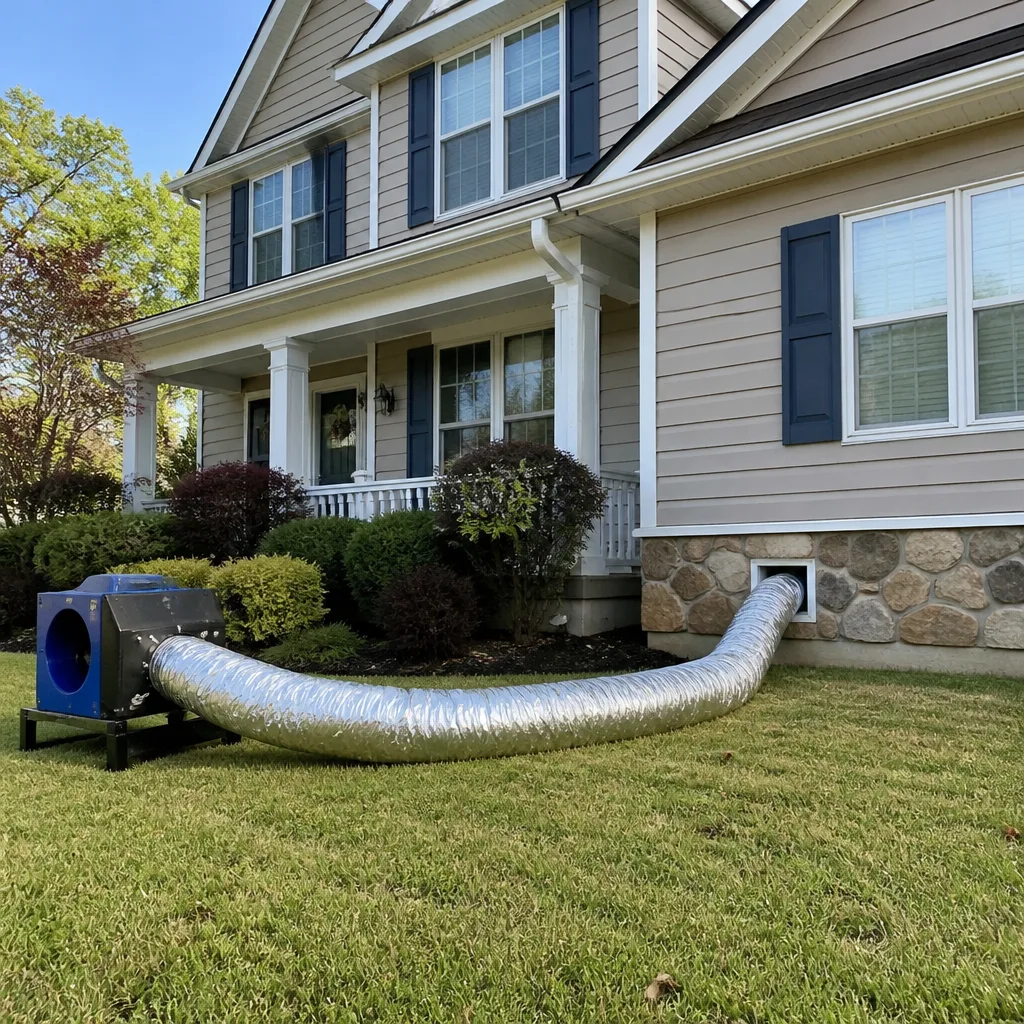
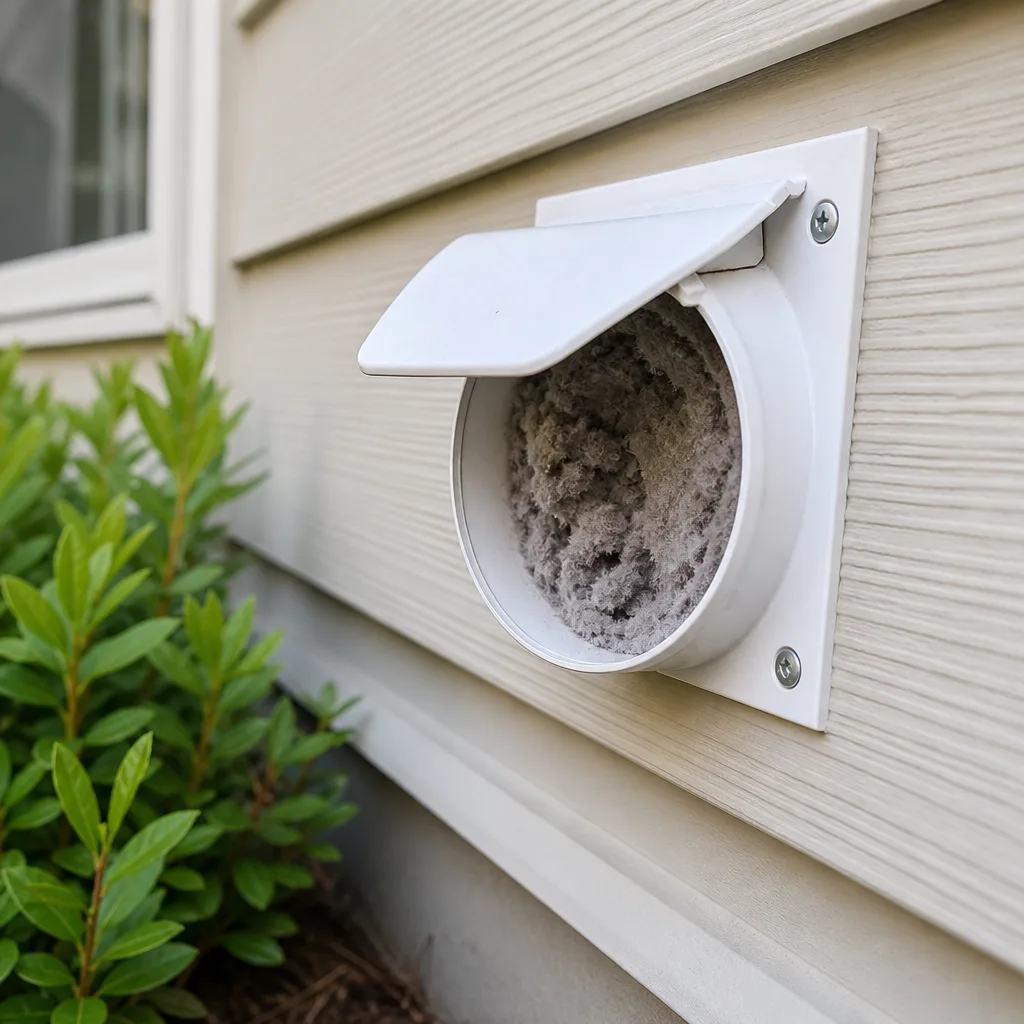 Dryer vent cleaning
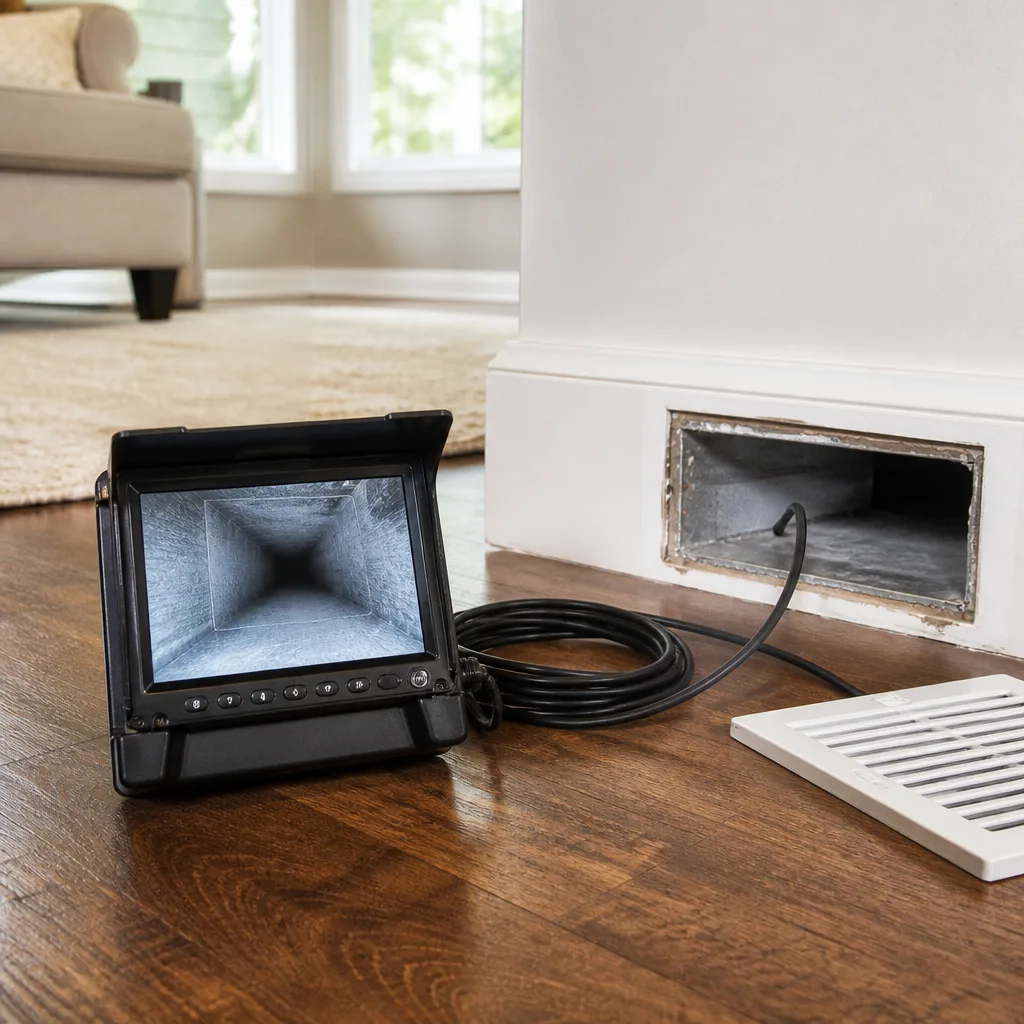 Camera inspection
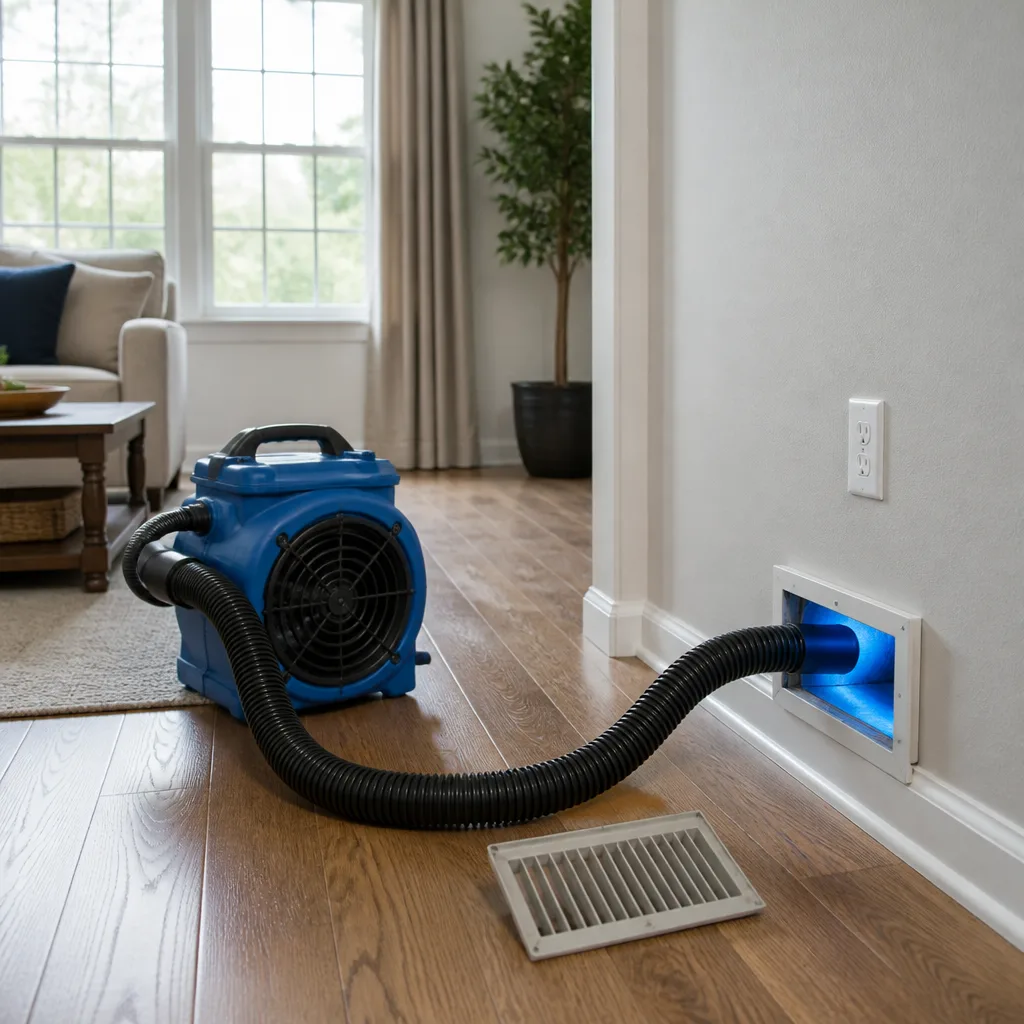 Sanitizing & deodorizing
Whole-system duct and dryer vent check with before-and-after photos - you see exactly what came out of your vents
That "$99 whole-house special" is a bait ad - the real number appears once they are in your hallway, or the "clean" is a shop-vac at the register. We photograph the inside of your ducts before and after instead.
Seasonal Air Duct Cleaning Care for Orlando: Year-Round Homeowner’s Guide
In Orlando, April is the most important month for your duct system. Not because anything dramatic happens in April, but because it’s the last calm window before six months of near-continuous air conditioning begins. Most national guides will tell you to think about your ducts in spring and fall, but they’re written for places with four actual seasons. Orlando has two: a hot, humid wet season and a milder dry season. That changes the whole calendar. In this guide, we’ll walk through what actually matters for Orlando homes month by month, when to clean, when to just check, and how to keep a system running clean from Lake Nona to College Park without paying for work you don’t need.
Quick Answer
In Orlando, the two best windows for professional air duct cleaning are April (before the AC runs continuously) and October (after hurricane season ends). Between those windows, seasonal check-ins and more frequent filter changes handle most of what a typical home needs. This guide explains what to do each season, what to check after storms, and how to know whether you need Air Duct Cleaning or just a visual inspection.
Styles & brands we work with
Table of Contents
- Why Orlando’s Climate Breaks the Standard Duct Cleaning Calendar
- Why April Is the Single Most Important Month for Orlando Ducts
- What Sustained AC Use Does to Ducts from May Through September
- Hurricane Season: What to Check Before and After Every Storm
- Why October Is Orlando’s Second Critical Cleaning Window
- A Seasonal Filter Schedule for Orlando Homes with Pets
- Seasonal Check-In vs. Full Cleaning: Knowing the Difference Saves Money
- Orlando’s Month-by-Month Duct Care Calendar
Why Orlando’s Climate Breaks the Standard Duct Cleaning Calendar
Most duct cleaning advice assumes a northern climate: furnace season in winter, pollen in spring, humidity in summer, leaves in fall. Orlando doesn’t work that way. Our furnace season is measured in days, not months. Our pollen season starts in January and doesn’t really quit. And our humidity is a constant companion from late April through early November. The result is that ducts in Orlando accumulate a different kind of contamination than ducts in, say, Minneapolis or Boston. It’s not just dust. It’s dust that has been repeatedly dampened by humid air, then baked dry by the AC, then dampened again. That cycle creates a compacted layer inside ductwork that behaves differently than loose dust. It adheres to surfaces. It supports mold growth more readily. And it gets recirculated through the house every time the air handler kicks on.
We’ve opened ducts in homes across Orlando, from Winter Park to Dr. Phillips, and seen the same pattern repeat: a gray, slightly tacky film on the inside of supply ducts that doesn’t brush away easily. That film is the product of Orlando’s humidity interacting with household dust, pet dander, and the fine particulate that blows in from I-4 traffic and construction sites. Homes near active construction corridors, like parts of Horizon West or Lake Nona, tend to accumulate that layer faster because the ambient dust load is higher. Homes with pets add dander and hair on top of it. The point is not that Orlando ducts are dirty in some dramatic, hazardous way. The point is that they need a cleaning rhythm matched to the climate, not to a generic national calendar.
When we use professional equipment from brands like Rotobrush and Nikro, the difference between Orlando duct contamination and what you’d find in a drier climate is immediately visible. It takes more mechanical agitation to release the film, which is why a proper cleaning here involves contact tools and negative air pressure, not just a shop vac pointed at a register. That’s also why timing matters. Cleaning at the wrong time means the work gets undone faster.
Why April Is the Single Most Important Month for Orlando Ducts
April in Orlando is the shoulder season. The worst of the spring pollen has passed, the daily thunderstorms haven’t started, and the AC is still cycling on and off rather than running constantly. That makes April the cleanest possible baseline for the six months ahead. Here’s the logic: whatever is inside your ducts in late April is what your AC will be blowing through your house from May through October. If you clean in April, you start the cooling season with empty ducts. If you skip April, you start it with whatever accumulated during the winter dry season, plus whatever the spring pollen load added. Then the AC runs constantly, the humidity inside the ducts rises, and that accumulated material turns into the tacky film we described earlier. It doesn’t just sit there. It becomes harder to remove and more likely to affect indoor air quality.
There’s a second reason April matters: scheduling. Orlando’s HVAC and duct cleaning companies get slammed starting in May, when the first 90-degree stretch reminds everyone their AC exists. Book in April and you have scheduling flexibility, shorter wait times, and cooler weather for the technicians working in your attic or crawl space. When Morton’s Air Duct Orlando performs an April cleaning, the crew isn’t fighting 140-degree attic temperatures, which means the job gets done more carefully and more comfortably for everyone involved. If you have kids at home or pets who get anxious around unfamiliar equipment, April’s milder weather also means we can often work with windows open and less background noise from the AC itself.
So our advice is simple. If you can only schedule one professional duct cleaning per year, make it April. If you haven’t had the system cleaned in several years, April is the month to do it. The Air Duct Cleaning in Orlando page goes into more detail about what a full cleaning involves, but the timing principle stands: clean before the load, not during it.
What Sustained AC Use Does to Ducts from May Through September
From May through September, the AC in most Orlando homes runs 12 to 18 hours a day. That’s not an exaggeration. Our design temperatures, our humidity, and our poorly insulated attics all push systems to near-continuous operation during the hottest months. That sustained runtime does three specific things to ductwork.
First, it accelerates dust loading. The more air moves through the system, the more particulate gets pulled into the return and deposited on duct walls, coils, and blower components. A duct system that saw light use in winter suddenly becomes a highway for every particle in the house, plus whatever the filter doesn’t catch. Second, sustained cooling drops the temperature of duct surfaces below the dew point for hours at a time, especially in non-conditioned attics. That creates condensation on the outside of ducts and, in some cases, on the inside. Condensation plus dust equals the tacky film we keep mentioning. It also creates the conditions where mold can grow, particularly in the thick insulation liners of older flex ducts. Third, sustained runtime shortens effective filter life. A filter rated for 90 days in a mild climate might be fully loaded in 30 to 45 days in an Orlando summer, especially if the system is running almost constantly. A loaded filter stops protecting the system and starts restricting airflow, which makes the AC work harder and cool less efficiently.
None of this means your ducts are dangerous or that you need to panic. It means the summer months are when the system absorbs the most contamination, which is why the cleaning you did in April matters so much. Starting summer with clean ducts means the film builds slowly over the season instead of compounding on top of years of accumulation. And it means that when October arrives, you’re dealing with five months of new material, not five months layered on top of a pre-existing problem.
Hurricane Season: What to Check Before and After Every Storm
Hurricane season officially runs from June 1 through November 30, but Orlando’s real exposure peaks from August through October. Every named storm that passes within 100 miles of Orlando brings the same set of risks to ductwork, and none of them are the ones most people think about. The risk isn’t that wind will tear ducts apart. The risk is moisture and debris.
Here’s what to check before a storm approaches:
- Exterior vent caps and terminations. Walk around the house and look at every exterior vent: dryer vents, bath fan exhausts, kitchen hood terminations, and any fresh-air intakes. Make sure the caps are seated, the flaps close fully, and there’s no visible damage. A loose or missing vent cap is an invitation for wind-driven rain to enter the duct system.
- Attic duct connections. If you have attic access, do a visual check of the flex duct connections at the plenum and at each register boot. Look for sagging sections, disconnected collars, or tears in the outer jacket. Storms don’t cause these, but they make existing weaknesses worse when pressure and moisture spike.
- Condensate drain line. Pour a cup of white vinegar into the primary condensate drain to clear algae buildup. During heavy rain and high humidity, the AC produces more condensate than usual, and a backed-up drain can flood the emergency pan and seep into nearby ducts.
- Air filter. Install a fresh filter before the storm. If the power goes out and the AC is off for days, a loaded filter will hold moisture and become a mold source when the system restarts.
After the storm passes, repeat the exterior checks within 48 hours. Look for shifted caps, accumulated leaf debris at vent openings, and any signs of water staining around ceiling registers. If you see staining or smell a musty odor from the vents, that’s a signal to call a professional before mold has time to establish. The Mortons Air Duct Orlando home page has contact information and service details if you need a post-storm inspection.
One more Orlando-specific note: after any hurricane or tropical storm that produces significant rain, attic humidity stays elevated for days, sometimes weeks. That’s the period when moisture intrusion into ducts becomes visible. Checking within the first 48 hours gives you the best chance of catching a problem early.
Why October Is Orlando’s Second Critical Cleaning Window
October matters in Orlando for a different reason than April. April is about starting clean. October is about assessing damage and resetting before the dry season. By October, the system has run hard for five months. The filter has been changed several times, the coils have condensed thousands of gallons of water out of the air, and at least one or two storms have likely passed through or near the city. All of that adds up.
October is also when many Orlando homeowners notice a change in indoor air that they can’t quite explain. The AC is still running, but maybe less constantly. The windows are sometimes open. There’s a slight mustiness to the air, or a musty smell that appears when the system first kicks on. That smell is often the first sign that moisture got into the ducts or the air handler during the wet season and has been lingering. By October, conditions have shifted enough that problems become noticeable. The humidity is dropping, but the residual moisture inside ductwork hasn’t fully evaporated. It’s the ideal time for a visual inspection.
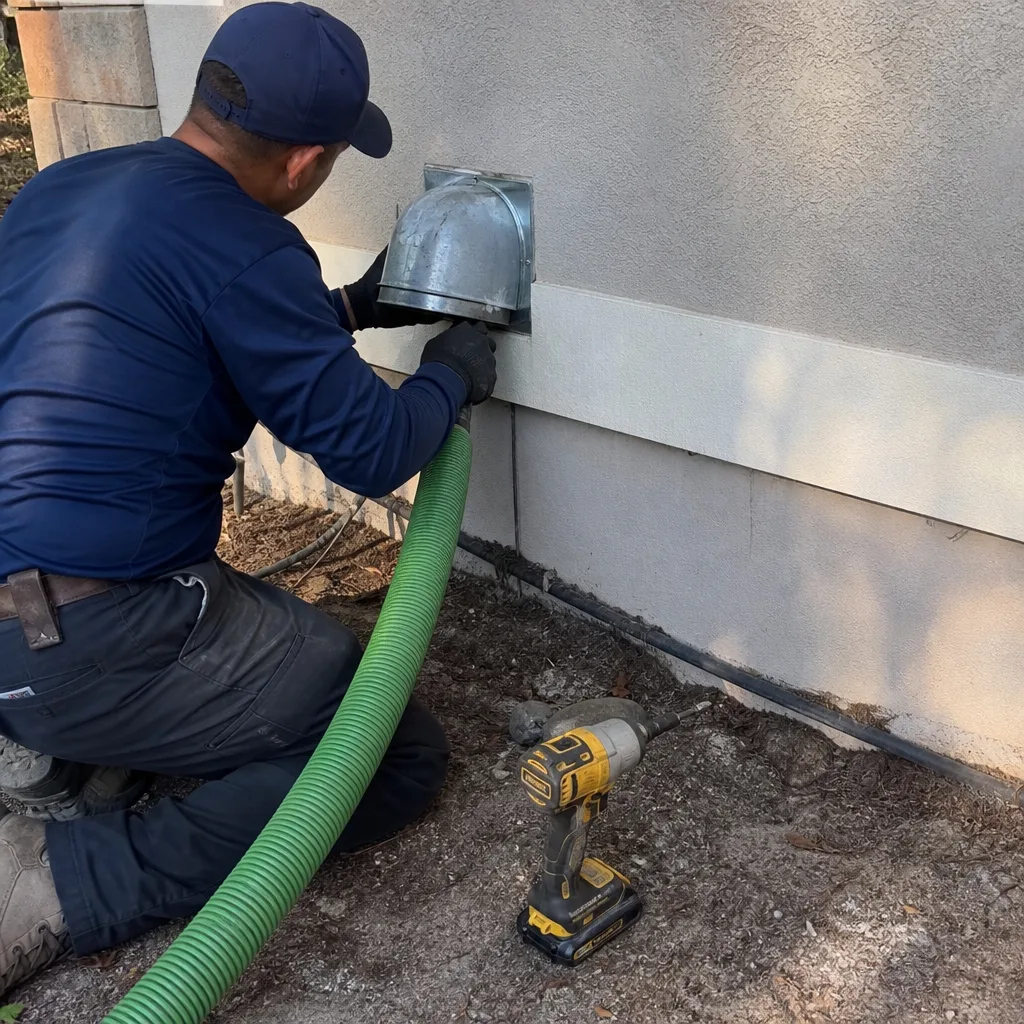
For homes that did an April cleaning, October often doesn’t require a full repeat. A seasonal check-in, which we describe in detail below, is usually enough. For homes that skipped April, October becomes the catch-up window. It’s the last chance to remove accumulated summer debris before the holidays, when the house fills with guests, cooking, and more hours of closed-window living. It’s also a sensible time to schedule Dryer Vent Cleaning in Orlando, since dryer vent buildup peaks during the humid months when clothes take longer to dry and lint loads are higher.
If your home saw a hurricane pass within 50 miles, treat October as a mandatory inspection month regardless of when you last cleaned. The combination of high wind, heavy rain, and extended power outages creates exactly the conditions that turn minor duct issues into persistent ones.
A Seasonal Filter Schedule for Orlando Homes with Pets
Filter advice is where most generic guides fail Orlando homeowners. The standard “change your filter every 90 days” guidance assumes a moderate climate, average runtime, and average household dust. Orlando’s climate and runtime already put us outside that average. Add pets, and the 90-day rule becomes actively misleading.
Here’s a practical filter schedule for Orlando homes, adjusted for the wet and dry seasons:
- May through September (wet season, high AC runtime): Change filters every 30 days. If you have two or more pets, check every two weeks and replace no later than 30 days. Use a filter with a MERV rating that your system’s blower can handle; MERV 8 to 11 is the sweet spot for most residential units. Higher MERV filters restrict airflow and can strain older systems, especially in the middle of a Florida summer.
- October through November (transition): Change at the start of October, then again around Thanksgiving. The first change clears out summer accumulation. The second prepares for holiday gatherings and the return of closed-window living.
- December through February (dry season, intermittent AC): Every 60 days is usually sufficient, even with pets. Lower humidity means less biological growth, and shorter runtime means less dust loading. If you run the heat during cold snaps, which stirs up dust from the heat exchanger and duct walls, consider checking at 45 days.
- March through April (pollen season): Every 30 days. Orlando’s oak, pine, and grass pollen season peaks from late February through April, and the pollen load inside the house is largely determined by how well the filter is doing its job. A fresh filter in March and another in April can significantly reduce the amount of pollen that settles into the duct system.
If you have a pet that sheds heavily, like a husky or a golden retriever, you already know the filter is going to load faster. But here’s the part most people don’t consider: pet dander is smaller and stickier than human skin cells, and it bonds to the filter media quickly, reducing airflow even when the filter doesn’t look dirty. That’s why the schedule above errs on the side of more frequent changes, not less. A clean filter is the cheapest thing you can do to protect your ducts, your AC system, and your indoor air.
We use and recommend filters from Honeywell and Aprilaire in the homes we service around Orlando, not because they’re exotic, but because they’re consistent. The filter itself matters less than the discipline of changing it. Pick a brand you can find reliably at the hardware store and set a recurring reminder on your phone for the first of each month from May through September.
Seasonal Check-In vs. Full Cleaning: Knowing the Difference Saves Money
One of the most frustrating things we hear from Orlando homeowners is that another company sold them a full duct cleaning when the system was already clean. It’s an industry problem, and it’s part of why so many families are skeptical of duct cleaning in general. We’d rather tell you the truth: not every home needs a full cleaning every season, and sometimes every year. A seasonal check-in is different from a full cleaning, and knowing the difference can save you hundreds of dollars.
Here’s what a seasonal check-in involves:
- Visual inspection of accessible components. We look at the return grille, a few supply registers, the blower compartment, and the coil if it’s accessible. We’re checking for visible dust accumulation, moisture staining, mold growth, or pest activity.
- Filter condition assessment. We note the filter’s condition and discuss the appropriate change schedule for your household, considering pets, allergy sensitivities, and system runtime.
- Exterior vent check. We inspect dryer vents, bath exhaust terminations, and any exterior duct penetrations for damage, blockage, or signs of water intrusion.
- Airflow verification. We check airflow at several registers to identify any restrictions that might indicate a collapsed duct, a closed damper, or a coil that needs attention.
A full cleaning adds the actual mechanical removal of debris from the duct system: contact agitation with equipment like Rotobrush systems, negative air pressure to capture what’s loosened, and cleaning of the supply runs, return runs, plenums, and register boots. It’s a much more involved process and costs more, which is exactly why you shouldn’t pay for it if the check-in shows clean ducts.
The general rule: if your system was fully cleaned in the last two years, a seasonal check-in in April and October is usually sufficient. For a step-by-step approach, see our Air Duct Cleaning Maintenance Checklist for Orlando Homeowners. If it’s been more than three years since a full cleaning, or if you’ve had a hurricane, a renovation, or a significant pet count increase, consider a full cleaning. A company that tries to sell you a full cleaning without first doing an inspection is not one you should trust with your home.
Orlando’s Month-by-Month Duct Care Calendar
Here’s the complete year at a glance. Print this, pin it to the fridge, or save it somewhere you’ll actually see it. This calendar reflects how Orlando’s climate actually behaves, not how a national guide assumes it behaves.
- January: Light AC use, low humidity. Change filter if you didn’t in December. Check registers for dust buildup. This is a quiet month for duct work.
- February: Pollen season begins. Switch to monthly filter changes. Consider an HVAC system check as temperatures start warming.
- March: Peak pollen. Keep filters fresh every 30 days. Vacuum return grilles. If you’re planning a spring cleaning, include the ducts.
- April: Schedule your professional cleaning or seasonal check-in. This is the single most important month. Change filter at the start of the month.
- May: Humidity arrives. Start the every-30-days filter schedule. Check condensate drain lines. AC runtime increases dramatically.
- June: Hurricane season begins. Check exterior vent caps. Make sure you know where the main condensate drain is and how to access it. Keep filters fresh.
- July: Peak AC runtime. Filter discipline is critical. Watch for any new musty odors from vents, which indicate moisture in the system.
- August: Peak hurricane threat. Pre-storm checklist as described above. Keep a spare filter on hand for post-storm replacement.
- September: Peak humidity. Continue monthly filter changes. If any storm passed through, do the 48-hour post-storm inspection.
- October: Second professional cleaning window. Seasonal check-in or full cleaning depending on condition. Consider dryer vent cleaning.
- November: Transition month. Change filter. Check that exterior vent caps are clear of leaf debris from fall landscaping.
- December: Prepare for holiday guests. Fresh filter before gatherings. Quick check of return grilles and visible register interiors.
This rhythm protects the system without overspending. The two professional touchpoints, April and October, bracket the highest-risk months and create accountability: you’ll see what accumulated during the wet season, and you’ll start each cooling season with a clean baseline. Everything in between is filter discipline and the occasional visual check, both of which any homeowner can manage without professional help.
Common Mistakes to Avoid
- Skipping the April cleaning because “the AC is working fine.” April is the calm before the storm. Once the system runs constantly, the contaminants inside get baked into a layer that’s harder to remove and more likely to support mold. Waiting until you smell a problem means waiting until the problem is already established.
- Using a high-MERV filter in an older Orlando system. We see this constantly. Homeowners buy MERV 13 or higher filters thinking they’re protecting the air, but the blower in many older systems can’t push air through that density. The result is reduced airflow, higher energy bills, and a strained system, especially in summer.
- Ignoring exterior vent caps after storms. A displaced dryer vent cap or bath exhaust flap is a small problem that becomes a big one when the next rain drives water into the duct. Post-storm exterior checks take ten minutes and can prevent thousands of dollars in remediation.
- Assuming one duct cleaning is permanent. Orlando’s climate ensures that ducts get dirty again. The rate depends on pets, proximity to construction, filter discipline, and storm activity. A realistic cleaning interval for most Orlando homes is every one to three years for a full cleaning, with seasonal check-ins between.
- Letting the condensate drain clog repeatedly instead of addressing the root cause. If you’re clearing algae from the drain line every month, the line likely needs professional attention. A perpetually clogged drain causes overflow that soaks into nearby ductwork and creates persistent mold issues.
- Trusting a company that quotes a price without inspecting the system. Every duct system is different. A legitimate company needs to look at the access points, the type of ductwork, the number of returns, and the condition of the plenum before quoting. A price given sight unseen is a sales pitch, not a professional assessment.
- Forgetting that dryer vents are part of the same exhaust system. Dryer vents connect to the outside air and affect indoor humidity. A clogged vent pushes moisture back into the laundry room and the adjacent living space, adding humidity that the AC has to remove. Dryer vent cleaning is part of duct system hygiene, not a separate luxury.
See the difference
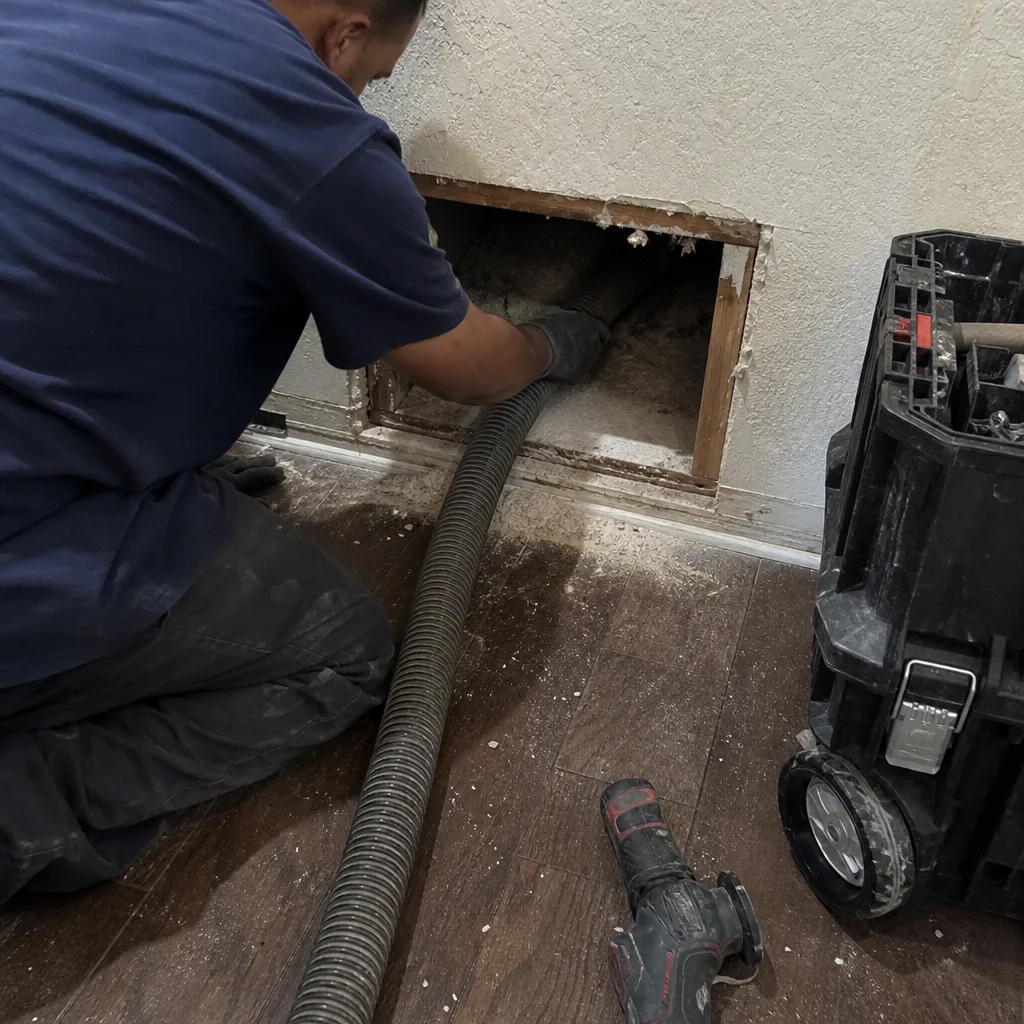 Before
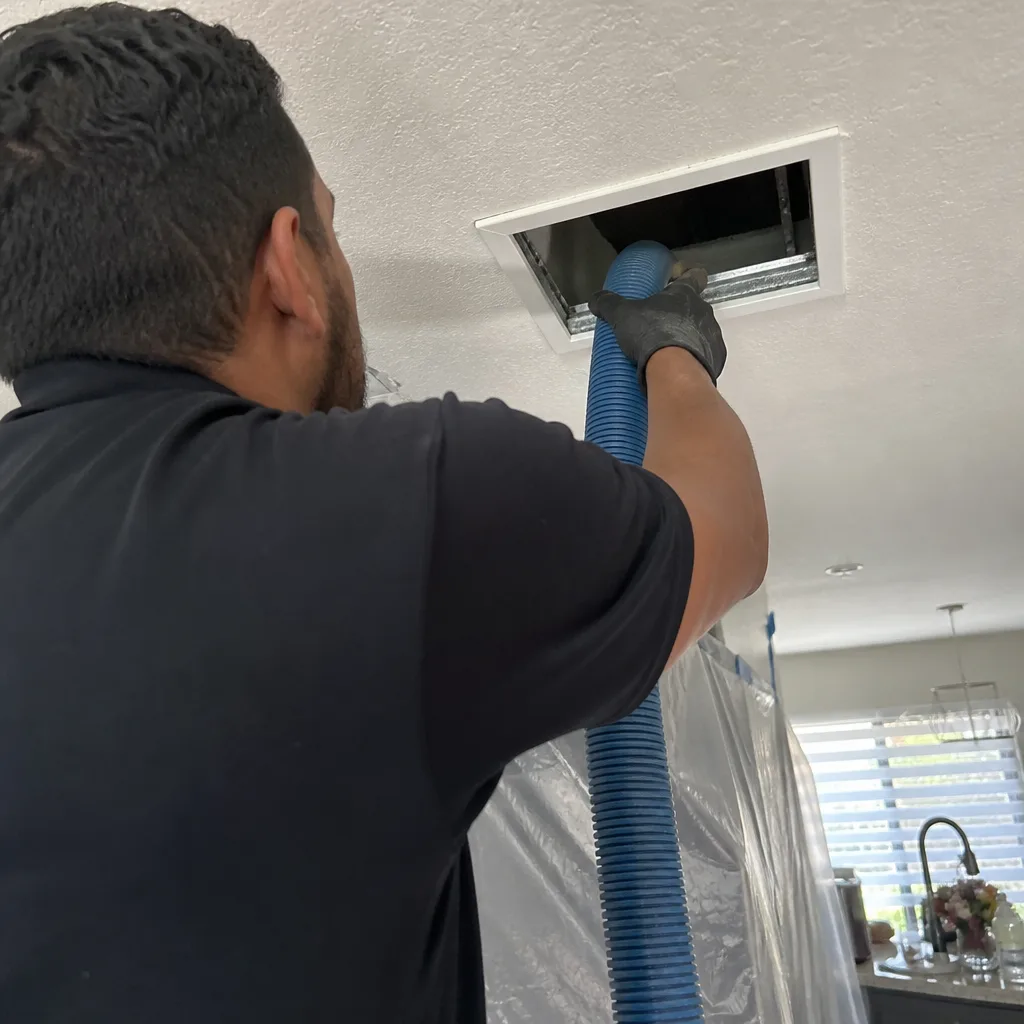 After
After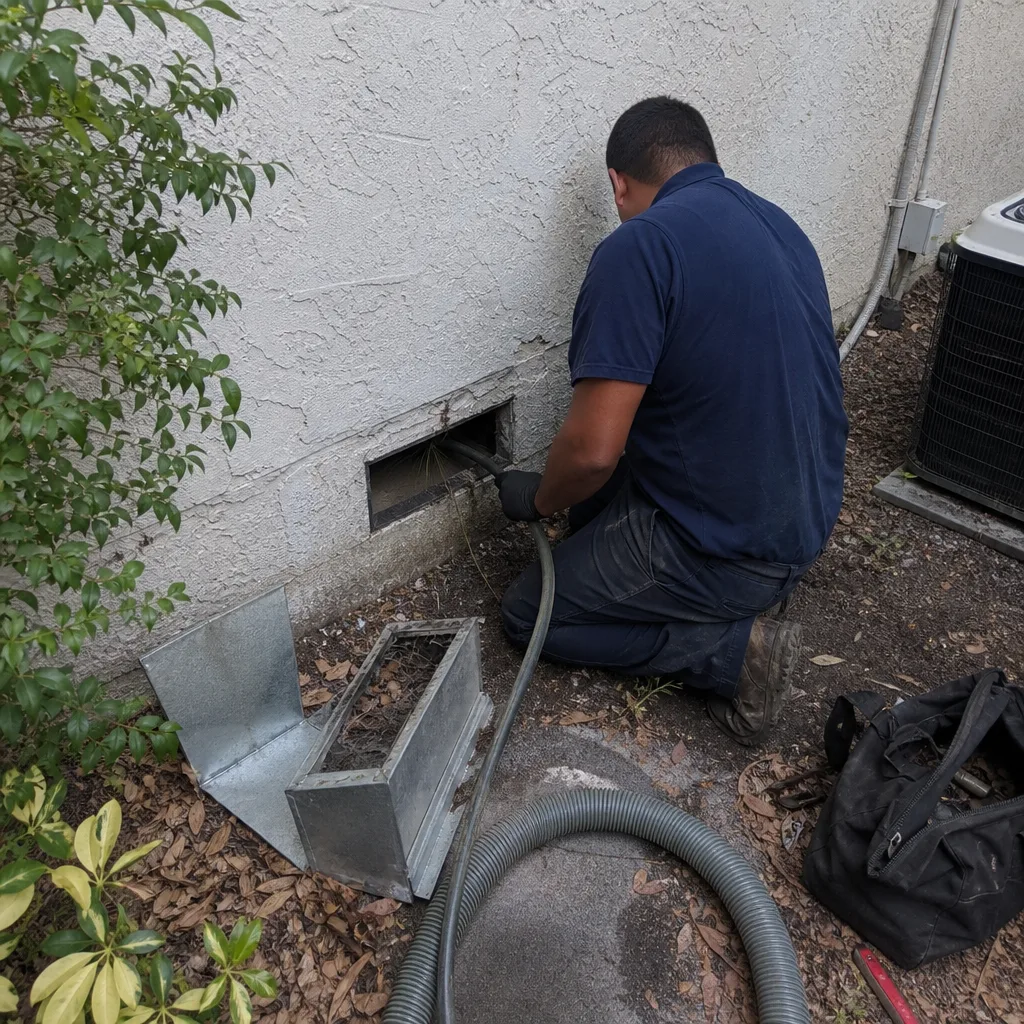 Before
 After
After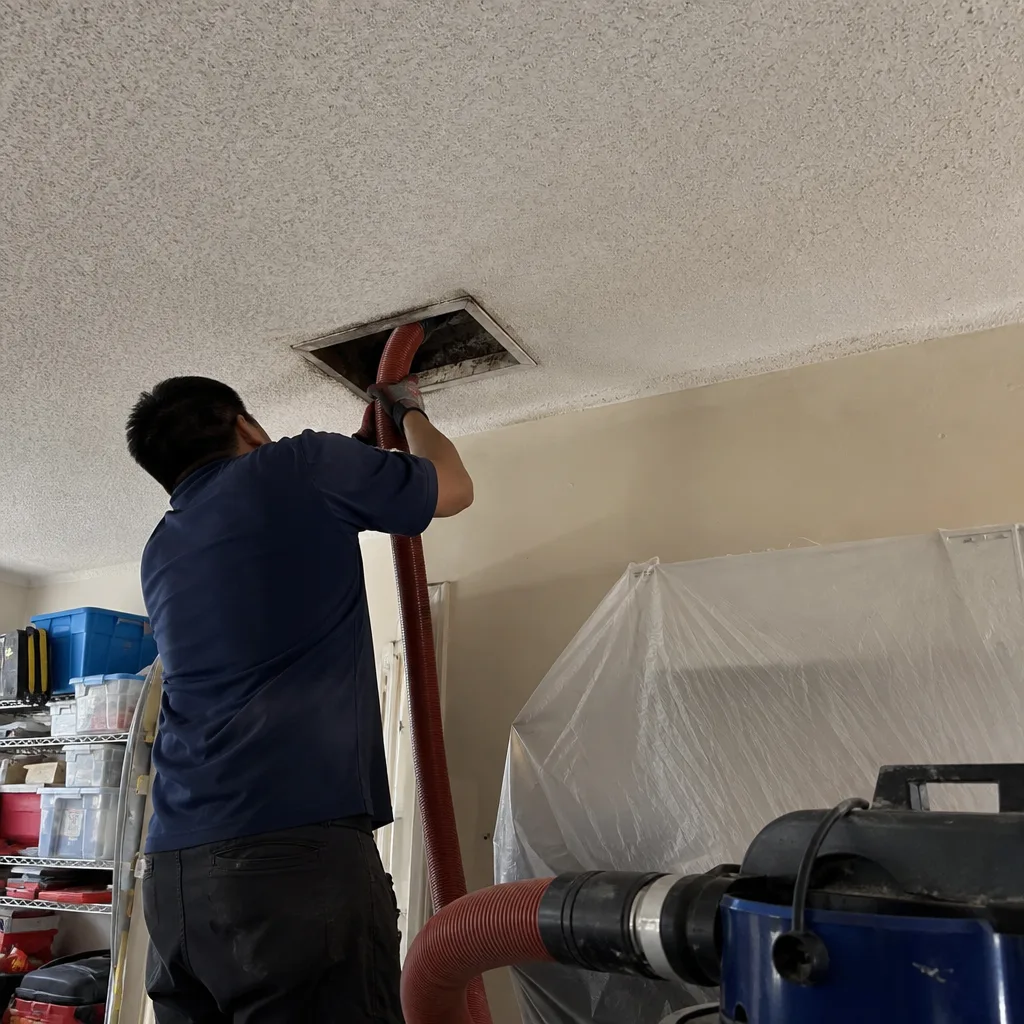 Before
 After
AfterWhen to Call a Professional
Some situations call for trained eyes and professional equipment. If you notice musty odors from the vents that persist after changing the filter, visible mold on register covers or inside accessible duct sections, or water staining on ceilings near registers, that’s a call to make sooner rather than later. If your home has just undergone a renovation, drywall dust will have coated the entire duct system and a professional cleaning is the only way to get it out. If a hurricane passed through and you suspect moisture got into the ducts, schedule an inspection within the week. And if it’s been more than three years since the system was cleaned, a professional assessment is overdue. Mortons Air Duct Orlando offers free estimates in Orlando, call (321) 204-8194 to schedule one. We’ll inspect first, quote before work starts, and tell you honestly if a full cleaning isn’t necessary.
Frequently Asked Questions
Air Duct Cleaning Cost Breakdown: The Orlando Homeowner’s Reference for 2026 shows that air duct cleaning in Orlando typically costs between $350 and $700 for a full system cleaning in a standard single-family home, with larger homes or systems with multiple returns running higher. The final price depends on the number of vents, the accessibility of the system, and the level of contamination present. At Morton’s Air Duct Orlando, we provide a written price before any work starts, so you know the full amount before the crew begins. Call (321) 204-8194 for an exact quote on your home.
Most Orlando homes benefit from a full air duct cleaning every one to three years, with seasonal check-ins in April and October between cleanings. Homes with multiple pets, homes near construction corridors, and homes that experienced hurricane-related moisture may need cleaning more frequently. The best way to know is a seasonal inspection, which tells you whether the system needs work without selling you a service you don’t need.
Cheap duct cleaning quotes in Orlando usually come from companies that don’t perform a full mechanical cleaning of the entire system. They may only vacuum the visible register openings, skip the return runs, or use equipment that doesn’t actually agitate the film bonded to duct walls. The result is a surface cleaning that leaves the system dirty and a bill that looks like a bargain but isn’t. A legitimate full cleaning involves contact tools, negative air pressure, and access to every run in the system, which takes time and costs more.
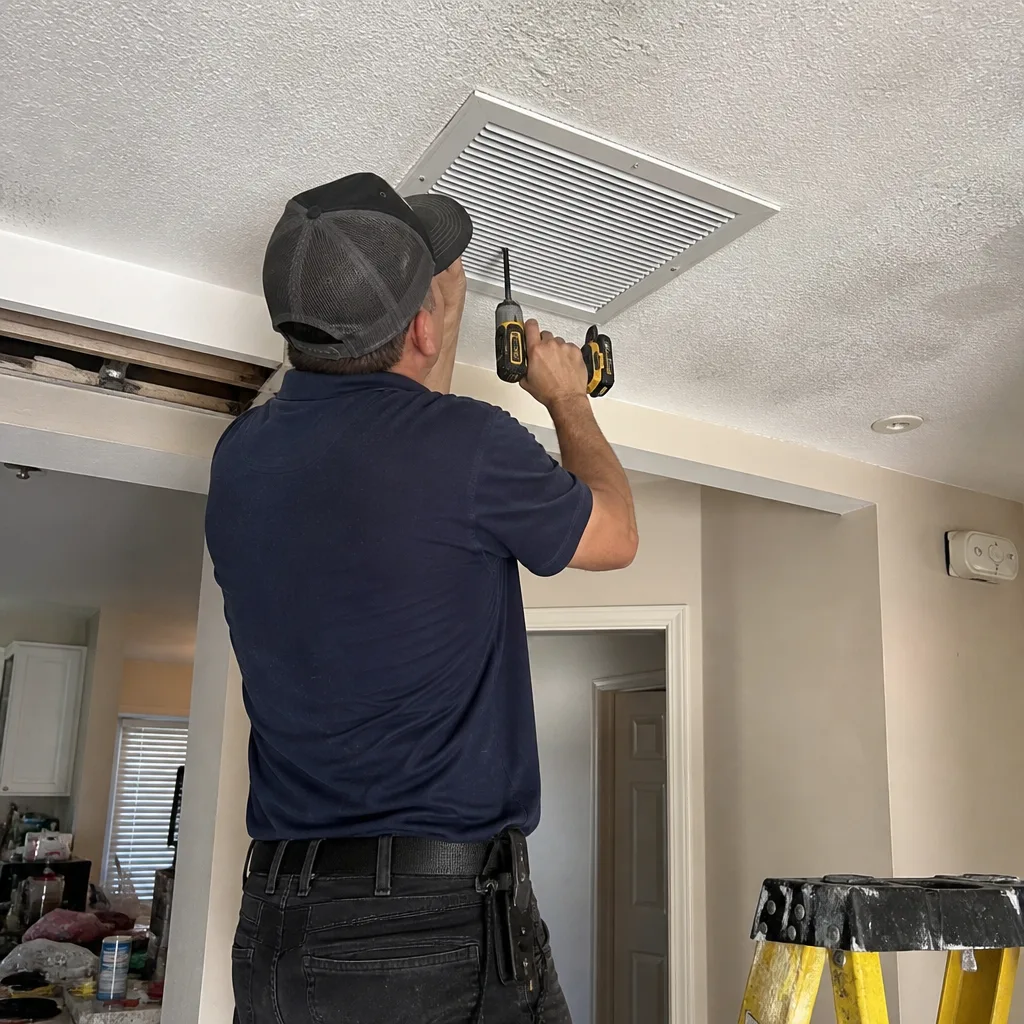
You should be able to see the difference, and a professional company will show you. At Morton’s Air Duct Orlando, every completed job includes a photo of the clean-up before the crew leaves, along with before-and-after images of the duct interiors where access allows. If a company can’t show you visual proof of the work, that’s a reason to be skeptical.
Yes, particularly in Orlando where the humid climate causes pet dander and pollen to bond into a sticky film inside ductwork instead of remaining as loose, removable dust. A professional cleaning removes that accumulated layer, which reduces the amount of dander and pollen circulating through the home each time the AC runs. Combined with a proper filter schedule, it can make a noticeable difference for household members with allergies.
April and October are the two optimal months for air duct cleaning in Orlando. April gets you a clean system before the long, humid cooling season. October lets you assess and address anything that accumulated during the summer and any tropical storms that passed through. Both months also offer scheduling advantages, since the extremes of summer and holiday rush haven’t yet filled the calendars of local service companies.
The Bottom Line
Orlando’s climate asks more of a duct system than most places, and the standard national advice doesn’t account for it. The homes that perform best, in terms of indoor air quality and system longevity, are the ones that follow an Orlando-specific rhythm: professional attention in April and October, filter discipline during the wet season, storm checks during hurricane season, and honest assessments in between. You don’t need to over-clean, and you don’t need to panic about the state of your ducts. You need a calendar that matches the climate, the discipline to follow it, and a company that will tell you the truth about what your system actually needs. For more guides & resources, visit our blog. That’s how we work at Morton’s Air Duct Orlando. Call (321) 204-8194 for a free estimate, and we’ll start with an inspection, not a sales pitch.
Written by Paul Adeyemi, Owner at Mortons Air Duct Orlando, serving Orlando since 2005.